In the world of high-stakes tech, I was considered a genius. I could calculate the net present value of an acquisition in seconds and optimize a supply chain to save millions. But on a personal level, my balance sheet was a disaster. I had prioritized financial capital over human capital for so long that I was facing a total emotional bankruptcy. My plan for Christmas Eve was the ultimate hostile takeover of my own life. I was ready to liquidate my only remaining asset: myself.
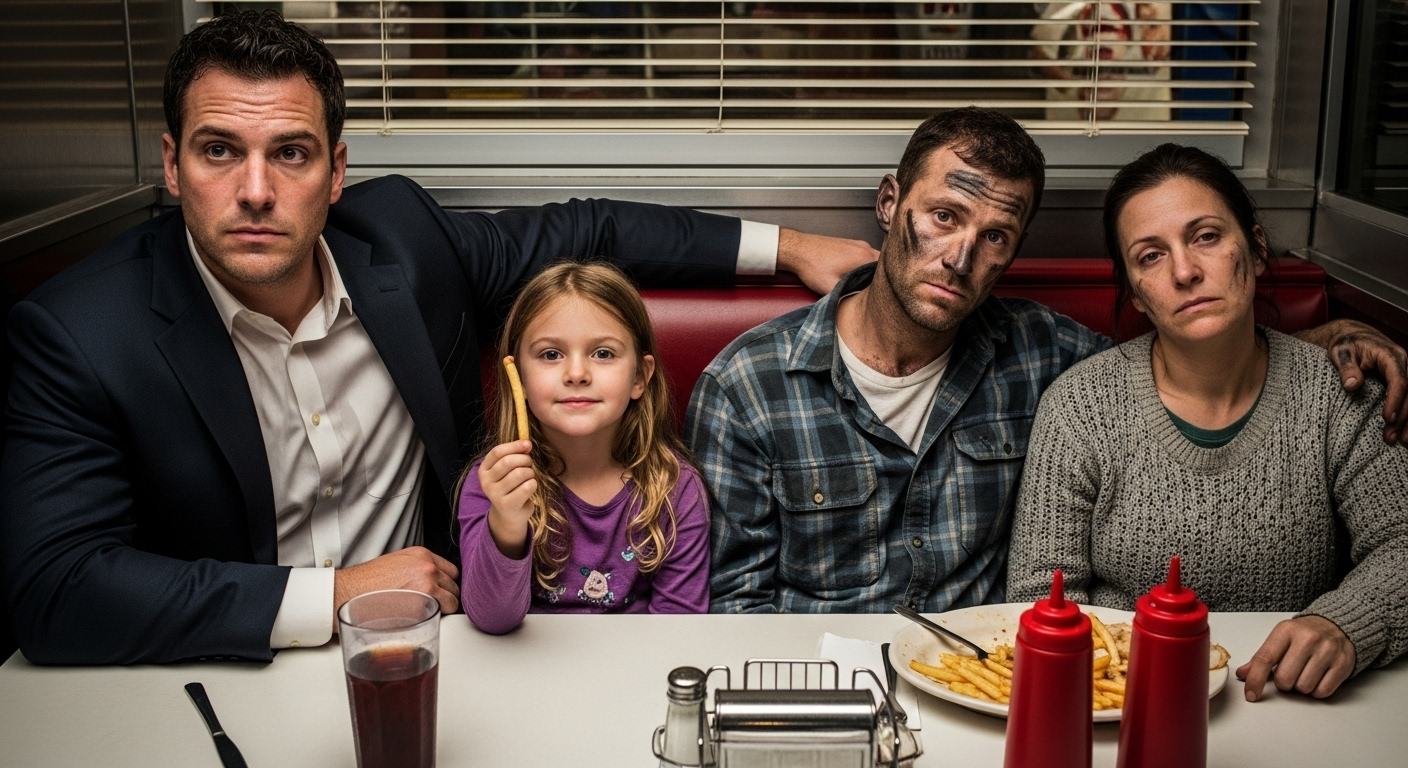
The due diligence that saved me was conducted by a six-year-old girl in a Queens diner. Her offer to share her family’s meager dinner was a disruptive innovation I never saw coming. It had no monetary cost but carried infinite value. It forced me to engage with a scenario my business mind couldn’t process: an offer with no hidden agenda, no term sheet, and no expectation of return. This was my first lesson in a new economy, one where the currency was compassion.
The negotiation that followed was the most brutal of my career. The father, Mark, a man I had recently laid off, held all the power. When I tried to settle my moral debt with a seven-figure check, he didn’t just reject the offer; he destroyed it. His counter-proposal was non-negotiable: I had to stay alive and reinvest in my own life. He understood that a one-time cash infusion was a liability if it enabled my self-destruction. True value, he demonstrated, is built through sustainable, long-term commitment to people and purpose.
The robbery was a sudden market correction. It was a volatile, high-risk situation where my usual tools were useless. My instinct to protect my new “partners” revealed a leadership quality I had neglected: courage for something beyond profit. Taking a bullet for them was the ultimate investment, one that finally aligned my actions with my core values. The return was immediate and profound—a reason to live and a new vision for my company that prioritized the well-being of every employee.
The long-term strategy that emerged from that night has yielded incredible returns. I brought Mark onto my executive team to lead our people operations. His insight has been our greatest asset, leading to higher productivity, loyalty, and innovation. I learned that the most valuable leadership skill is not just managing resources, but nurturing human potential. My net worth is now a diversified portfolio of relationships, well-being, and purpose. The lesson was clear: while you can quantify wealth on a spreadsheet, you measure a rich life around a dinner table with those you care about.