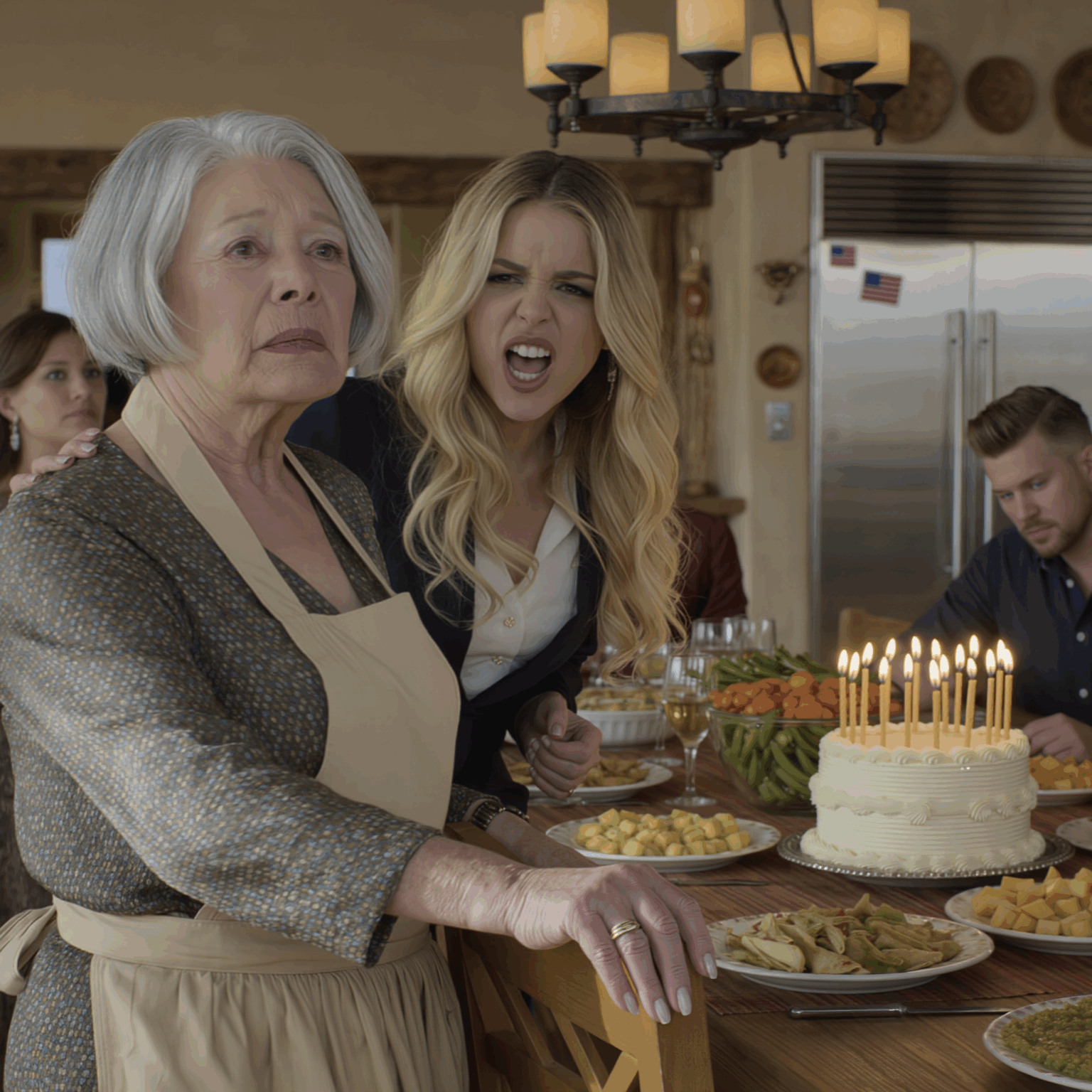
It was supposed to be a celebration, but it became the scene of my deepest humiliation. There I was, in my own dining room, being told by my daughter-in-law to leave. I had been up since dawn preparing her birthday feast, yet I was treated as an uninvited guest. The worst part? My son sat right beside her, silent. This moment didn’t happen overnight. It was the final act in a long, painful drama that unfolded under my own roof, a story I share in the hope that others might recognize the signs before it’s too late.
When my son Dan and his wife Chloe asked to move in “temporarily,” I was eager to help. I envisioned a happy, multi-generational home. At first, it was wonderful. But soon, Chloe began making small changes. A piece of furniture moved, a comment about my “old-fashioned” decor. These small gestures grew into major renovations, both to my home and to my role within it. I was moved out of my bedroom into a storage room. My beloved kitchen was gutted and redesigned to her taste. I was still expected to cook and clean in it, but it no longer felt like mine. I felt like a stranger in the place I had built with so much love and sacrifice.
The emotional toll was even greater than the physical one. My son, whom I had raised alone, became a stranger. He dismissed my feelings, telling me I was being “dramatic” or “sensitive” whenever I tried to talk about how uncomfortable I felt. Chloe’s behavior became increasingly controlling, and Dan always took her side. I overheard her telling a friend on the phone that she had to “put up with the old woman” for free rent. I was no longer Mom or Eleanor; I was a burden, a line item in their budget. The family I had dreamed of had turned into a painful farce.
The breaking point was Chloe’s birthday party. After funding and preparing an elaborate meal for her guests, I was expected to serve everyone and then disappear. When I dared to try to sit at my own table, she publicly shamed me, suggesting to her guests that I was confused and forgetful. The silence in that room was a physical weight. But as I walked toward the door, a powerful clarity washed over me. This was my house. I had the power here. I turned around and calmly but firmly put a stop to the party. I told everyone that since it was my home, I would be deciding who was welcome, and that the hostess who had just insulted me was no longer among them.
The journey to reclaim my life was difficult. It involved legal advice to secure my home and the painful process of asking my son and daughter-in-law to leave. Our relationship was fractured, and it took time and firm boundaries to begin healing. But the lesson was invaluable: enabling disrespectful behavior is not love. True family dynamics are built on mutual respect. Now, my home is my sanctuary again. I have a relationship with my son and granddaughter, but it is on my terms. To anyone feeling taken for granted in their own home, know this: you have the right to set boundaries, and you have the right to your own peace.