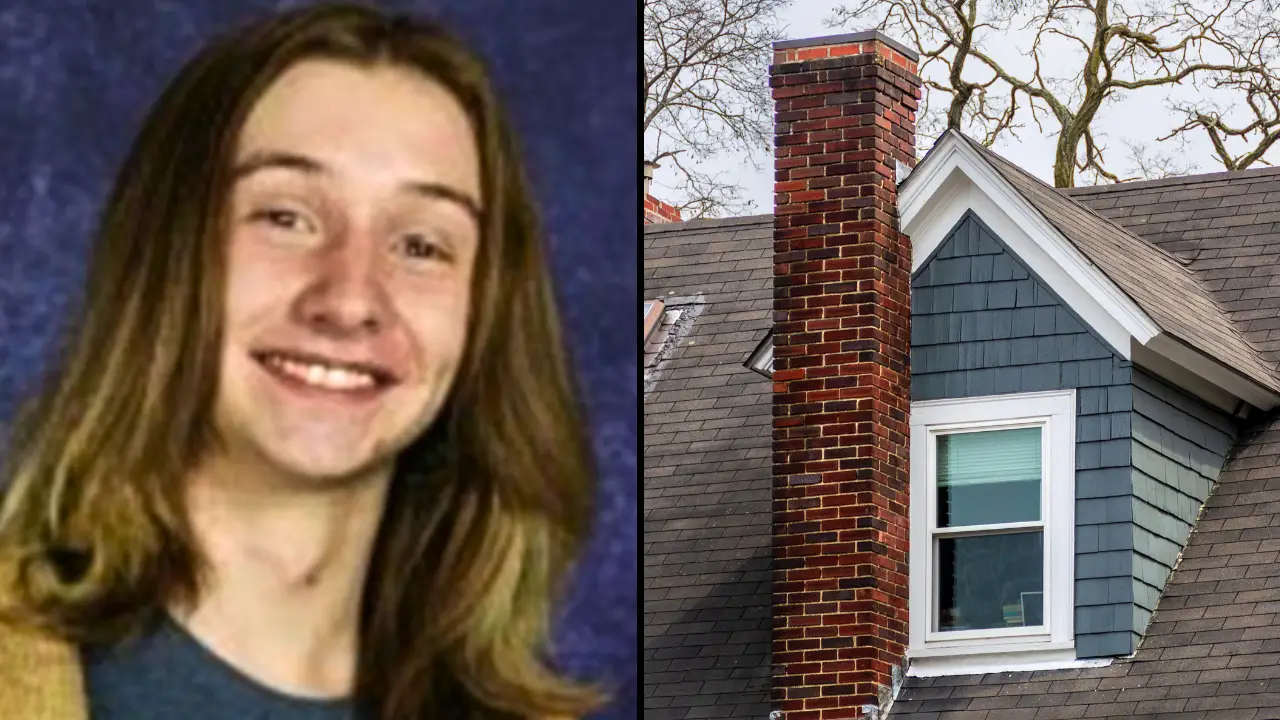
The search for Joshua Maddux spanned seven years and countless theories, but the truth was hiding in plain sight. On May 8, 2008, the artistic and introspective teen left his Woodland Park home and disappeared. His family’s subsequent search was frantic, then hopeful, then resigned to a painful uncertainty. They hoped he had simply chosen a different life. The reality, discovered in 2015, was both tragically simple and horrifically complex: Joshua’s remains were found inside the chimney of an abandoned cabin located just two blocks from his own house.

The discovery by construction workers raised immediate and disturbing questions. Joshua was found in a severely contorted, fetal position within the chimney flue. Inside the cabin, his pants, shoes, and socks were folded neatly. A large wooden breakfast bar had been torn from the wall and placed against the fireplace opening. An autopsy found no definitive signs of trauma, violence, or drugs in his system. The initial coroner’s ruling pointed to a freak accident, suggesting Joshua entered the chimney and died of hypothermia.

However, this theory quickly encountered a major obstacle from the cabin’s owner, Chuck Murphy. He testified that a robust steel mesh grate, installed to deter animals, had been fixed near the chimney top. Murphy was unequivocal: “There’s no way that guy crawled inside that chimney with that steel webbing.” This claim forced the coroner to reconsider. While the mesh was not present when the body was found—possibly removed during demolition or having rusted—its alleged existence challenged the entire narrative of how Joshua entered the space.

Faced with these contradictions, the investigation reopened. The coroner acknowledged that Joshua’s head-first position was peculiar and that placing a body in such a configuration might have required assistance. Law enforcement received tips, including one about an individual who had allegedly bragged about putting Josh “in a hole,” but concrete evidence tying anyone to the scene was lacking. The remote location of the cabin meant that even if cries for help were made, they likely would have gone unheard.
The case remains officially undetermined, a label that offers little solace. For Joshua’s family, the pain of loss is now mixed with the frustration of an unsolved puzzle. How did he end up there? Was it a misguided act, a tragic misadventure, or something more sinister? The bizarre circumstances—the folded clothes, the barricaded fireplace, the missing chimney grate—create a mosaic that refuses to form a clear picture. It stands as a poignant reminder that not all mysteries, even those solved after years, provide the answers we seek.