Psychological safety is the bedrock of a secure relationship. For twenty-five years, I believed my husband David provided that. He entered my life at its most chaotic point—I was pregnant and alone—and offered structure, commitment, and calm. I interpreted his careful oversight as devotion. Our life became a portrait of control, not the oppressive kind, but the soft, predictable kind that feels like safety when you’re coming from a place of fear. I never questioned the narrative because it met my most basic need: security.
The human mind, however, has a way of pointing out inconsistencies. The trigger was a moment of cognitive dissonance. David expressed deep pride in our daughter’s name, Michaela. My subconscious jolted. That name was a direct link to the traumatic loss he was supposed to have healed. Why would he embrace it so fully? This tiny crack allowed me to re-examine other patterns: his subtle steering of conversations, his need to always know my location, his discomfort with my past. These weren’t just quirks; they were the behavioral traces of someone maintaining a constructed reality.
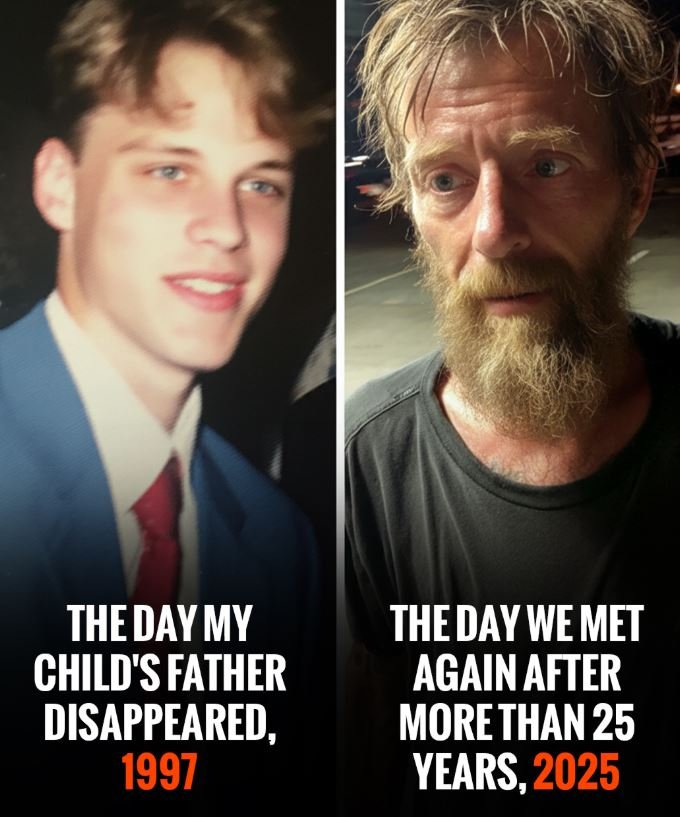
A chance encounter became the catalyst for collapse. Finding Michael in David’s office hallway was a shock. His physical and emotional state spoke of prolonged trauma, not a man who had simply moved on. His terror was palpable and specific. The truth he shared was a psychological bomb: David had not been a passive beneficiary of Michael’s absence but an active architect of it. The “stability” I cherished was purchased with another man’s ruin. My protector was, in fact, the primary threat.
This revelation necessitated evidence. Violating David’s private space felt like a transgression, but I needed objective proof. The locked drawer in his office contained it—a legal document that reframed our entire relationship. The will revealed a clear contingency: marriage and a child for an inheritance. My value to him at the outset was purely functional. This wasn’t a romance; it was a strategic acquisition. The life we built was not a sanctuary, but a gilded cage whose door I had never tried to open.
Confronting David was less about argument and more about statement. I presented the facts. His response was telling: he shifted from denial to devaluation, attempting to undermine my sense of self-worth by claiming I was “nothing” without him. This classic manipulative tactic only solidified my resolve. Leaving was an act of reclaiming my reality. Now, with the truth exposed, I can begin a new chapter—not a fairytale, but an authentic connection, however complicated, built on honesty and the long-overdue repair of a life he helped to break.