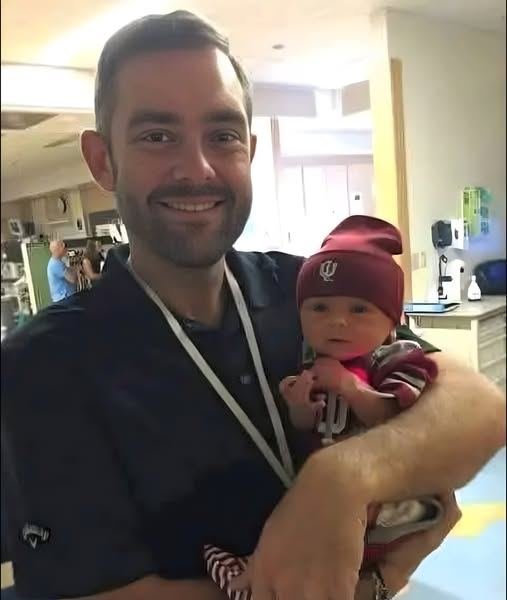
Nine months ago, my wife Brooklyn and I embarked on a path we never envisioned. The excitement of expecting our baby boy was met with a devastating turn during the pregnancy: a diagnosis of severe hydrocephalus. “Water on the brain,” they called it. The images showed a profound buildup of fluid, and the future they painted for our son was bleak. As new parents, we reeled, clutching each other as we tried to navigate a landscape of fear and medical complexity.
Our search for answers led us to the fetal specialists at Cincinnati Children’s Hospital. The expertise was world-class, but the confirmation was harsh. Our baby’s condition was among the most severe they had seen—so extreme that measuring the fluid became pointless. The MRI was a heartbreaking sight. We were given the sobering statistic that he had over a ninety percent chance of dying shortly after birth or surviving with severe impairments. The hope we carried felt small and fragile against such numbers.
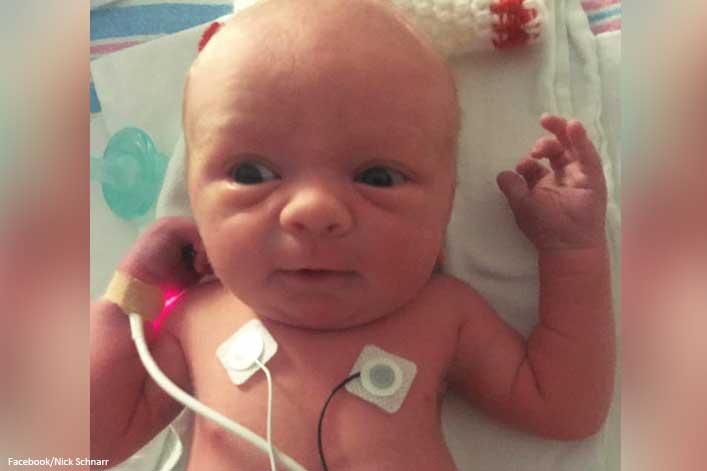
We entered difficult conversations about palliative care, discussing end-of-life decisions for a child who hadn’t yet begun his life. The emotional toll was immense. Brooklyn relocated to Cincinnati to be close to the hospital, a brave sacrifice, while I managed our home and our two daughters. We were a team divided by circumstance but united in a fierce determination to fight for our son. The stress was a constant shadow, but our love for this unborn child was our compass.
Brooklyn’s labor began on July 8th. In the final moments before the C-section, we reviewed the grim possibilities with the doctors one last time. We had prepared our hearts for tragedy. But then, Charlie was born. And he cried. That powerful, life-affirming cry shattered the silence of our dread. In an instant, the narrative changed. He was here, he was alive, and he was fighting.
Charlie’s stay in the NICU was a rollercoaster of cautious monitoring and whispered hope. Then, the inexplicable occurred. Follow-up scans revealed his brain was spontaneously resolving the blockage. The fluid was finding new pathways. The medical team, meticulous scientists all, spoke of a phenomenon they couldn’t clinically explain. They witnessed what we could only call a miracle. We are convinced that the avalanche of prayers from our community—an outpouring of love from people we knew and many we didn’t—played a part in this divine intervention.
We have now brought Charlie home. He is a healthy, beautiful baby, delighting us with every coo and grasp. While we will keep an eye on a minor residual enlargement, his progress is breathtaking. This journey has taught us that the human spirit, both in a tiny infant and in the community that surrounds him, possesses an incredible capacity for healing and hope. Charlie’s story is a beacon, proving that even when medicine reaches its limits, love and faith can chart an unexpected path forward.