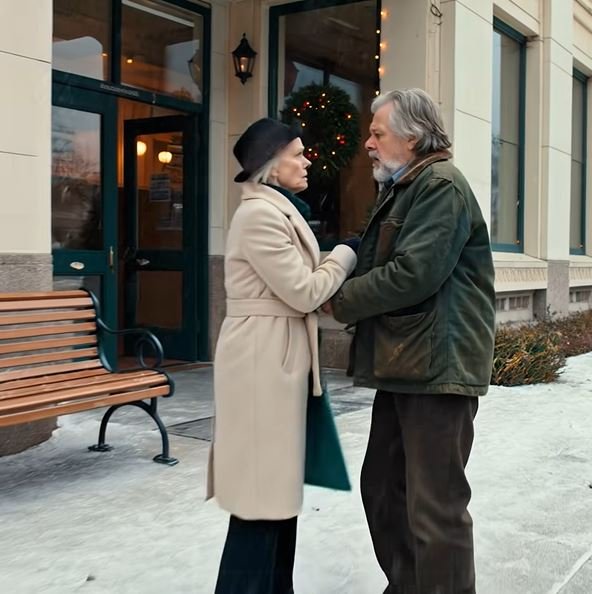
Grief is a quiet tenant. It moved in after my husband died, filling the spaces Richard left behind. At 63, I was adrift, financially hollowed out by illness and alone. My children were loving but distant. Necessity forced a new chapter: a small apartment and a part-time job at a senior center. Each day, I took the bus downtown and walked the last few blocks for my hip’s sake. That daily walk introduced me to Samuel. He was a fixture on a library bench, a man of quiet grace despite his faded jacket and paper cup.
I started leaving a little money each morning. It wasn’t much, but it was a connection. We began to talk. He was a former teacher, a man who had lost his wife, his pension, and his home through a cruel twist of fate. Our morning chats became the highlight of my day. He listened to my stories about work and memory, and I listened to his reflections on history and life. In a city where I felt invisible, Samuel saw me. And on that bench, I learned to see him not as a homeless man, but as a friend.
The morning he gripped my arm, his usual calm shattered, my world tilted. “You mustn’t go home,” he whispered fiercely, his eyes scanning the street. He spoke of danger at my workplace, of a bookkeeper named Tiffany, of records being fiddled. He begged me to stay in a hotel. The intensity in his voice, so foreign to our gentle routine, compelled me to agree. At work that day, the director, Patricia, pulled me aside to reveal suspected fraud at the center. The coincidence was chilling. That night, from a sterile motel room, I received the call: my apartment was on fire.
Samuel had predicted it. He saved my life. When we met the next day, he showed me the how and why. From his bench, invisible to those who spoke around him, he had overheard a conspiracy. Patricia and others were stealing donation funds and had planned the fire to silence me, their chosen scapegoat. Samuel, armed with a notebook and a cheap phone, had become an investigator to protect the one person who showed him kindness. His evidence was meticulous. We took it to the police together, and a web of corruption at the senior center unraveled.
In the aftermath, a new battle began—for Samuel’s health. The streets had taken a brutal toll. I used my voice, now stronger, to advocate for him. We secured him housing and medical care. The teacher was able to teach again, volunteering at the local library. Our friendship, forged in extraordinary circumstances, now thrives in ordinary moments. We often reflect on how it began: with spare change and a smile. That small, human choice created a chain of events that exposed criminals and rebuilt two broken lives. It taught me that compassion is never wasted. It’s an investment in unseen futures, a seed that can grow into a shelter for the very person who might one day save you.