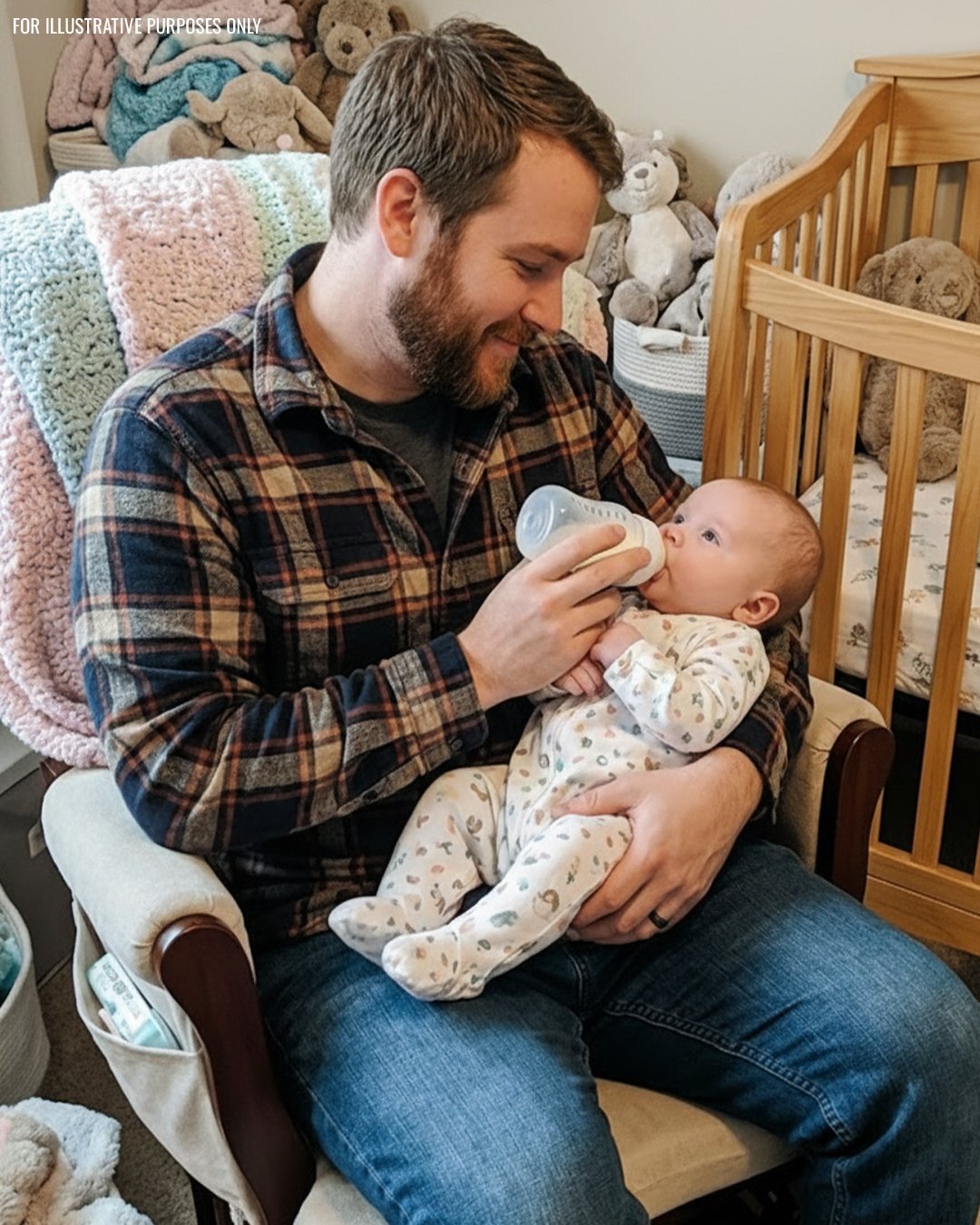
The foundation of a family is built on presence. For Mark, that foundation collapsed the morning his wife, Erin, vanished, leaving him to solo-parent their infant daughter, Maisie. For five years, he was both mother and father, answering Maisie’s innocent questions with a heartbreaking blend of truth and reassurance. The narrative was set: Mom left, it wasn’t your fault, and we may never know why. Then, a chance moment with the television changed everything, forcing a painful renegotiation of their entire shared history.
The emotional whiplash was extreme. One moment, Maisie was eating apple slices; the next, she was pointing at a TV screen, asking if the singer was Mommy. There was Erin, publicly explaining a private agony—a severe postpartum depression that made her feel she was disappearing. Her plea was broadcast for all to see, but meant only for two. She held a tangible relic of their past: the drawstring from the hoodie Maisie had treasured. This public yet intimate disclosure complicated Mark’s righteous anger, introducing a narrative of mental health struggle he had never been allowed to see.
The doorstep confrontation laid bare every wound. Mark’s anger was a shield for Maisie, who was equal parts curious and confused. The revelation that Erin had been peripherally present—sending anonymous financial support and watching recitals from a distance—added layers of complexity. It wasn’t a clean abandonment, but a tortured, hidden observance. For a child, this information is profoundly confusing; for a betrayed spouse, it can feel like a continued deception.
The late-night kitchen conversation after Maisie slept was where adult realities collided. Erin spoke of her journey to wellness and self-discovery through music. She presented not just as a remorseful runaway, but as a person rebuilt, asking for inclusion, not ownership. Her request to have Maisie sing a chorus on a song was a bid to blend her old and new lives. Mark’s refusal was firm, a necessary boundary to protect the stability he had fought to create.
The tentative resolution they reached is a map for countless families facing similar ruptures. Trust, once obliterated, cannot be demanded; it must be earned through consistent, transparent action. Mark’s decree of supervised visits on his terms is not an end, but a fragile beginning. It acknowledges that while a parent’s internal battle may explain an absence, it does not erase the consequences. The path forward is uncharted, resting on the fragile hope that accountability and time might someday build a new, different kind of family bridge.