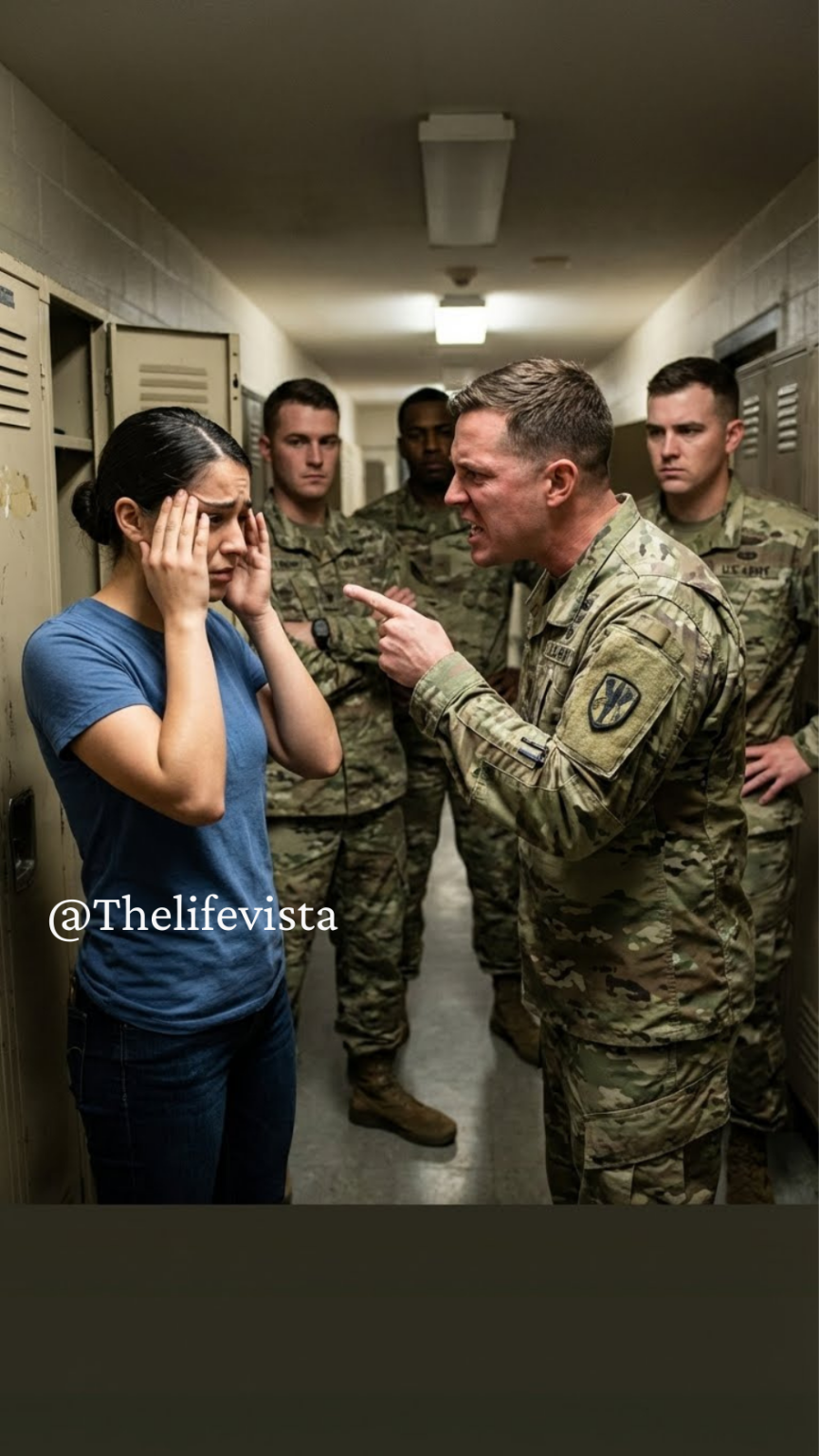
We’ve all seen bullies. They often operate under the assumption that no one will challenge them. Petty Officer Derek Davies was having that kind of day in the Trident Mess Hall. Spotting Abigail Carter, a blonde woman in civilian clothes, he saw an easy target. He stepped in her way, made physical contact, and laughed. He questioned her presence, demanded her ID, and with his friends, created a little circle of intimidation. He saw only what was on the surface, and he judged her as less than. His strength, he believed, was in his uniform, his voice, his willingness to be loud and demeaning.
Abigail, however, possessed a different kind of strength entirely. It was an internal fortress, built during tours in a combat zone. When Davies grabbed her arm, her mind didn’t register panic; it accessed a file of far greater dangers. Her eyes fell to a simple ribbon on her bag—a Combat Action Ribbon. That small pin was a portal. For a split second, she was back in a landscape where threats were real and measured in life and death. The petty officer’s posturing became background noise, a trivial pantomime next to the memories of valor that ribbon represented. Her calm wasn’t an act; it was the profound stillness of someone who knows the true weight of things.
The turning point came from an unexpected quarter. Across the hall, Gunnery Sergeant Miller, a man who’d seen his share of warriors, was watching. He saw the bullying, but more importantly, he saw Abigail’s poise. And then he saw the ribbon. Recognition dawned, hard and fast. The name Carter, the legend of “Dozer,” a fellow Marine who had faced down real enemies. In that moment, a line was crossed. This wasn’t just about harassing a civilian; it was about disrespecting a sister-in-arms who had paid a price they could never fathom. A protective, furious loyalty ignited.
What happened next was a powerful, wordless ballet of respect. Miller stood. His men stood. Then, as if a wave passed through the room, every Marine in the facility—dozens of them—rose from their tables. They didn’t shout. They didn’t approach. They simply stood, a forest of silent resolve, their gaze fixed on the three sailors. The message was deafening in its silence. The fake power of bullying crumbled instantly under the genuine, collective power of honor. Davies and his friends were frozen, finally understanding the profound miscalculation they had made.
The story concludes not with a grand victory, but with a quiet lesson in growth. After facing disciplinary action, Davies found Abigail again. Humbled and shaken, he offered a sincere apology. Abigail’s strength was evident again in her response. She accepted it and charged him with a mission: to intervene when he saw others acting as he had. The incident reminds us that true strength often wears a quiet face. It’s the strength of composure under pressure, the strength of a community that defends its values, and the strength to accept a hard lesson and strive to be better.