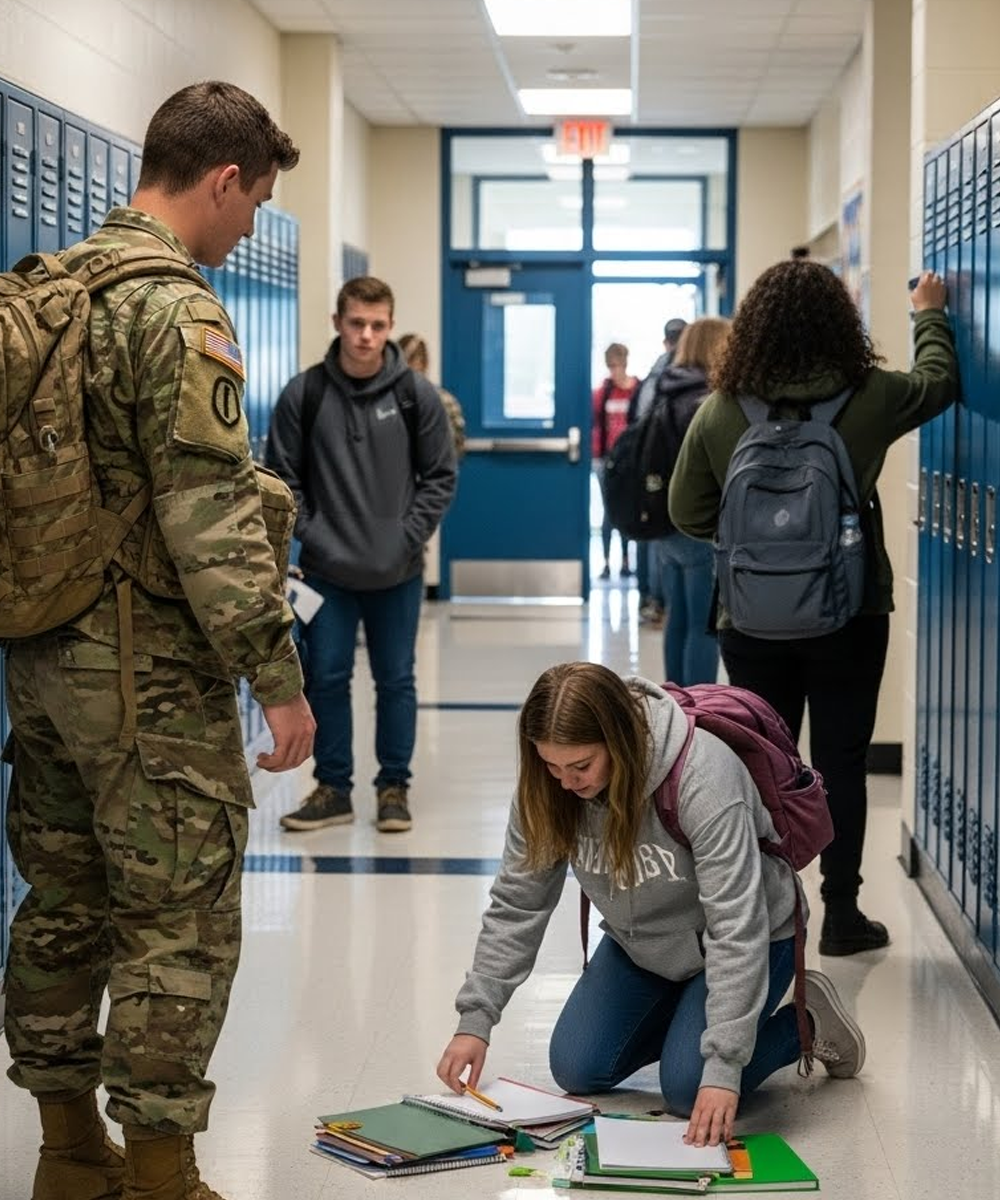
A soldier’s training is about anticipating the unexpected, a lesson that took on a deeply personal meaning during his homecoming. Instead of a family reunion, he found himself in the echoing silence of his sister’s high school, witnessing the aftermath of a cruel shove. The sight of his sister, Sarah, gathering her things from the floor while a classmate loomed over her, was a battle of a different kind. His response was a masterclass in measured strength, forged far from that hallway.
He moved with purpose, not rage. His focus was solely on Sarah—kneeling beside her, his touch a familiar anchor in a moment of public shame. In providing that immediate sanctuary, he stripped the bully’s actions of their power. When he finally addressed the boy, his calm question, “Is there a problem here?” carried the gravity of someone who has seen real conflict. It contrasted starkly with the petty cruelty of the hallway, exposing it as the small, shameful act it was.
The real victory, however, was not the bully’s stammered apology. It was what unfolded afterward: Sarah finding the courage to speak her truth, and the slow, steady change as she began to lift her head, both literally and figuratively. The soldier’s role shifted from protector to supporter, walking with her as she reclaimed her space in the world. His homecoming became a reminder that the greatest courage is often quiet, and that sometimes, the most important mission is not overseas, but beside someone you love, asking the world to treat them with the humanity they deserve.