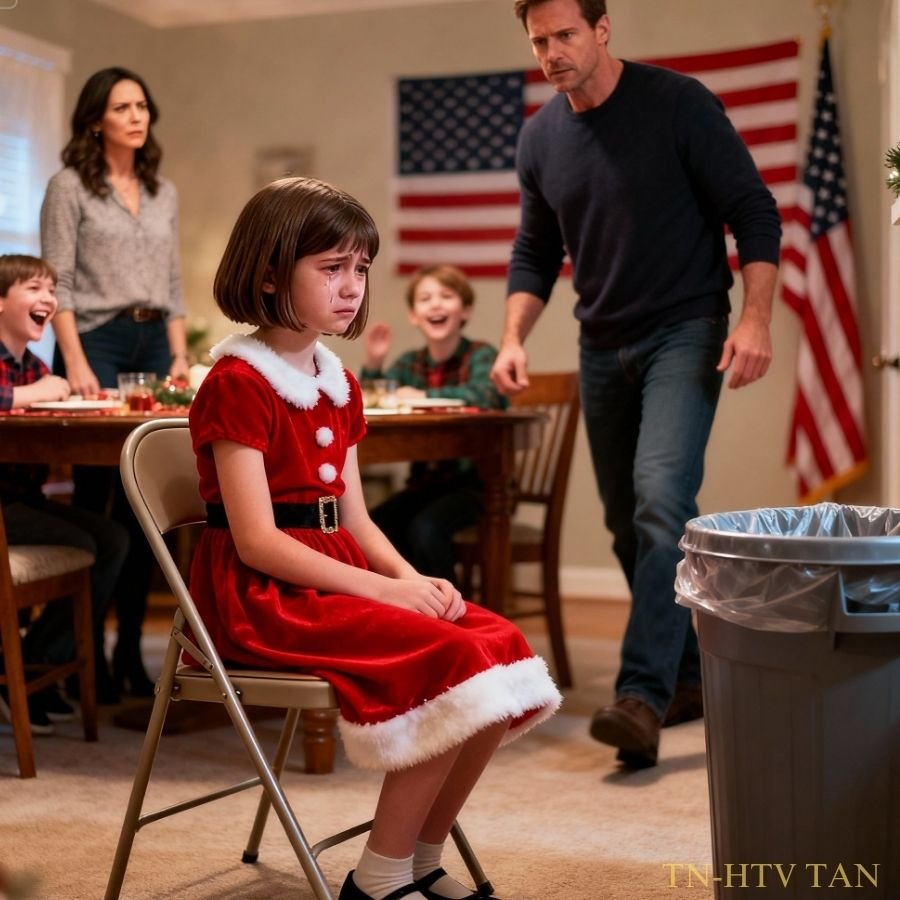
Christmas at my parents’ house was always a tableau of tradition, but this year, the picture was marred by a quiet cruelty. I arrived late, the last to join, and the festive chatter halted as I entered. A quick survey of the room revealed a telling emptiness at the main table and a heart-wrenching sight in the corner. My daughter, Lily, sat isolated on a flimsy chair beside the kitchen trash, a silent ornament of exclusion. Her holiday dress was a splash of color against the bleakness of her placement. The meal proceeded around her; aunts, uncles, and cousins acted as if this were normal. My sister shrugged, citing a need for discipline. My mother said she was fine. But a child relegated to the garbage is never fine.
Lily saw me and slowly uncurled herself from the chair. She walked over, a small figure navigating a sea of indifferent adults, and pressed her face close to my ear. Her whisper was the only sound that mattered in the room. “Mom… can you do what you said you’d do if I ever felt sad again?” I remembered my vow vividly. I had promised her that if my family ever treated her poorly again, my silence would end. I asked her if this was that moment, and her earnest nod was all the confirmation I needed. A lifetime of appeasement shattered, replaced by a clear, cold resolve.
I addressed the room, my voice steady. I announced that since they found a child’s humiliation acceptable, I would follow through on my promise. Before my mother could finish her dismissive retort, I retrieved a prepared envelope from my bag. I laid it on the lace tablecloth, a stark white rectangle amid the holiday feast. Then I let the contents spill out: six years of financial records, proof of every bill I’d paid, every mortgage installment I’d covered, every secret burden I’d carried for them after my father’s stroke. The silence that followed was deeper and more profound than before.
The revelation hit the table like a shockwave. My sister was the first to find her voice, questioning our mother in disbelief. My mother could only stare, her façade crumbling into panic. I then delivered the final piece of paper: formal notification that their financial safety net was being withdrawn, that I was stepping away for good. The scream that tore from my mother’s throat was one of pure, unrestrained fury and fear. It was the sound of a carefully constructed illusion breaking. I didn’t wait for the aftermath. I simply took my daughter’s hand, and we left the screaming and the secrets behind.
Outside, the winter air was bracing and clean. Lily held my hand tightly, and for the first time that night, I felt her relax. The shouts from the house faded into the distance, unimportant. At home, curled under a blanket, she shared her real fear: not of sitting by the trash, but of making me sad by telling me. That truth was the final weight that lifted, because it meant I had finally shown her where my loyalty truly lay. The following morning, amid the barrage of frantic messages, we found our own peace. We burned pancakes and laughed. That Christmas, by a trash bin, I found the courage to take out the trash for good. I kept my promise, and in doing so, I gave my daughter the only gift that truly lasts: the certainty that she comes first.