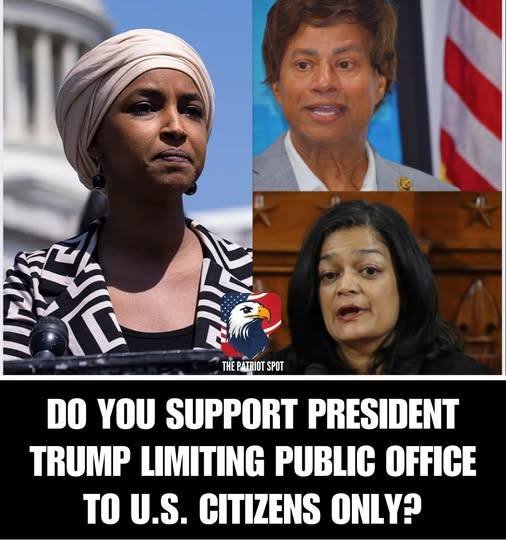
A political storm has been stirred by the suggestion that holding public office in America should be a right reserved exclusively for U.S. citizens. Forwarded by former President Trump, this concept has moved from the fringes of policy discussion into the mainstream, challenging long-standing norms in many localities. It centers on a potent idea: that the power to govern must be inseparable from the formal pledge of allegiance that citizenship represents. This debate cuts to the core of how the nation defines trust, belonging, and political power in the 21st century.

Advocates for the restriction present it as a bedrock issue of national loyalty. They posit that the immense responsibility of crafting laws, setting policy, and steering public funds must rest solely with those who have sworn the ultimate oath to the country. In their view, citizenship is not just a legal status but a clear declaration of primary allegiance, a necessary filter for those who will make decisions affecting national security and cultural cohesion. This perspective resonates with a populist emphasis on putting “America first” and ensuring that the levers of power are operated by individuals with an unambiguous, legally-binding connection to the nation’s welfare.
Opponents counter that the proposal is unnecessarily exclusionary and potentially damaging. They point to the countless lawful permanent residents who pay taxes, raise families, serve in the military, and are woven into the fabric of their towns and cities. To tell these individuals that, despite their contributions, they are ineligible for a seat on the county commission or in the state legislature is, in their view, to create a second class of civic participation. It risks alienating vibrant segments of the population and dismissing a wealth of talent and perspective over a technicality. For them, governance benefits from a diversity of experience, not a narrowing of eligibility.

Beyond the philosophical clash, there is a pragmatic layer to consider. The actual number of non-citizens elected to significant office is extremely low, making some wonder if the policy addresses a tangible threat or a symbolic concern. Its implementation would primarily affect local governance, where community knowledge and local investment are often more immediately relevant than national citizenship. Furthermore, such a rule could inadvertently discourage the civic integration it supposedly champions, sending a message that full belonging is a closed circle, not an aspirational journey.
The discussion ultimately transcends a single policy. It is a referendum on the American narrative itself. Is the nation a finished project, guarded by gates that only the formally inducted may pass? Or is it a continuing experiment, where demonstrated commitment and shared community forge the truest credentials for leadership? The push to limit office to citizens seeks to codify a specific vision of patriotic purity. The resistance to it upholds a vision of earned inclusion. Where America lands on this question will reveal much about its evolving character.