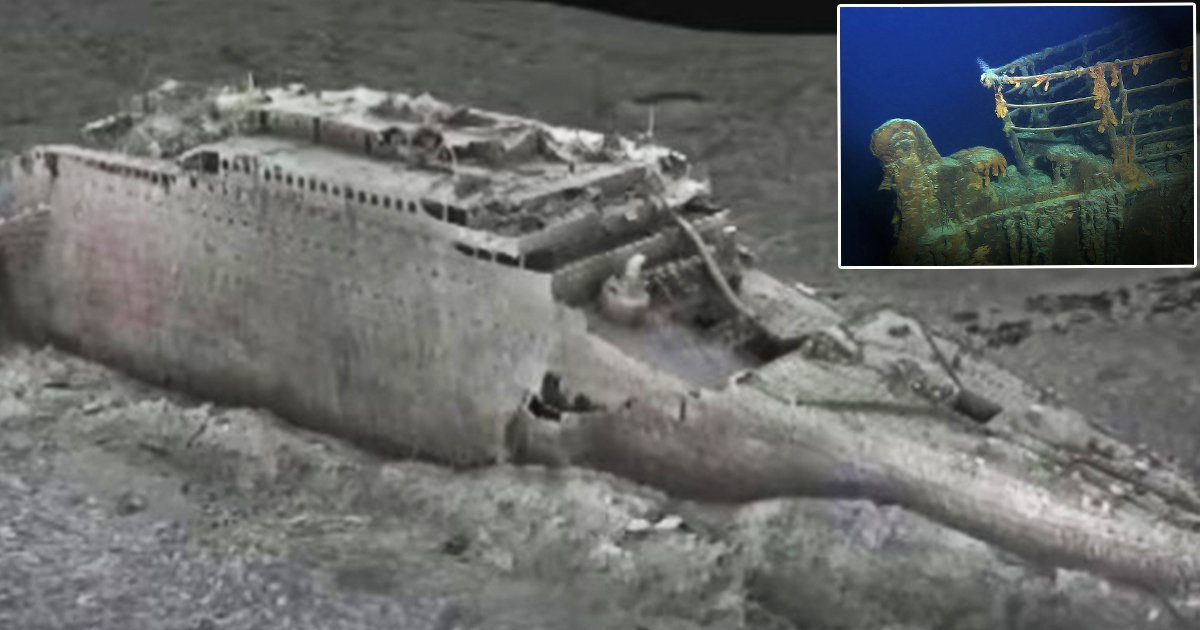
The sinking of the Titanic is a human tragedy on a scale that continues to resonate. When the wreck was finally found, the world expected to see a ghost ship, a time capsule holding the remains of its passengers and crew. Instead, explorers found the ship itself and its scattered contents, but the people were gone. The absence of over 1,500 bodies from the disaster site is a question that has a clear, if unsettling, scientific answer, one that involves the collaborative work of deep-sea biology and chemistry.

The initial recovery in 1912 brought 337 bodies back to the surface, but the vast majority were never found. For years, it was assumed they were entombed within the ship. However, decades of exploration have proven otherwise. The deep ocean is not a quiet, preserving vault; it is a dynamic and active environment. The first reason for the disappearance of the bodies is biological. A host of deep-sea creatures, from bone-eating zombies worms to countless bacteria, see organic matter like human tissue as a valuable food source. In the years following the sinking, these organisms would have systematically consumed the soft tissues of the victims.

Yet, the consumption of flesh does not explain the complete lack of skeletons. Bones are remarkably durable, and in many environments, they can last for thousands of years. The key to their disappearance at the Titanic site lies in the unique properties of the deep-sea water. The wreck rests at a depth where the pressure is nearly 400 times that at the surface, and the water is incredibly cold. More importantly, at this depth, the seawater becomes corrosive to calcium carbonate.
This calcium carbonate compensation depth is a critical boundary. Below it, the water is under-saturated with the minerals that form bones and shells. As a result, any skeletal material exposed on the seafloor does not remain intact; it slowly dissolves. This process ensures that even after the scavengers have done their work, the bones themselves do not endure. They break down on a molecular level, leaving behind no trace for explorers to find a century later.
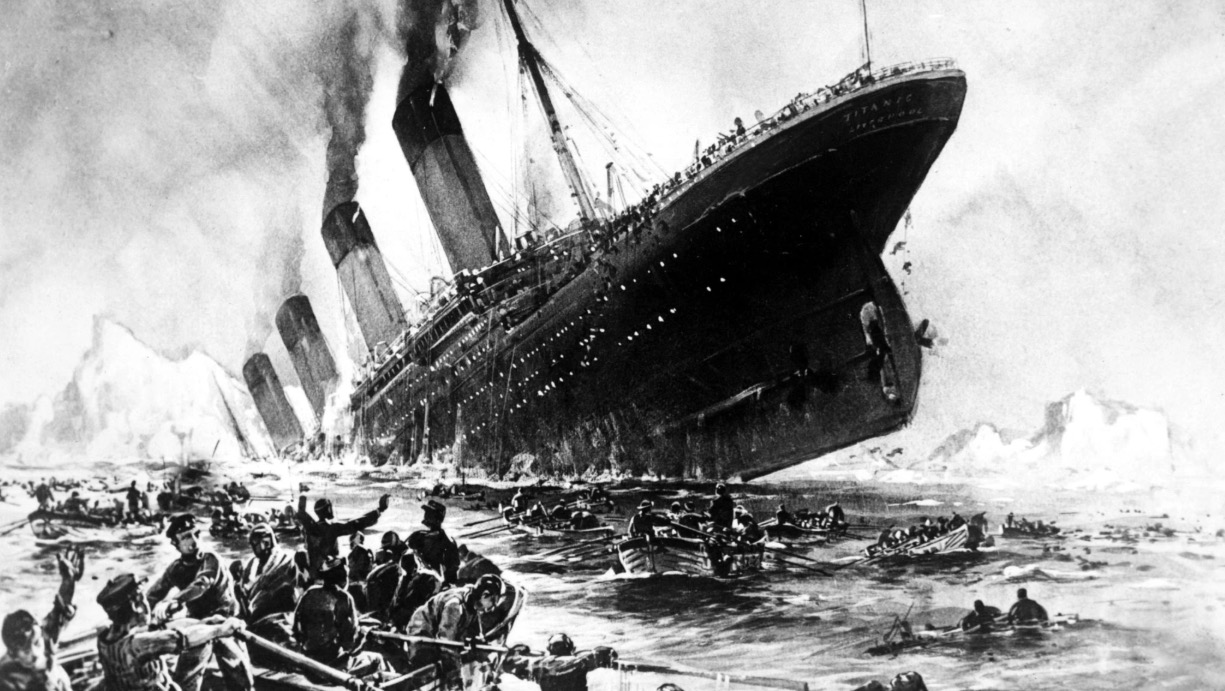
This explanation transforms our understanding of the wreck site. It is not a mass grave in the traditional sense, but a field of artifacts. The only remnants directly linked to the victims are their shoes, as the leather and tannins are unappetizing to deep-sea life and are not subject to the same chemical dissolution. These pairs of shoes, lying peacefully on the silt, are the true and only markers of the lives lost, a silent testament to the powerful and efficient natural forces that govern the ocean’s deepest realms.