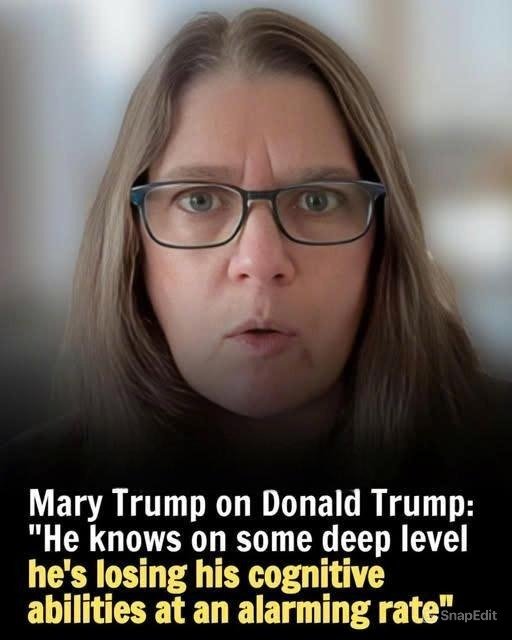
The latest headlines feature a familiar name with a deeply personal warning. Mary Trump, a clinical psychologist and the niece of Donald Trump, recently shifted the conversation from political battlegrounds to family living rooms. Her concern isn’t primarily about policy, but about her uncle’s mind. She believes he is “losing his cognitive abilities at an alarming rate.” This moves the discussion out of cable news debates and into a space we all understand: the difficult moment when a family member begins to notice worrying changes in a loved one.
What makes this story resonate is the universal experience it touches upon. Mary Trump, despite the famous name, is in a position many find themselves in—observing a relative’s cognitive health from a place of both knowledge and helplessness. Her training as a psychologist adds a layer of professional insight, but the core of her message is human and relatable. It’s the gut feeling that something is off, compounded by the frustration of watching that person remain in a high-stress, high-visibility role. She embodies the conflict between private concern and public image.
Her comments tap into a broader societal anxiety about aging, capacity, and denial. We’ve all seen families navigate the early signs of cognitive change, often met with resistance from the individual. Mary Trump’s public statement is an extreme version of this private struggle, magnified on the world stage. It forces us to consider the mechanisms of denial not just in an individual, but within an entire political movement that may dismiss health concerns as partisan attacks. The family dynamic here is a pressure cooker, with decades of tension influencing every word.
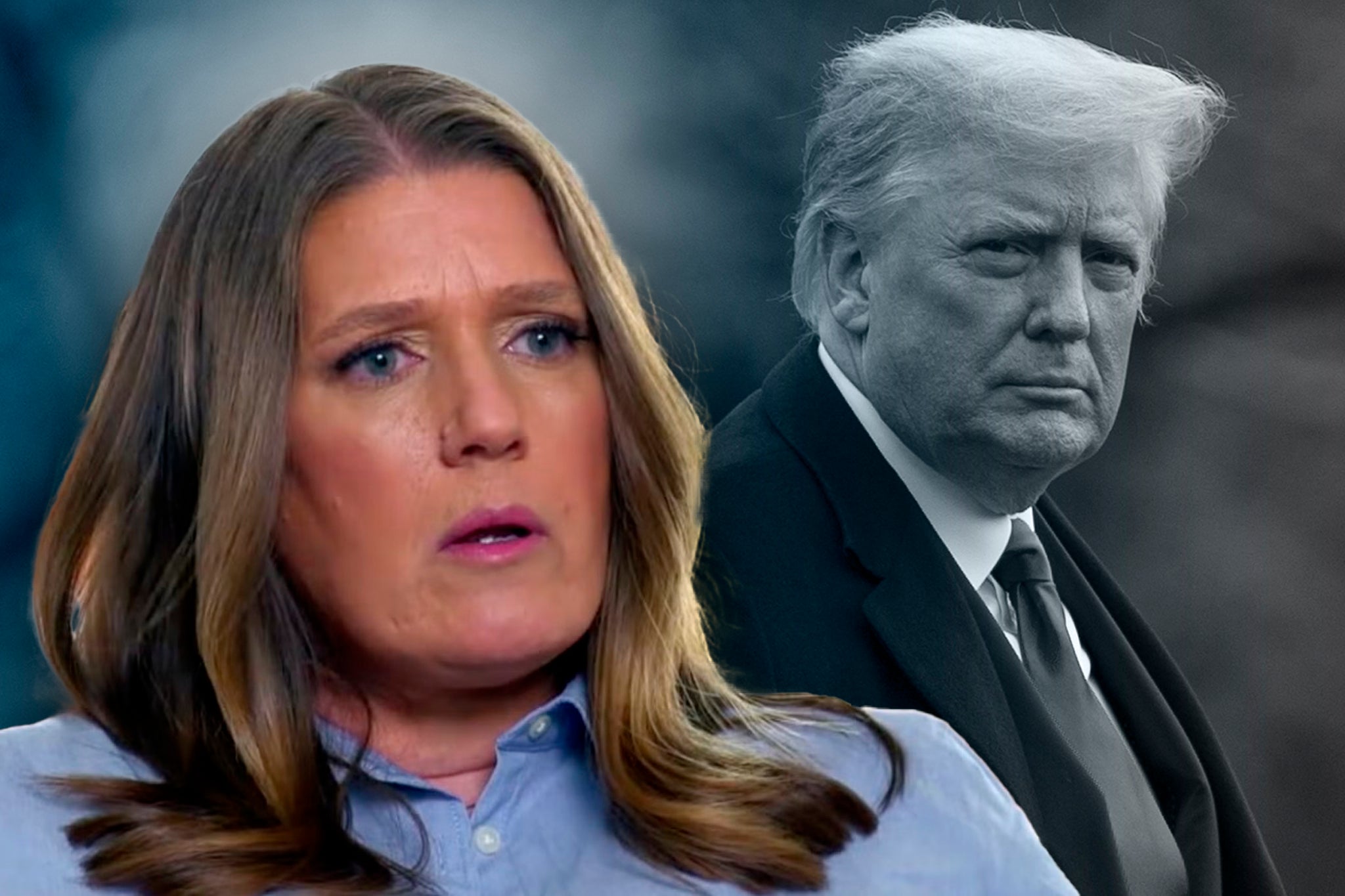
The public’s reaction is a case study in how we process uncomfortable health news about powerful figures. Some dismiss it as gossip, a reflection of our tendency to avoid difficult truths. Others seize on it, seeing confirmation of their own observations. This split reveals how our personal biases shape our reception of health-related information, even when it comes from a qualified source. Mary Trump has inadvertently held up a mirror, showing us how quickly facts about well-being can get lost in the noise of allegiance.
Forgetting the politics for a moment, the scenario presents a poignant question about well-being and responsibility. At what point does a family’s private concern become a legitimate public issue? When the person in question seeks the most powerful job on earth, the line blurrs completely. Mary Trump’s decision to speak out is a drastic example of the painful choices families face when they believe a loved one is a danger to themselves or others, even if that “danger” is to their own legacy and the country’s stability.
Ultimately, this story is a reminder that cognitive health is a human issue, not a political one. It challenges us to listen more carefully, to separate family drama from credible warning signs, and to consider the immense personal toll that living in the public eye can take. Whether one agrees with her or not, Mary Trump has framed her uncle’s story in the most human terms possible—not as a villain or a hero, but as a man whose own family is watching him change, and is afraid of what comes next.