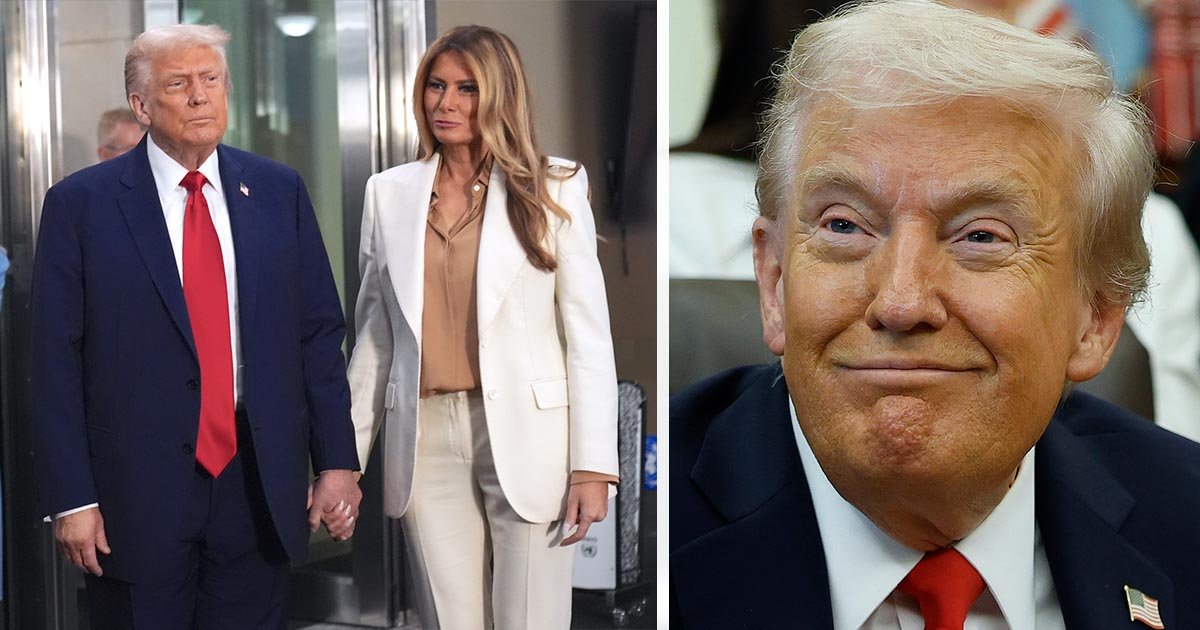
For every new president, the first entry into the White House as its occupant is a transition of profound personal and historical significance. It is the moment the abstract concept of winning an election becomes the tangible reality of living within a national monument. Donald Trump recently offered his own personal account of this experience, recalling the sense of surrealism that defined his and Melania’s first evening as residents of 1600 Pennsylvania Avenue.
The White House is far more than a home; it is a symbol of American democracy, with its halls and rooms echoing with the footsteps of past leaders. The residence comprises 132 rooms across six levels, each space imbued with its own legacy. For a new first family, acclimating to this environment is a unique challenge, balancing the need for private family life with the overwhelming presence of history in every corner.
Trump shared his memory at a recent public event, focusing on a specific, powerful moment. He described standing in the residential hallway with his wife, Melania, their attention captured by the doorway to the Lincoln Bedroom. To gaze upon a room so intimately connected to one of America’s most revered presidents was, for Trump, a disorienting and awe-inspiring experience. He articulated the feeling of disbelief that many must feel upon arriving, stating, “Do you believe this? We’re in the White House and that’s the Lincoln bedroom!”
This recollection stands in contrast to the various reports that have emerged about the Trumps’ daily life in the residence, including claims of separate bedrooms and unusual private rituals. While those reports detailed the personal habits of the inhabitants, Trump’s story touches on the universal awe of the presidency itself. It is a reminder that regardless of personal style or political affiliation, the office and its home can command a deep respect.
Trump concluded his reflection by acknowledging that it takes time to grow accustomed to life in the White House, and he suggested he may never have fully adjusted. His final remark, that the building is a “special place” that must be cared for, speaks to a sense of custodial duty shared by all its tenants. His anecdote provides a valuable insight into the human reaction to assuming one of the world’s most powerful roles and the immediate, humbling weight of its history.