Part 1 — The Silence After His Birth
I was twenty-four years old when I became a mother for the first time.
At least, that was what everyone would have called me.
But in those first frightening hours after my son was born, I did not feel like a mother at all.
I felt like someone standing outside her own life, watching everything happen through a pane of glass.
The night before I went into labor, I had barely slept.
I kept imagining the moment my baby would finally be placed against my chest.
For months, I had pictured his tiny fingers curling around mine. I imagined myself crying from happiness while my husband, Brian, leaned over the hospital bed and told me how beautiful our little boy was.
I had imagined noise.
Laughter.
Relief.
Congratulations.
Instead, when my son entered the world, the room became strangely still.
The change was immediate.
The doctor did not smile.
The nurses exchanged glances.
No one said the cheerful words I had expected to hear.
I remember turning my head from one face to another, confused and exhausted.
Something was wrong.
Then the doctor came closer.
His voice softened.
“Your baby has Down syndrome.”
The words reached me, but for several seconds they seemed to have no meaning.
I stared at him.
Down syndrome.
I knew the term, of course, but knowing a term and hearing it spoken about your newborn child are two very different things.
My mind suddenly filled with questions I could not organize.
What would his life look like?
Would he be healthy?
Would he be happy?
Would I know how to care for him?
Would I be enough?
But what frightened me almost as much as the diagnosis was the expression on everyone else’s faces.
They looked sorry for me.
That was what I remember most.
Not my son’s face.
Not his tiny hands.
The pity.
One nurse standing near my bed looked particularly emotional. Her eyes seemed to say that something precious had already been turned into something tragic before I had even been allowed to decide how I felt.
I looked toward Brian.
He was standing near the wall.
His face had gone pale.
“Brian?” I whispered.
He didn’t answer.
He did not move toward the bassinet.
He did not ask to hold our son.
He simply stared.
And somehow, his silence frightened me more than anything the doctor had said.
Part 2 — “We Can’t Do This”
Hours later, when the room was quieter and the medical staff had stepped away, Brian finally spoke.
“We can’t do this.”
At first, I thought I had misunderstood him.
“What?”
He rubbed both hands over his face.
“We’re twenty-four years old. We don’t know anything about this. We’re not prepared.”
I felt something tighten inside my chest.
“No first-time parents are prepared.”
“This is different.”
Different.
The word hung between us.
He began pacing beside the window.
“Our entire life would change.”
“Our life already changed,” I said quietly. “We just had a baby.”
He looked at me then, but there was no excitement in his expression.
Only fear.
“We aren’t ready for a life like this.”
A life like this.
I would remember those four words for years.
At the time, though, I was exhausted, sore, emotional, and terrified.
I needed someone beside me who would say, “We’ll learn.”
I needed someone to tell me we would figure things out one day at a time.
Instead, the person I trusted most seemed certain that keeping our baby would destroy everything.
And when you are frightened enough, another person’s certainty can begin to sound like wisdom.
By the following morning, Brian had already spoken with someone from the hospital.
A social worker arrived carrying documents.
She sat beside my bed and calmly explained several options.
I hardly heard her.
My eyes kept moving toward the door.
I wanted someone to bring my son back.
Brian remained beside me.
He did not take my hand.
“It doesn’t necessarily have to be permanent,” he said.
I turned toward him.
There was something about his voice that made my stomach twist.
He spoke as if we were discussing a temporary arrangement.
As if I simply needed time to recover.
As if the decision could somehow be undone whenever I was ready.
But somewhere inside me, beneath the panic and exhaustion, I knew better.
Goodbyes have a way of becoming permanent.
Before I signed anything, I asked to see my baby again.
The nurse brought him into the room.
He was sleeping.
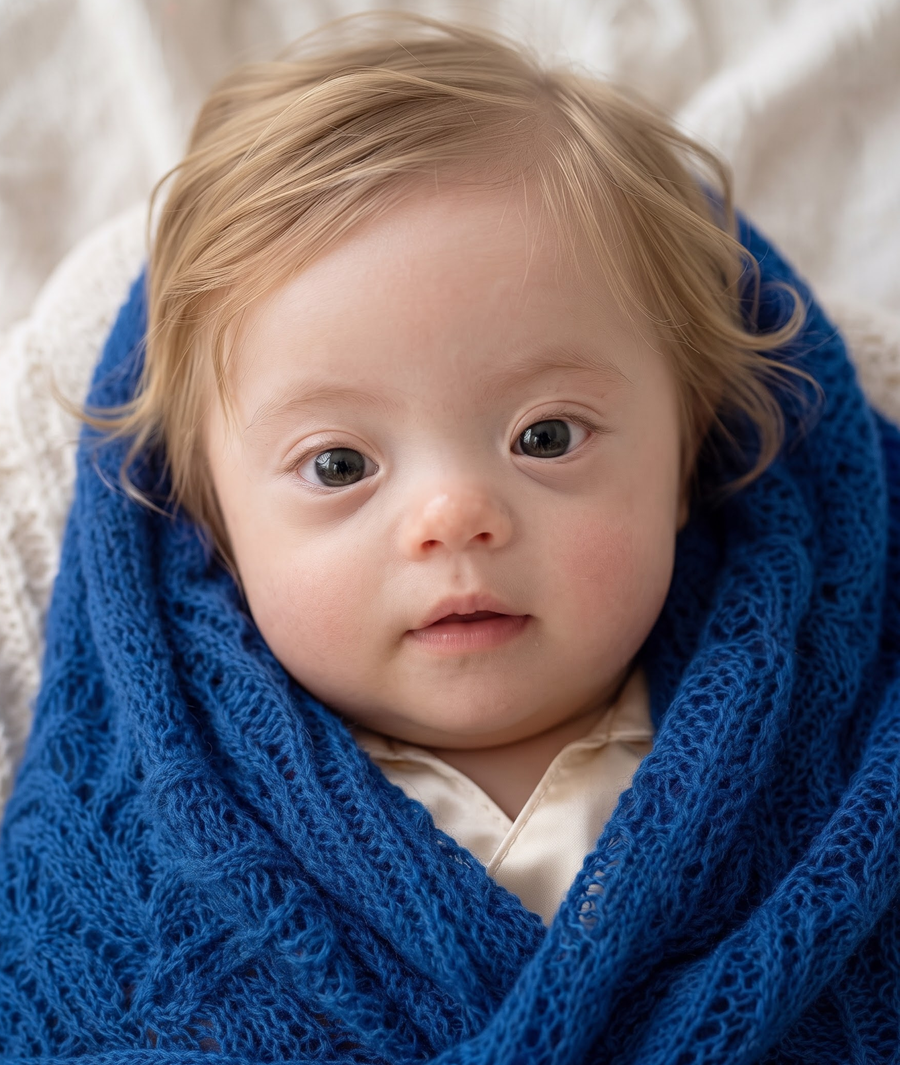
He looked unbelievably small beneath the blanket.
I studied his face.
There was no tragedy there.
There was only a baby.
My baby.
I reached down and touched his cheek.
He shifted slightly at the warmth of my fingers.
Something inside me screamed not to let go.
But another voice had become louder.
You’re too young.
You’re not prepared.
What kind of life can you give him?
Maybe letting him go is the loving thing.
Brian stood nearby.
I waited for him to tell me to stop.
To say we should reconsider.
He didn’t.
Eventually, the nurse took my son from my arms.
And I signed the papers.

Part 3 — The Empty Carrier
About an hour later, I left my hospital room.
The baby carrier hung from my arm.
Empty.
I had brought it with me only days earlier, excitedly imagining the first drive home with our son sleeping inside it.
Now every step caused it to bump against my leg.
It felt heavier empty than it ever could have felt with my baby inside.
Brian walked several steps behind me.
Neither of us spoke.
The maternity hallway seemed impossibly long.
Behind closed doors, I could hear newborn babies crying.
Families laughing.
Someone somewhere was taking photographs.
I kept my eyes on the floor.
Just keep walking, I told myself.
Don’t turn around.
If you turn around, you won’t be able to leave.
We were almost at the elevators when I heard footsteps rushing toward us.
Fast footsteps.
“Wait!”
I stopped.
The nurse who had cared for me after the delivery was hurrying down the hallway.
Her face was flushed.
Her eyes were red.
She looked as though she had been crying.
Brian immediately stiffened.
“What is it?” he asked.
But she barely looked at him.
She came directly to me.
“Please,” she said breathlessly. “Before you leave, there’s something you deserve to know.”
Brian stepped forward.
“This isn’t necessary.”
The nurse ignored him.
Her hands were shaking slightly as she held out a document.
I stared at it.
“What is that?”
“A social services report.”
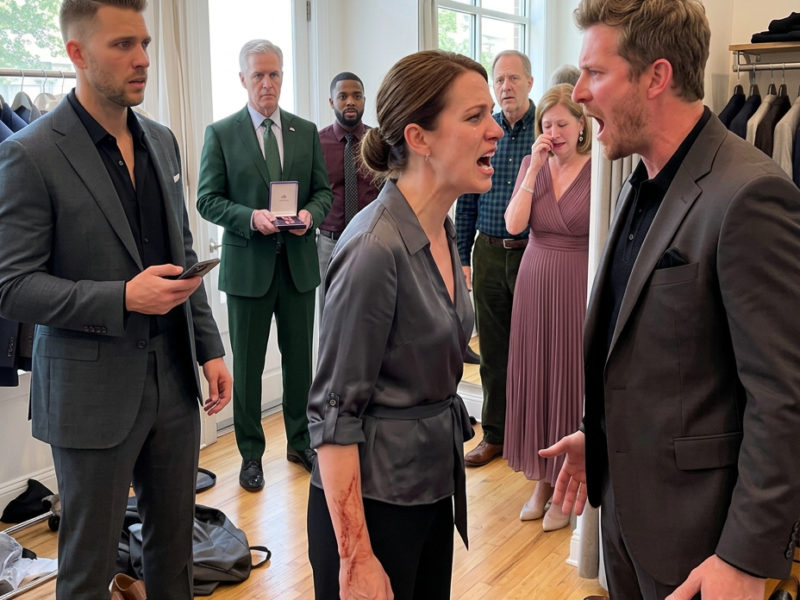
Brian’s expression changed.
And for the first time since my son had been born, I felt something other than fear.
Suspicion.
I took the paper.
Part 4 — What Brian Had Done
At first, I could barely understand what I was reading.
My mind was still foggy from the delivery, lack of sleep, and everything that had happened since.
Then one sentence caught my attention.
I read it twice.
Then a third time.
According to the report, my husband had specifically requested that hospital staff limit the baby’s visits with me.
I looked up.
“What does this mean?”
The nurse’s eyes filled with tears again.
“Your husband asked us to stop bringing your son into your room so often.”
I turned toward Brian.
He looked away.
My hands began to shake.
“You told them not to bring my baby to me?”
“I was trying to help you.”
“Help me?”
“You were emotional. You weren’t thinking clearly.”
The words struck me with astonishing force.
Because I had heard versions of them repeatedly since the birth.
Get some rest.
Don’t overwhelm yourself.
You’re exhausted.
Let me handle this.
Trust me.
I looked back at the document.
There was more.
The social worker had written that I appeared to be under significant pressure while making the decision.
Another section described my behavior whenever my son was brought into the room.
I had repeatedly asked to see him.
I had cried when he was taken away.
I had reached for him.
I had asked questions about feeding him, holding him, and staying close to him.
The report described something I had somehow stopped believing about myself.
I had wanted my child.
Not abstractly.
Not someday.
From the beginning.
I had wanted him beside me.
The nurse spoke carefully.
“Every time we brought him in, you reached for him.”
I could not speak.
“You asked about him constantly,” she continued. “You wanted to hold him longer. You asked when he would come back.”
I looked down at the empty carrier.
A horrifying realization began settling over me.
Perhaps I had not made this decision because I wanted to surrender my son.
Perhaps I had been terrified.
And someone I trusted had used that fear to convince me that giving him away was the only responsible choice.

Part 5 — Finding My Own Voice Again
Brian stepped closer.
“You’re making this sound terrible when it wasn’t. We made the decision together.”
I slowly turned toward him.
“We?”
“Yes.”
“No.”
My voice was barely louder than a whisper.
He frowned.
“We talked about this.”
“You talked.”
“That isn’t fair.”
I looked at the nurse.
Then at the report.
Then back at Brian.
Memories from the previous day came rushing back differently now.
Every time I had hesitated, Brian had been there with another reason.
Every time I wanted my son brought back, Brian encouraged me to sleep.
Every time I wondered if we could manage, Brian answered before I could finish the thought.
Eventually, his fear had become my fear.
His certainty had drowned out my instincts.
I had mistaken surrender for kindness because I had been told repeatedly that keeping my own child would be selfish.
The nurse moved closer.
Her voice was gentle.
“You still have time.”
I looked sharply at her.
“What?”
“The process isn’t complete.”
For a moment, the hallway disappeared around me.
I could hear only my heartbeat.
Brian shook his head.
“Don’t do this right now. You’re emotional.”
There it was again.
That sentence.
You aren’t thinking clearly.
But for the first time since the delivery, I was beginning to think clearly.
I looked directly at my husband.
There was one question I needed answered.
“Did you love him?”
Brian stared at me.
I swallowed.
“Our son. When you looked at him, even once… did you love him?”
His mouth opened slightly.
Then closed.
He said nothing.
I waited.
The nurse waited.
The hallway seemed completely silent.
Brian looked away.
And somehow, that silence told me everything.
Not necessarily about whether he was capable of loving our son someday.
But about what had guided every decision he had made since the birth.
Fear.
Not love.
Fear of inconvenience.
Fear of responsibility.
Fear of a future he had never imagined.
And I suddenly understood something that frightened me even more.
I had allowed his fear to become louder than my love.
Part 6 — “Take Me Back to My Son”
I looked down at the empty infant carrier.
Only hours earlier, I had thought carrying it out of the hospital was the hardest thing I would ever do.
Now I realized walking away would be harder.
Much harder.
I handed the carrier to the nurse.
She looked confused for a moment.
Then I took a long breath.
My entire body was trembling.
“Take me back.”
The nurse’s eyes widened.
“To your room?”
I shook my head.
“To my son.”
Behind me, Brian said my name.
I did not turn around.
For the first time since our baby had been born, I didn’t need him to tell me what to think.
I didn’t need him to reassure me.
I didn’t need permission.
I simply followed the nurse back down the hallway.
With every step, my fear was still there.
I was still twenty-four.
I still knew almost nothing about raising a child with Down syndrome.
I still didn’t know what challenges might wait for us.
I didn’t suddenly become fearless.
But something had changed.
For the first time, fear was no longer making the decision.
Love was.
When the nurse finally brought my son to me again, I began crying before she had even placed him in my arms.
I held him tightly against my chest.
He was warm.
Real.
Mine.
His small hand moved against my gown, and one of his fingers curled around mine.
That simple touch broke something open inside me.
“I am so sorry,” I whispered.
Not because of who he was.
Because I had almost left before learning who he could become.
I kissed his forehead.
“I don’t know how to do this,” I admitted through my tears.
The nurse stood beside the bed.
“Most mothers don’t at first.”
I gave a shaky laugh.
For once, those words comforted me.
I looked down at my son again.
I didn’t know what tomorrow would bring.
There would be doctors to speak with.
Questions to ask.
Support to find.
Things to learn.
And difficult conversations with Brian that I could no longer avoid.
But I knew one thing with absolute certainty.
I wanted the chance to know my child before fear decided his entire future for me.
That day taught me something I would never forget.
Sometimes we do not lose our voice all at once.
Sometimes it disappears gradually beneath the opinions, fears, and certainty of people around us.
And sometimes it takes only one person—a nurse, a friend, even a stranger—to remind us that the voice is still there.
Waiting.
That nurse did not make my decision for me.
She simply gave me enough truth to hear myself again.
And when I finally did, my heart had only one thing left to say:
Take me back to my son.
Note: This story is a work of fiction inspired by real events. Names, characters, and details have been altered. Any resemblance is coincidental. The author and publisher disclaim accuracy, liability, and responsibility for interpretations or reliance. All images are for illustration purposes only.