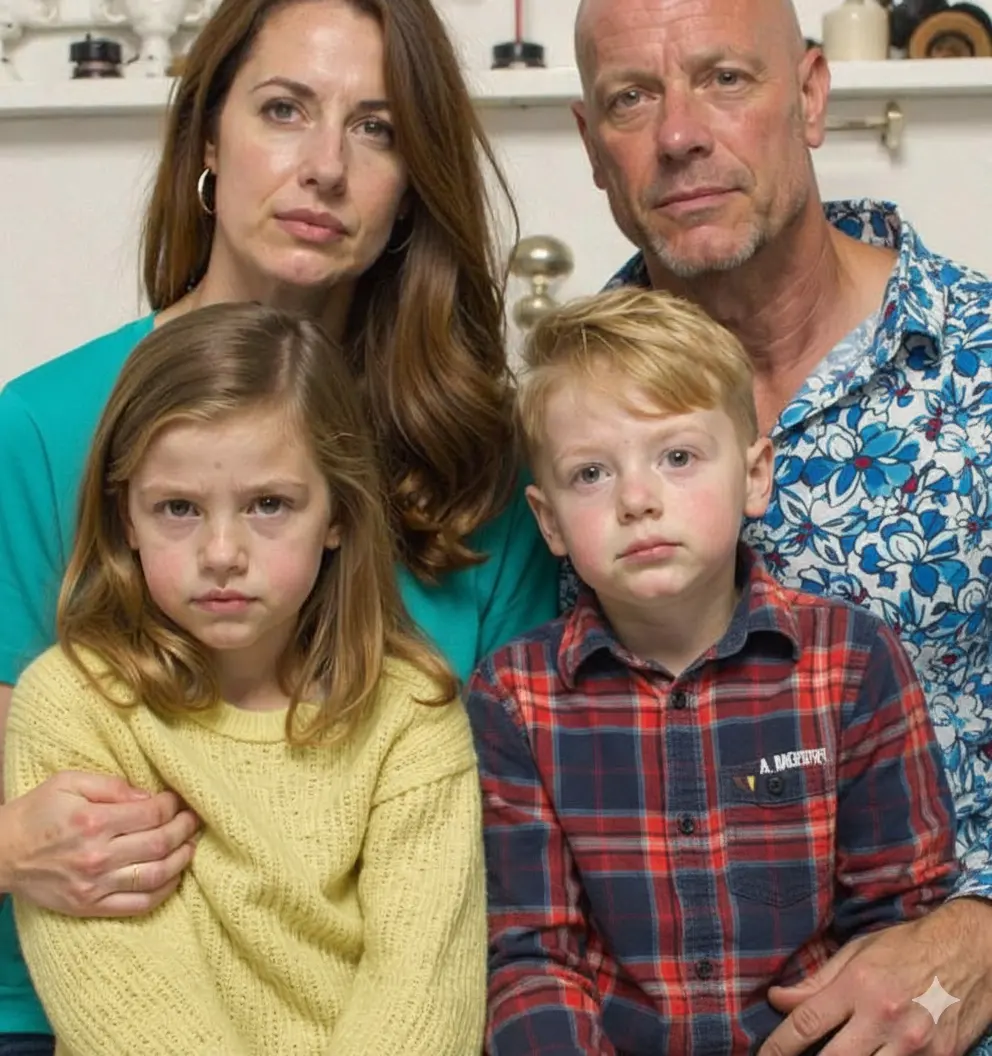
Marriage is often a negotiation, but for years, I didn’t know I was the only one conceding. My husband Eric and I had an unspoken contract: he brought home the paycheck, and I ran the entire universe of our home and two children. I handled the school runs, the homework, the sick days, the emotional needs—all while he decompressed from his workday. I told myself it was a fair division, until he decided to unilaterally amend the terms. He wanted a third child. To him, it was a celebration of our stability. To me, it was a sentence to more solitary labor.
The request laid bare a fundamental disconnect. When I expressed my exhaustion, he cited the hard work of “providing.” It was a shield he’d always used. But providing isn’t parenting. Parenting is showing up, knowing your child’s fears, losing sleep, and being present. He was a ghost in our family’s daily life. His mother and sister soon arrived to reinforce this outdated doctrine, framing my desire for partnership as criticism and my fatigue as a personal failing. They represented a chorus telling me to be quieter, to need less, to just endure.
The real turning point wasn’t the argument; it was the ultimatum. Fed up with my refusal to return to the silent, overwhelmed woman I once was, Eric commanded me to pack my bags and leave. In that moment, a strange clarity washed over me. His anger wasn’t about love; it was about control. He wanted the compliant wife back, not a partner with boundaries. So, I called his bluff. I would leave, I said, but our children would remain in the house. The parent who stayed would have to step into the full, relentless reality of care.
His reaction was instantaneous panic, then refusal. The man who demanded more children would not take sole responsibility for the two he already had for even a trial period. That refusal was the most honest thing he’d ever done. It proved that his vision of family was entirely dependent on my invisible labor. He didn’t want a larger family; he wanted a busier wife. With that truth laid bare, there was no path forward but out.
The legal process was a formality that finally recognized the work I’d always done. I was awarded the home, full custody, and support. People may wonder if standing my ground was worth the collapse of my marriage. But a marriage that requires one person to disappear into service isn’t a partnership—it’s an assignment. I didn’t end my family; I rescued it from a fiction. Now, my children are raised in a home where their mother’s worth is recognized, even if it had to be recognized by a court. Sometimes, walking away is the first real step toward the life you deserve.