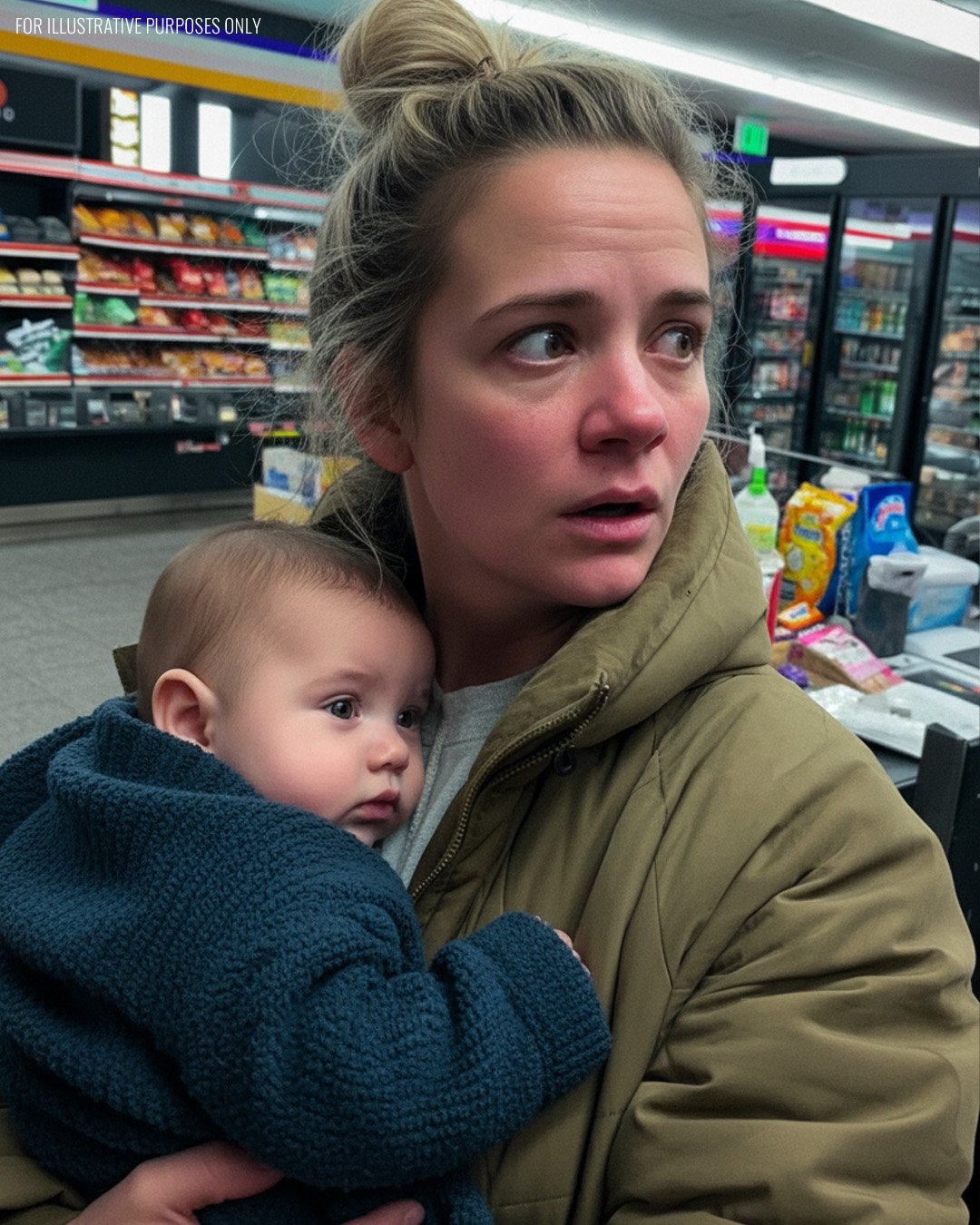
Life had downsized my expectations. After decades at a factory, a pink slip and a locked gate left me, Ross, starting over as a night clerk at a highway gas station. It was a quiet, often lonely job. One late evening, a young mother came in with a child asleep on her shoulder. Her exhaustion was palpable. She gathered a few basic items, and at the counter, her face crumpled as she realized she was four dollars short. She offered to put the diapers back. The words left my mouth before I could think: “It’s fine. I’ve got it.” I slipped my own money into the register and wished her a safe journey home. She left quickly, and I returned to stacking cigarettes, unaware that this tiny exchange had just altered a life.
A week later, an envelope arrived for me at work. Inside was a check for five thousand dollars and a note from the woman’s parents, expressing a depth of gratitude that left me reeling. They explained their daughter, Emily, had been escaping a dangerous marriage, and my small act of help was a beacon in her darkest hour. They invited me to their home. My wife, Lydia, hugged me tight when I showed her, her tears a mix of pride and relief. She saw what I had missed: in a season where I felt I had little to give, I had given something priceless.
Accepting their lunch invitation led me to a beautiful dining room and a story that reshaped my understanding of that night. Robert and Margaret, Emily’s parents, shared how their daughter had been isolated and controlled. The night she came to my station, she was making her desperate drive to freedom, to them. My refusal to let her put back the diapers was more than convenience; it was a restoration of her dignity. It told her that not all strangers were threats, that kindness still existed. For her parents, my action was the gentle hand that helped guide their family back together.
The financial gift they pressed upon me was life-changing for my own family, easing pressures that had become a constant weight. But the greater change was internal. I had viewed my job as an endpoint, a symbol of a career lost. This experience revealed it as a crossroads, a place where my presence could genuinely matter. The transaction wasn’t just milk and diapers; it was an exchange of hope. I learned that impact isn’t measured by the amount you give, but by the need you meet at the exact right moment. I still work those quiet night hours, but the silence feels different now. It’s filled with the potential for connection. I understand now that we all carry invisible battles, and sometimes, four dollars and a few kind words can be the unexpected currency of a fresh start.