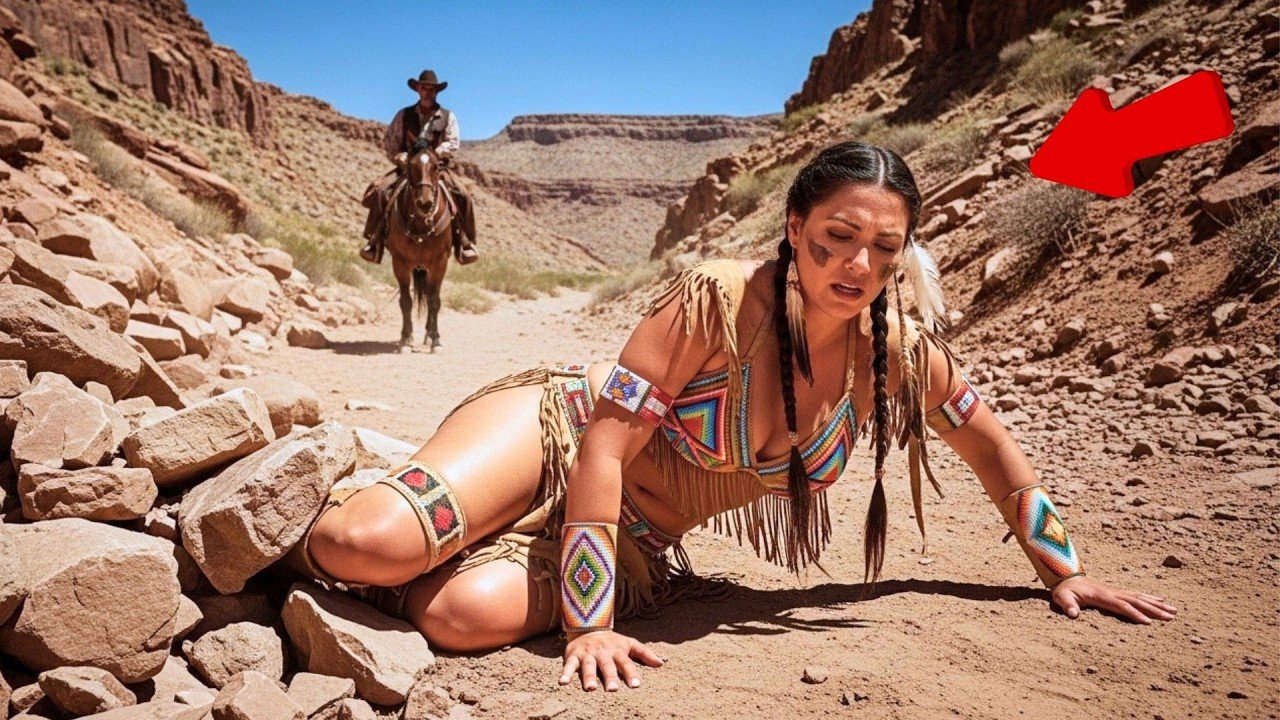
The canyon’s grip was merciless, but the promise Ayauna made in its shadow was one of fierce, desperate hope. When Cole Madrin found her and pried the stone from her leg, he was simply a good man doing a hard thing. He brought the injured woman to his isolated cabin, a place that reflected his own closed-off heart. As he tended her wounds, an unspoken tension grew, rooted in the vow she had yet to voice but which hung in the air between them.
During a simple meal, she finally gave it sound, telling him of her offer to bear a child for the man who saved her. Cole, hardened by a life that taught him to expect little, tried to dismiss it as the rambling of a trauma-addled mind. But Ayauna was clear-eyed. Her promise was not about repayment; it was about seizing a chance for a life of her own choosing, starkly contrasted against the fate her father had arranged with a heartless suitor. That fate arrived at the edge of Cole’s property, demanding she honor the wrong promise.
What happened next was a stand not of violence, but of will. Ayauna rose, defying the pain in her leg, and stood beside Cole. She publicly claimed her canyon vow as her own choice, transforming it from a secret pledge into a weapon against her past. Her raw honesty and Cole’s immovable, silent protection formed an alliance the two interlopers could not break. Faced with a daughter who was no longer a commodity and a man who would clearly die to defend her right to choose, her father backed down.
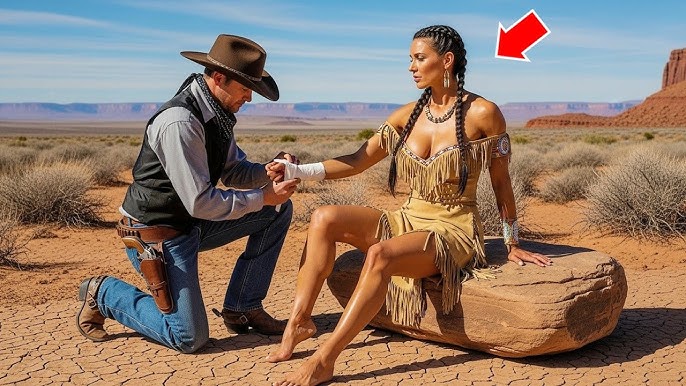
With the riders gone, a new and fragile peace descended. Cole, a man of few words, offered her the world in simple terms: her freedom, his partnership, or a shared future. The question of the promise hung between them, now stripped of desperation and full of potential. Her hand on his arm was her answer. This narrative is a powerful exploration of autonomy. It shows that the deepest bonds are often formed not in comfort, but in the courageous space where one person’s defense of another’s right to choose becomes the foundation for everything that follows.