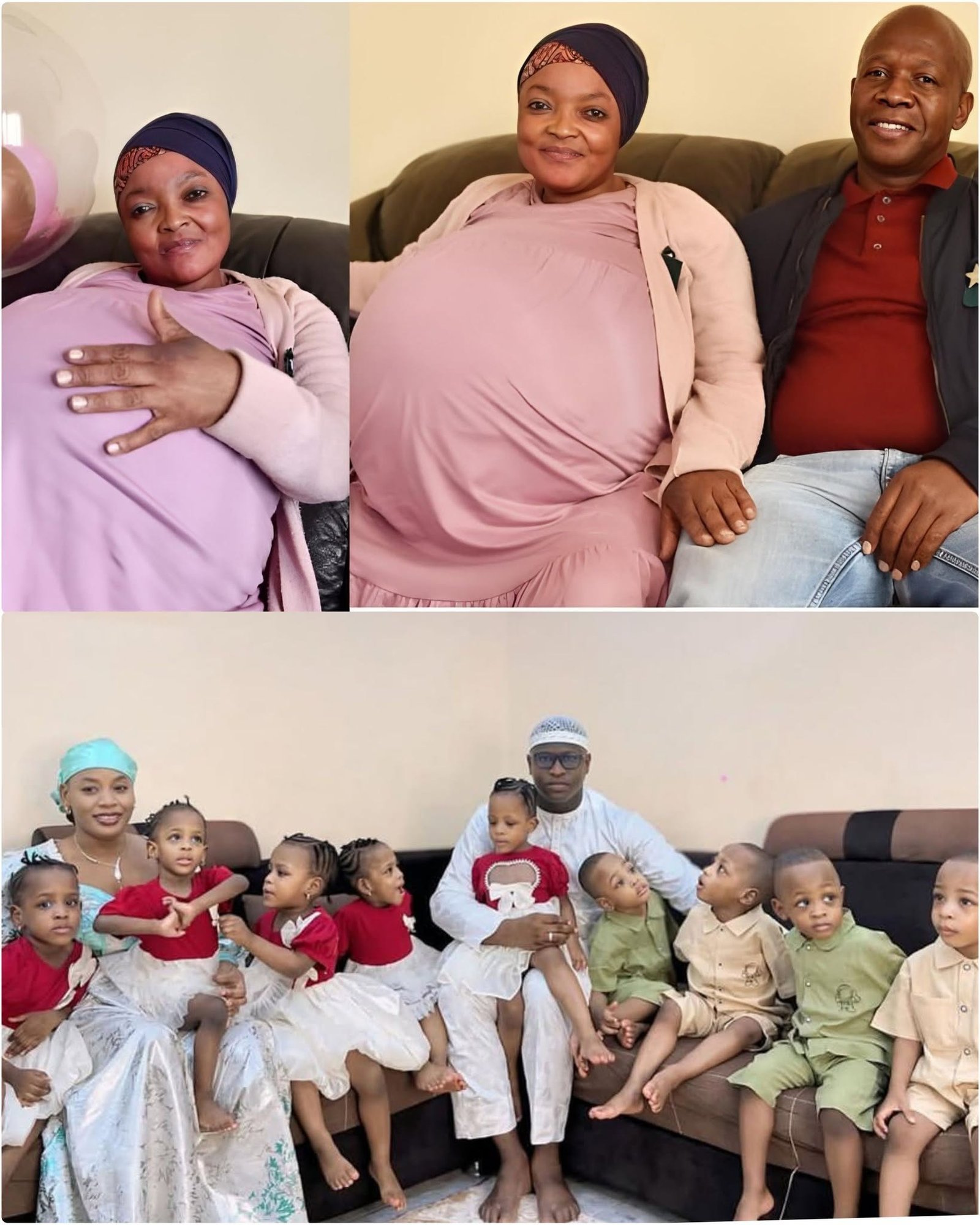
In the spring of 2021, the world’s attention suddenly turned toward Morocco after a story emerged from a hospital in Casablanca that seemed almost impossible to believe. It was not a story about fame, wealth, or power. It was the story of an ordinary young woman whose pregnancy would become one of the most extraordinary medical events of the modern era. Her name was Halima Cissé, a 25-year-old woman from Mali who never imagined that her journey into motherhood would place her at the center of worldwide attention. Like many women expecting a child, Halima began her pregnancy filled with hope, excitement, and uncertainty. But very early, doctors realized that this was not a typical pregnancy. Medical examinations revealed that she was carrying multiple babies, and initial ultrasounds suggested there were seven children developing inside her womb. Even that discovery was considered extremely rare. A pregnancy involving seven babies presented enormous challenges and required constant medical observation because carrying so many children at once placed extraordinary demands on the mother’s body and created serious risks for the babies. Doctors carefully monitored every stage, knowing that every additional day of pregnancy could improve the children’s chances of survival, but also understanding that complications could appear at any moment. Then came the discovery that shocked everyone involved. The number was not seven. It was nine. Five girls and four boys were growing inside Halima. The news left doctors amazed because naturally occurring pregnancies involving nine babies are extraordinarily uncommon. Suddenly, this was no longer just a medical case being followed by specialists. It had become a moment that captured global attention. Yet behind the headlines and statistics was a young mother facing an overwhelming reality. She was not thinking about records or history. She was thinking about nine tiny lives depending on her and the medical team around her. The world saw a miracle. Halima saw her children waiting to be born.
The pregnancy quickly became a test of patience, preparation, and hope. Doctors understood that the goal was not simply to deliver the babies, but to give each child the strongest possible chance of surviving. Multiple pregnancies are always complicated, and a pregnancy involving nine babies created challenges unlike almost anything medical teams encounter. Every decision required careful planning. Every examination carried importance. Every additional week inside the womb represented another opportunity for growth. Halima’s body was carrying a responsibility that few mothers in history had experienced. She carried not only the physical weight of nine babies but also the emotional weight of knowing that the world was watching. However, throughout the uncertainty, she remained focused on the same dream shared by mothers everywhere: to hold her children safely in her arms.
A Race Against Time To Protect Ten Lives
By the time Halima reached approximately 30 weeks of pregnancy, doctors knew they could not wait much longer. The medical team faced a difficult decision. Continuing the pregnancy carried risks, but delivering the babies too early also created serious challenges. The priority was protecting both Halima and the nine children she carried. In May 2021, preparations began for one of the most carefully planned births ever attempted. At a hospital in Casablanca, doctors, nurses, and specialists gathered together knowing that every second would matter. This was not a normal delivery room. It was a place where preparation had to meet uncertainty. Nine newborn care stations were prepared. Incubators were arranged. Medical specialists stood ready. The team understood that after birth, the smallest details could determine whether these fragile babies survived.
Then the delivery began. The first baby arrived. Then another. Then another. The room remained focused as the medical staff carefully welcomed each newborn into the world. Five daughters. Four sons. Nine babies. The doctors counted carefully, then counted again. There was no mistake. Halima had truly given birth to nine children. Each baby weighed just over one kilogram, incredibly small and vulnerable. Their first moments were not spent in their mother’s arms but inside incubators where machines helped support their fragile bodies. For many parents, the first image after birth is holding their newborn child. For Halima, the first image was watching nine tiny lives fight for strength. It was a moment filled with both joy and fear. She had achieved what many thought was impossible, but the journey was far from over.
The birth itself became a historic moment, but doctors knew that survival would depend on what happened afterward. The next weeks would test the strength of the babies, the dedication of the medical staff, and the patience of a family waiting for the day when they could finally bring their children home.

The Months When Every Breath Was A Victory
After their birth, the nine babies entered neonatal intensive care, beginning a long and uncertain journey. They were alive, but they were extremely fragile. Babies born at such an early stage often face challenges because their lungs, immune systems, and other organs are still developing. For Halima’s children, those challenges existed nine times over. Every day inside the hospital became a battle measured in small victories. A little more weight gained. A stronger heartbeat. A successful feeding. A stable breathing pattern. To outsiders, these moments might have seemed ordinary. To the doctors and nurses caring for them, they were signs of progress.
The neonatal intensive care unit became a second home for the babies. Nurses watched them around the clock, carefully recording every change. Feeding schedules were calculated with precision because even a small difference mattered. Medical equipment surrounded them, helping their tiny bodies continue developing. Behind the scenes, countless hours of work were dedicated to ensuring that each child received individual attention.
For Halima, the waiting was both beautiful and painful. She had dreamed of holding her children, but instead she had to watch them grow stronger from a distance. Like any mother, she wanted to protect them herself, but she also understood that the medical team was giving them the greatest gift possible: time.
The world often describes extraordinary births as miracles, but miracles rarely happen without human effort. Behind this story were doctors making difficult decisions, nurses offering endless care, and a mother refusing to lose hope. The survival of nine babies was not one single moment. It was thousands of moments connected together, each one representing dedication and determination.
Slowly, the babies grew stronger. Their bodies adapted. Their chances improved. The day everyone had been waiting for finally came closer.
Nine Babies Who Captured The World’s Attention
When news of Halima Cissé and her nine children spread around the world, millions of people followed their journey. In a time when many stories focused on uncertainty and hardship, their survival offered something different: a story of hope. Photographs of nine tiny babies resting in their hospital beds touched people everywhere. The image of nine lives beginning together became unforgettable.
People were amazed by the number of children, but the deeper meaning of the story went beyond the record. These were not simply nine babies born at once. They were nine individual human beings beginning their own journeys. They represented the determination of a family, the commitment of medical workers, and the power of collective care.
When the children were finally strong enough to leave the hospital, the moment represented the end of one chapter and the beginning of another. After months surrounded by medical equipment, they were finally able to experience life outside the hospital walls. The family could begin building a new routine, one filled with the challenges and joys of raising nine children.
The world continued watching, but the family’s focus remained simple. They were no longer only a medical story. They were parents raising children. They were siblings growing together. They were a family creating memories beyond the extraordinary circumstances of their birth.
Their story had started with uncertainty, but it had transformed into something much more powerful: proof that hope can survive even the most unlikely beginnings.
A Record Beyond Numbers
The birth of Halima Cissé’s nine babies was officially recognized by Guinness World Records as the highest number of babies from a single delivery to survive. The achievement placed their names in history, but for their family, the record was never the most important part of the story.
A record is measured by numbers.
A family is measured by love.
Behind the world record were countless personal moments that mattered far more than statistics. The first smiles. The first steps. The first sounds. The everyday experiences that parents treasure. For Halima and her family, these were the true milestones.
The public saw nine babies born at once. Their parents saw nine unique personalities. Nine children with different dreams, different strengths, and different futures.
The story also reminded the world that medical achievements are not only about technology. They are about people. They are about the doctors who dedicate their lives to saving others, the nurses who provide care during the most difficult moments, and the families who continue believing even when the outcome is uncertain.
The record brought attention, but the human story created meaning.

The People Behind The Miracle
Extraordinary outcomes are often described as miracles, but behind every miracle are people who work tirelessly to make it possible. The survival of Halima’s nine children was the result of cooperation between many individuals who shared one goal: protecting life.
The doctors who monitored the pregnancy had to make difficult decisions. The specialists who prepared for the delivery understood the risks involved. The nurses who cared for the babies provided constant attention during their most vulnerable days.
Their work required patience, knowledge, and compassion.
At the same time, Halima’s strength remained at the center of the story. She experienced a journey that few mothers ever will. She carried nine children, faced uncertainty, and waited through months of medical challenges. Yet throughout everything, she continued forward with hope.
Her story showed that motherhood is not defined only by easy moments. Sometimes love means waiting. Sometimes love means trusting others. Sometimes love means believing when the future is unclear.
The nine babies survived because many people refused to give up.
Nine Lives, One Unforgettable Story
Today, the story of Halima Cissé and her nine children remains one of the most remarkable birth stories ever recorded. What began as a medical mystery became a symbol of resilience, determination, and the extraordinary possibilities of human life.
The image that remains strongest is not only the operating room or the world record announcement. It is the image of nine small cribs standing together. Nine tiny hearts beating. Nine children who entered the world facing challenges but continued moving forward.
Their story reminds us that history is not only made by famous people or great events. Sometimes history is created quietly, inside a hospital room, through the courage of a mother and the dedication of people who choose to protect fragile lives.
Halima’s journey showed the world something unforgettable. Nature can surprise us. Medicine can be challenged. Human beings can face impossible situations and still find a way forward.
The birth of nine children was not only a record.
It was a reminder of hope.
A reminder that every life matters.
And a reminder that sometimes the most extraordinary stories begin with the smallest hearts fighting to survive.