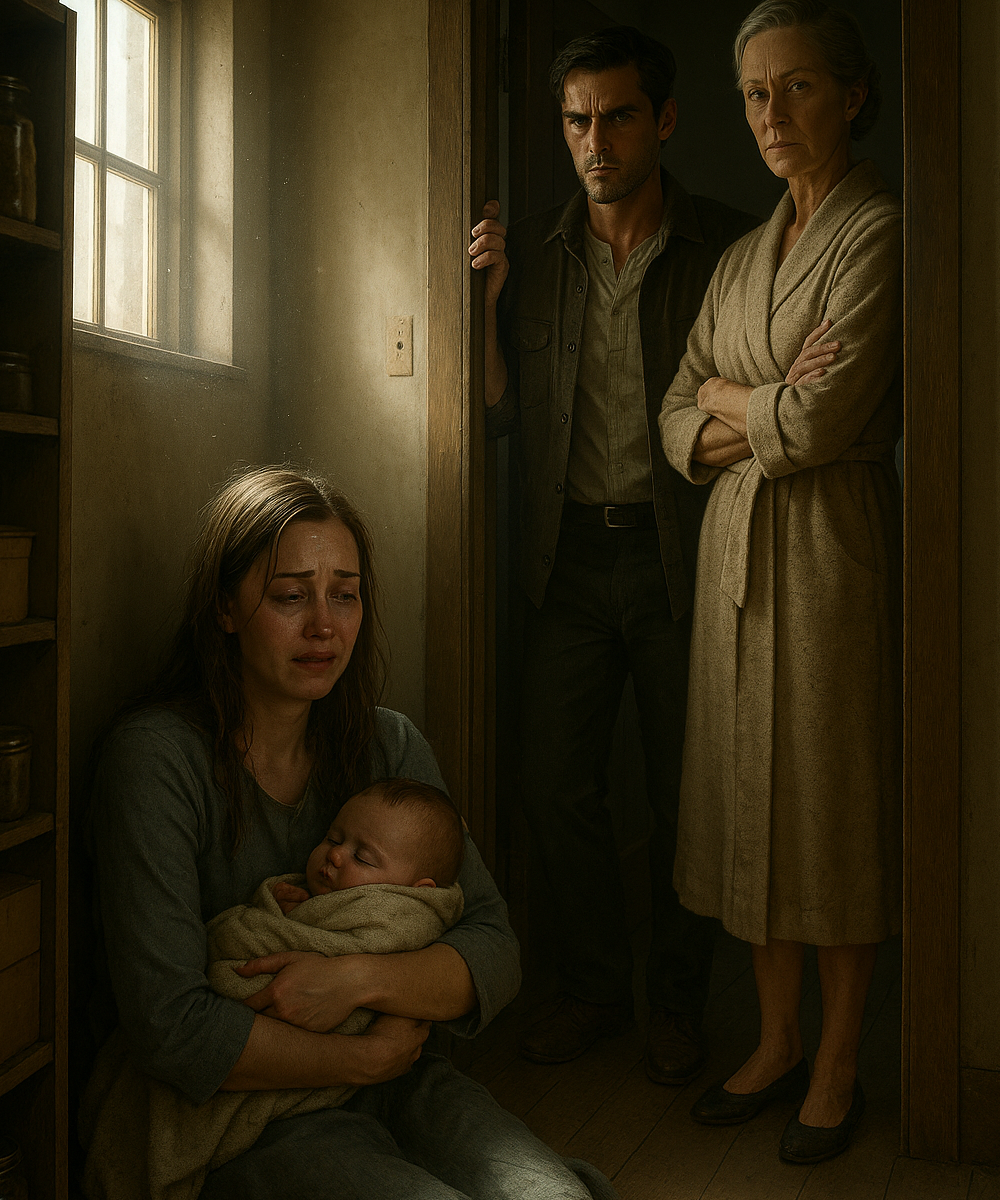
Sometimes, the darkest room can be the one that finally lets in the light. For Anita, that room was a barren storeroom, a punishment from her husband, Raj, for daring to have a voice. After a night spent nursing her feverish son, she had refused an order from her mother-in-law to cook for guests. Her quiet, exhausted protest—”I am your daughter-in-law, not your servant”—was met not with understanding, but with humiliation. Dragged and locked away, she was meant to learn a lesson in obedience. Instead, she learned the final, painful lesson of her marriage’s worth.
Anita’s story is one so many women will recognize. She left her city and family for love, promising to integrate into Raj’s world. She endured the subtle jabs and the controlling behavior of her mother-in-law, Sharda, who never saw her as a true part of the family. The birth of her son should have been a joyful anchor, but it instead became a battleground. Every decision was questioned, every moment of motherhood scrutinized. Raj, the man who vowed to be her partner, consistently became her judge, always ruling in his mother’s favor.
That final night in the storeroom, stripped of even a blanket, was the culmination of a thousand smaller cuts. The cold floor was a harder truth than any she had faced: she was not valued, she was not loved, she was owned. In that darkness, a resolve stronger than fear was born. With the help of a kind neighbor who saw her distress, she made a choice. She would walk away from the house that was never her home, toward the distant, uncertain sanctuary of her parents, clutching her son, her most precious responsibility.
The divorce papers she filed were not an act of vengeance, but a declaration of self-worth. The reason stated clearly: mental cruelty. It was a legal and final way of stating that she would no longer be treated as less than human. When Raj called, pleading, she was no longer the tired, pleading woman he remembered. Her voice was steady, her path clear. She had moved from being a victim of her circumstances to the architect of her own future.
Anita’s story does not end with a reconciliation. It ends with her reclaiming her life and the life of her child. It is a powerful reminder that respect is not given, it is earned, and when it is consistently denied, the strongest action a person can take is to walk away. The locked storeroom door was meant to confine her, but it ultimately became the door she walked through to find her freedom and her voice.