WHEN A 15-YEAR-OLD HITCHHIKER STEPPED INTO A VAN THAT WOULD CHANGE EVERYTHING FOREVER
On September 29, 1978, in Berkeley, California, the late afternoon light carried a calm that would later feel almost offensive in its normality. Teenagers moved through sidewalks, buses rolled past intersections, and life continued in the ordinary rhythm of a city that had no reason to anticipate what was about to be taken from it.
A 15-year-old girl stood near the roadside, trying to catch a ride south toward Los Angeles. Her name was Mary Vincent. She was not a stranger to motion or performance—by the age of 13 she had already danced onstage at the Miss Universe pageant in Las Vegas, a brief moment of spotlight that suggested a future still open, still forming, still negotiable.
But behind that surface of potential was a reality shaped by instability. A broken home. A search for direction. The quiet resilience of someone too young to fully understand risk, yet old enough to believe she could navigate it.
That afternoon, when a blue utility van stopped nearby, it seemed like nothing more than chance intersecting with necessity.
There were other men on the road. The driver, a 50-year-old named Lawrence Singleton, said only one passenger could fit.
The others warned her not to go.
But exhaustion, youth, and the illusion of normalcy often outweigh warning.
Mary Vincent got into the van.
And history shifted without announcing itself.
WHEN THE ROAD TURNS QUIET AND THE WORLD BEHIND YOU DISAPPEARS
At first, nothing appeared unusual. The van moved along familiar highways, carrying the ordinary illusion of safety that strangers sometimes rely on when they choose trust over caution. Conversations were minimal. The landscape outside continued unchanged.
But somewhere along that route, something shifted.
The vehicle changed direction.
The desert replaced the road.
And the sense of distance between intention and reality became suddenly, irreversibly visible.
Mary asked to be turned back.
The van stopped.
And for a brief moment, the story could have ended differently—an exit point, a return to safety, a correction of judgment made too late.
She stepped out.
She bent down to tie her shoe.
And in that small, ordinary gesture, time fractured.
It was the last moment she would ever use her hands in the way she once knew.

WHEN VIOLENCE BREAKS FORM AND BECOMES SOMETHING THE HUMAN MIND STRUGGLES TO CONTAIN
What followed does not belong to easy narration. It belongs instead to forensic record, to legal documentation, to the kind of language that tries and fails to fully capture the scale of harm.
Mary Vincent was attacked with brutal force and subjected to violence that would later define one of the most widely discussed criminal cases in California history. She was left unconscious, then injured again in a manner that permanently changed her body and her future.
And then, before dawn, she was discarded.
Down a ravine.
Into a drainage culvert.
Into darkness that was meant to ensure silence.
Her attacker believed the outcome was complete.
A disappearance.
A body that would not be identified.
A crime without continuation.
But what he did not account for was not just survival.
It was decision.
WHEN SURVIVAL BEGINS WHERE MOST STORIES END
Mary Vincent was conscious when she should not have been.
Lying in the cold desert terrain, injured and alone, she recalled something she had learned years earlier while living in the Philippines—a fragment of survival knowledge passed down in a different context, under entirely different circumstances.
If bleeding cannot be stopped, pressure and earth can slow it.
So she pressed what remained of her injuries into the ground.
And then she stood.
The act itself defies simple explanation. Medical professionals later described it as physiologically extraordinary. But survival is not always a matter of explanation. Sometimes it is a matter of refusal.
She climbed out of the ravine.
Thirty feet upward.
Without assistance.
Without certainty.
Without guarantee that anything waited for her at the top except more distance from safety.
And when she reached the roadside, she did not collapse into disappearance.
She began to walk.

WHEN 3.9 MILES BECOME A TEST OF HUMAN LIMITS
The distance Mary Vincent covered that night—approximately 3.9 miles along Interstate 5—has become one of the most frequently cited elements of her story. But distance alone does not capture what those miles represented.
Each step was negotiation between pain and persistence.
Between shock and awareness.
Between the body that had been changed and the mind that refused to abandon it.
When she was finally discovered by a passing couple, she was still alive. Barely. But unmistakably present.
Emergency response transported her to medical care where her survival became both a clinical focus and a public shockwave. Her condition defied expectation not because survival was impossible, but because it had persisted through conditions that statistically should have ended it.
But even then, the story was not finished.
Because survival was only the beginning of what she would choose next.
WHEN MEMORY BECOMES TESTIMONY AND TESTIMONY BECOMES POWER
In the hospital, Mary Vincent worked with law enforcement to provide a description of her attacker. The detail and precision of her recollection became a critical factor in the investigation that followed. Within a short period of time, the suspect was identified and arrested after being recognized from the police sketch.
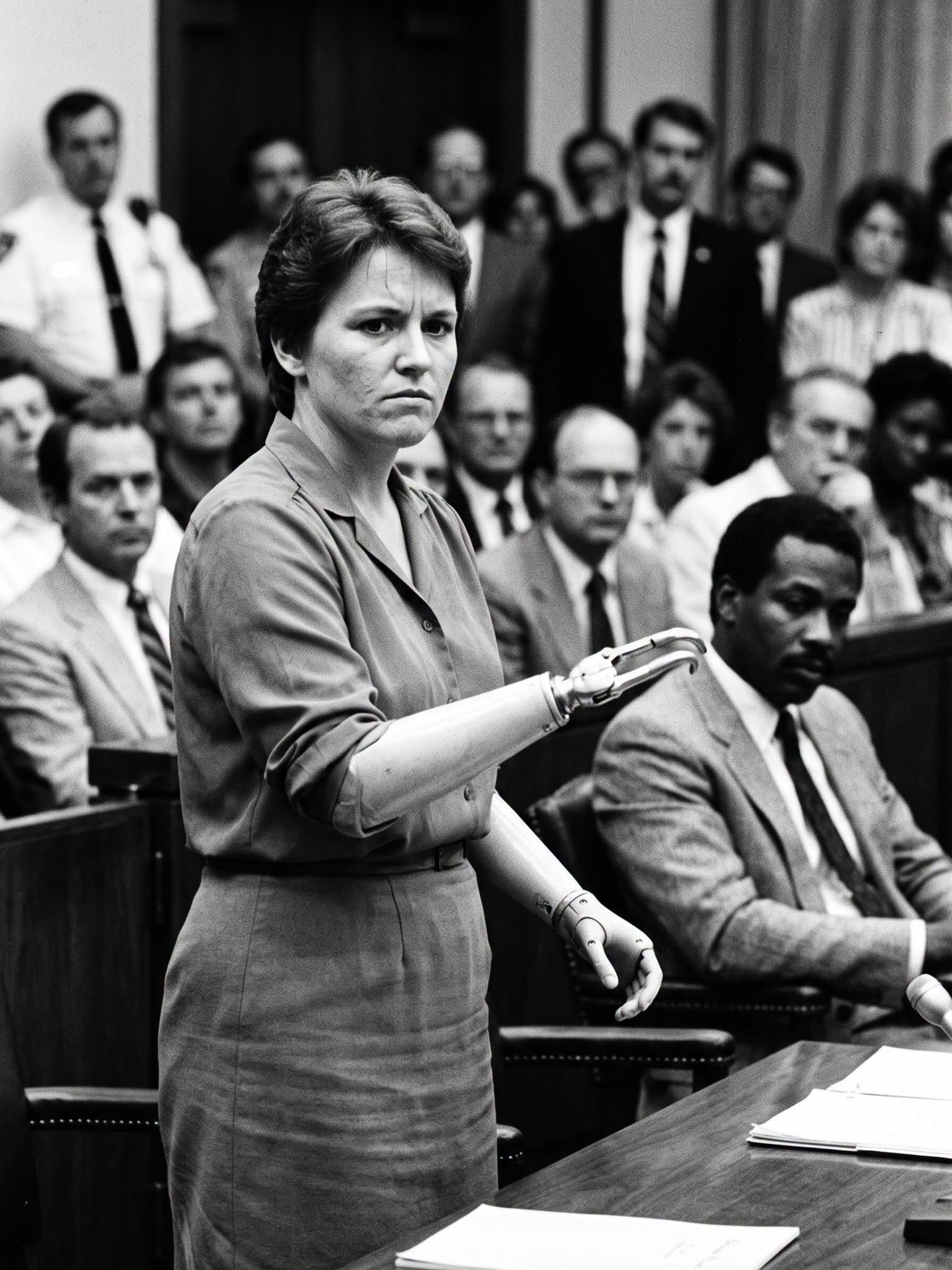
The case moved into the legal system, where Mary would later confront the man responsible for her attack in court.
She refused to refer to him by name.
She called him only “my attacker.”
In that refusal, there was no theatricality. There was structure. A decision to define the relationship through truth rather than acknowledgment of identity.
The courtroom became not just a legal space, but a site of controlled confrontation between memory and denial, between testimony and consequence.
And in that space, she stood as both witness and survivor.
WHEN JUSTICE BECOMES A PROCESS WITHOUT FULL CLOSURE
The legal outcome of the case brought conviction for rape, attempted murder, and mayhem. The sentencing reflected the constraints of the legal system at the time, which would later become a point of significant public discussion and reform efforts.
Public reaction was intense. The limitations of sentencing, the inadequacy of punishment relative to harm, and the broader implications for victim protection became part of a wider conversation that extended beyond a single case.
Mary Vincent, meanwhile, continued to live within the reality of what had happened to her.
Recovery was not linear.
It was layered with psychological trauma, physical adaptation, and the long process of rebuilding daily life under conditions that had fundamentally changed.
Yet within that process, something unexpected emerged.
WHEN CREATION RETURNS WHERE LOSS ONCE DOMINATED
In the years following the attack, Mary Vincent discovered an ability she had not previously recognized: visual art. Working with prosthetic adaptations, she began creating pastel works that reflected color, form, and emotional intensity.
Her subjects were often women—portraits that carried strength, presence, and individuality. The work was not framed as tragedy. It was framed as expression.
In creating, she did not erase what had happened.
She transformed what remained.
Later, when her attacker reoffended years later in a separate case that led to another murder conviction, Mary was called back into the legal process as a witness.
She returned.
Not because she was required to relive the past.
But because she chose not to leave it unspoken.
WHEN A LIFE BECOMES MORE THAN THE MOMENT IT WAS BROKEN
Over time, Mary Vincent’s story became widely known not only because of the violence she survived, but because of what she built afterward. Advocacy, public speaking, legal reform engagement, and survivor support work became part of her long-term presence in public life.
She raised children. She experienced instability, recovery, and rebuilding. She lived through periods of uncertainty that mirrored many survivors of violent trauma who are often left navigating systems that do not fully account for long-term impact.
And yet, through all of it, she maintained a consistent position regarding her experience.
Not defined by it.
Not erased by it.
But acknowledged as part of a larger life that continued forward.
When asked years later about endurance, she described it not as triumph in a traditional sense, but as continuity.
The ability to continue existing without surrendering meaning.
WHEN THE STORY DOES NOT END WITH WHAT WAS TAKEN — BUT WITH WHAT REMAINS
The story of Mary Vincent is often summarized in fragments: survival, testimony, identification, justice, and aftermath. But those fragments do not fully represent what her life demonstrates.
It is not simply a narrative of violence endured.
It is a record of persistence that refuses to conform to expectation.
A body that survived when it should not have.
A voice that spoke when silence would have been easier.
A life that continued not in spite of what happened, but alongside it.
And perhaps most importantly, a reminder that survival is not the end point of a story like this.
It is the beginning of everything that comes after.