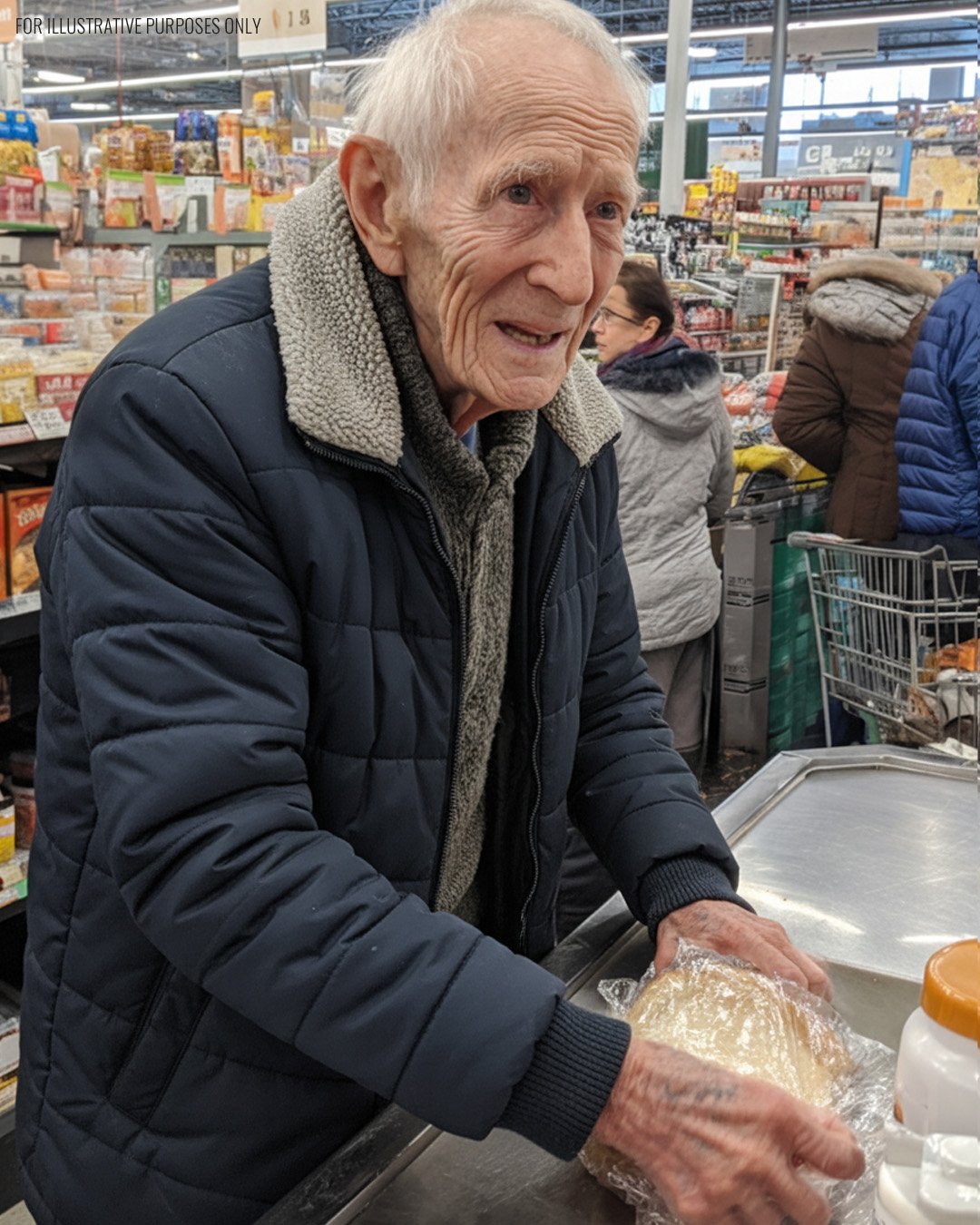
The Thursday evening grocery run was the last item on a crushing list. As a nurse, a single mother of two teens, and the sole keeper of a household still finding its footing after divorce, I was running on fumes. The store lights hummed, carts clattered, and all I wanted was to escape. Then I saw him in the express lane—an elderly man with three basic items. When his payment failed, the atmosphere turned cold with the impatience of strangers. His embarrassed flush, his soft offer to put everything back, struck a chord of shared humanity. Without overthinking, I intervened. “I’ve got it,” I said, adding a chocolate bar on a whim, citing a silly family rule. His profound, whispered thanks felt like a gift to me in my own state of weariness.
I thought that was the end of it. A ten-dollar moment of grace in a hectic week. But two days later, a determined woman named Martha was at my door. She was Dalton’s granddaughter. Using store security footage and the help of the manager—who remembered me from a time I’d helped his wife—she had tracked me down. Her grandfather was dying, and his final wish was to thank me in person. The request was so solemn and unexpected that I went with her immediately, leaving my confused daughters with a promise to explain later.
Dalton’s home was quiet and filled with the scent of old books. He was frail in his bed, but his gaze was sharp. He explained that his apparent need was a deliberate choice, a way to discern genuine kindness in a busy world. “You just helped,” he said, his voice thin but firm. “You saw a person, not a problem.” He handed me a sealed envelope, a gesture of gratitude with “no strings.” I sat with him, holding his hand in the quiet of the room until he passed. It was a sacred, heartbreaking privilege.
Later, in the car, I opened the envelope. The figure on the check stole my breath: $100,000. Tears welled up, a mix of shock and overwhelming relief for the financial pressures that had been my constant shadow. Martha drove me home in a respectful silence. My daughters were waiting, curious and concerned. I sat them down and recounted the entire story—the grocery line, the kind man, his final act of incredible generosity. Their amazement mirrored my own. That night, we celebrated Dalton’s memory not with somberness, but with joy, going out for a fun, ridiculous dinner. His gift was more than money; it was a testament that compassion is never wasted, and that sometimes, the universe returns a simple act of kindness a thousandfold, just when you need it most.