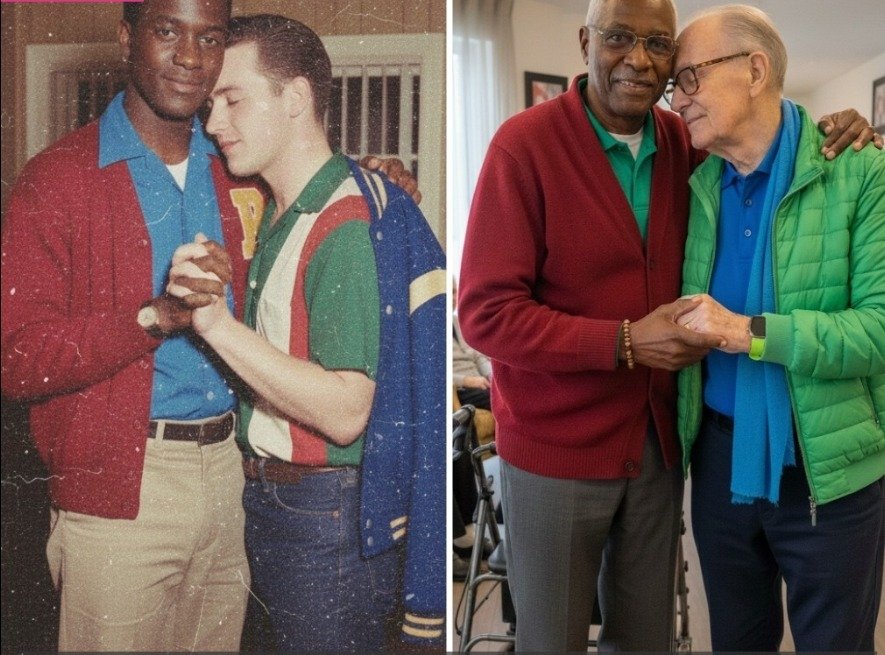
Sometimes the most important lessons aren’t on the syllabus. In 1965, in a stuffy college tutoring room, I learned one from a man named James. He was helping me solve for *x*, but he ended up teaching me about integrity, courage, and the cost of conformity. James was a Black student tutoring a room of white peers, a quiet act of defiance in a segregated South. His intelligence was a given; his kindness, a gift. Our sessions spilled over into real conversations, and a friendship blossomed in the unlikeliest of soils. We found a secret spot by a lake, a neutral territory where we could just be—two young men debating music and sharing hopes, away from the judging eyes of a society obsessed with division.
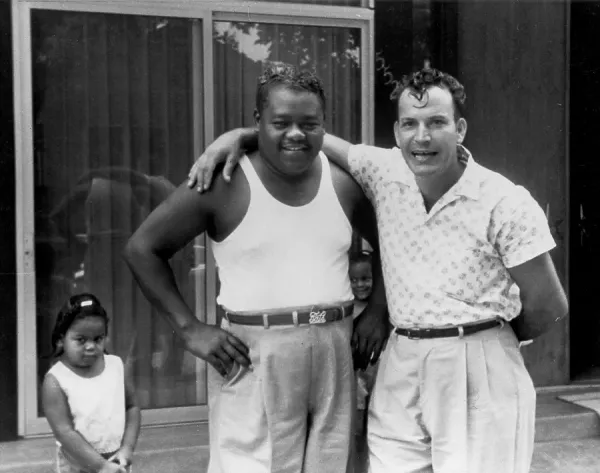
The idyll couldn’t last. A friend’s nervous warning—“People talk”—was the first crack in our fragile world. James understood the subtext I missed: our camaraderie was seen as a threat, a violation of an unwritten code. We began to meet more discreetly, but the shadow of discovery loomed. It finally fell in the form of a handwritten note, an innocent fragment of our friendship that my father discovered. His reaction was volcanic, rooted in a fear of societal backlash I was only beginning to comprehend. He arrived at my dorm in a rage, and the institutional wheels turned swiftly against James. His tutoring job, his foothold in that academic world, was gone. Our connection was severed not by a mutual drift, but by an external force that deemed it invalid. We were left with no closure, just a silent, painful absence.

Life moved on, as it does. I built a career, raised a family, and carried the memory of James like a sealed letter I could never send. I often reflected on the injustice of it, on the friendship stolen by prejudice. I wondered if he thought of me, if he carried a similar scar. The passage of years brought perspective but not peace regarding that chapter. It remained an open wound, a story without an ending. Then, on a whim, I returned to the old campus for a reunion, a walk through the ghost of my youth. I didn’t expect anything more than faded memories.
But there he was. On a bench beneath an old oak, reading a newspaper. My breath caught. Fifty-five years vanished in an instant when he looked up and smiled, not with surprise, but with a deep, knowing recognition. “Took you long enough,” he chuckled. We sat together, two old men where two young men once dreamed. The conversation was a floodgate opening. We spoke of our journeys—his successful career, my family, the roads we’d traveled. We spoke of that time with a raw honesty only age and distance could allow. There was no blame, only a shared grief for the lost years and a profound gratitude for this unexpected second chance.
In reconnecting, we solved the final equation of our friendship. The variable of time, once a barrier, now added depth and meaning. The constants—respect, affection, shared history—had never changed. We promised not to waste another day. That forbidden friendship, once crushed by the weight of the world, had quietly persisted, waiting for a time when the world had grown just enough to allow it space. Our reunion was more than a nostalgic trip; it was a victory, small and personal, over the divisive fears of the past. It proved that some bonds, forged in genuine understanding, are solved not by the algebra of society, but by the simpler, enduring arithmetic of the human heart.