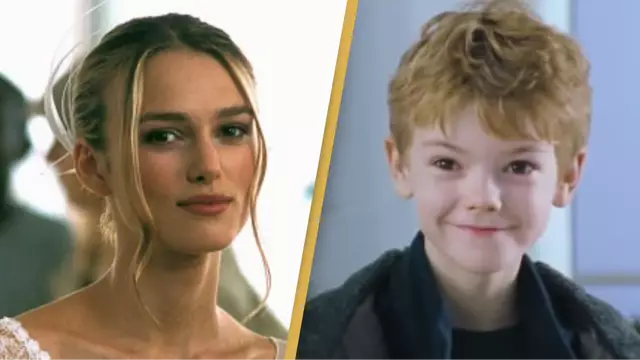
The enduring legacy of “Love Actually” is built on its interweaving stories of love and connection. Yet, time has a way of casting new light on even our most cherished traditions. For this early-2000s rom-com, one of the most persistent points of modern discussion isn’t about plot, but about a surprising piece of casting math. Keira Knightley and Thomas Brodie-Sangster, who inhabited vastly different emotional worlds in the film, were much closer in age than their characters—or our perceptions—would ever suggest.

Knightley, playing the newlywed Juliet, carried herself with a grace and maturity that belied her actual years. Brodie-Sangster, as the sweetly determined Sam, perfectly captured the essence of an eleven-year-old. The cinematic language clearly codes one as an adult woman and the other as a child. This makes the truth so jarring: during production, Knightley was 17 and Brodie-Sangster was 12. A mere five-year gap separated the actress portraying a romantic object of desire from the actor playing a lovestruck pre-teen.
This fact inevitably casts a shadow over one of the film’s most iconic moments: Andrew Lincoln’s silent declaration of love to Juliet. With Lincoln being 30, the scene becomes a grown man professing love to a teenager. Knightley has openly discussed the discomfort she felt, noting she initially played the scene as if Mark were being creepy, only to be directed to soften her reaction. This behind-the-scenes tension highlights the often-unquestioned norms of early-2000s filmmaking, where young actresses were routinely placed in adult romantic contexts.
Director Richard Curtis’s later reflections add weight to this reevaluation. He has acknowledged the value of modern feedback, admitting he might approach certain elements differently today. The ongoing audience shock at the Knightley-Brodie-Sangster age gap isn’t just trivia; it’s a cultural checkpoint. It shows how far we’ve come in questioning on-screen dynamics and the real ages of the performers involved, especially young women.
Ultimately, this detail doesn’t necessarily ruin “Love Actually,” but it does complicate it. The film becomes a fascinating time capsule, a product of its era that we now view with a more critical, informed eye. The stunned reaction to this age gap is a testament to evolving sensibilities, proving that even our most comfortable holiday classics can still offer surprising, and thought-provoking, lessons upon reexamination.