Part 1: The Envelope
“Sally, wait!”
I heard the voice behind me, but I kept walking.
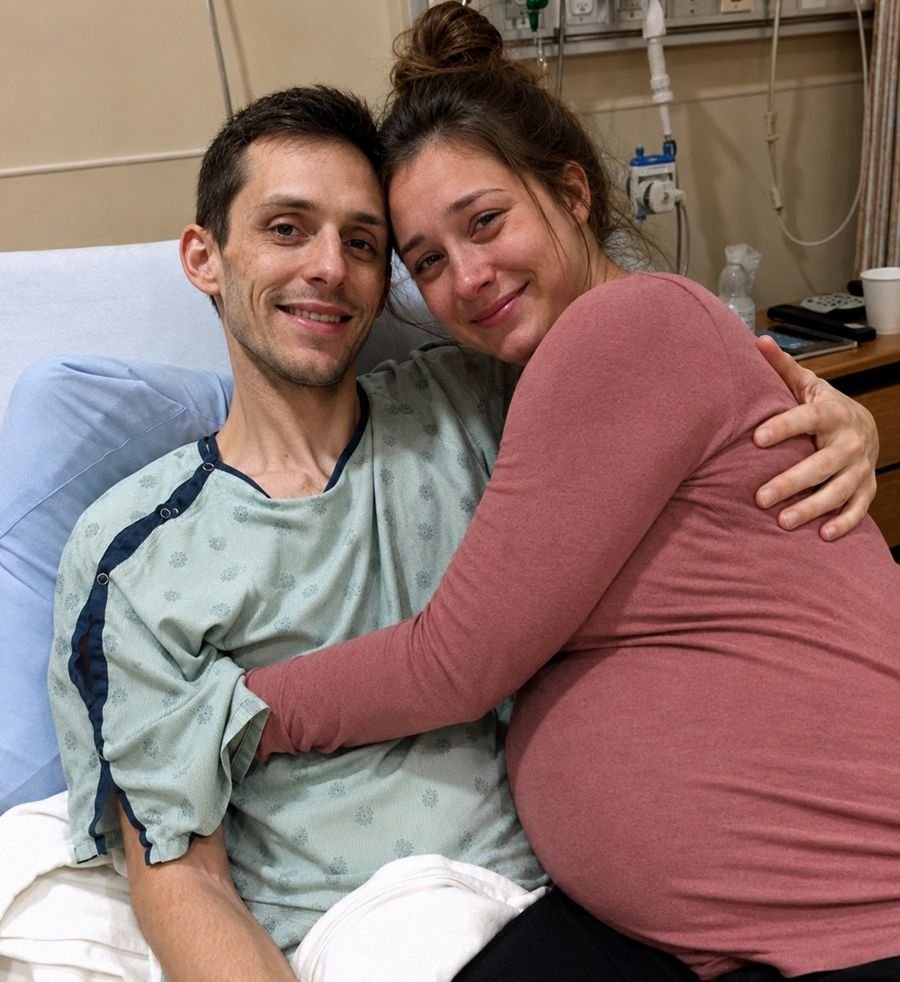
Stopping meant another sympathetic face. Another hand squeezing my shoulder. Another person speaking Mark’s name in that careful, softened tone people used around a woman who was eight months pregnant and had just lost her husband.
“Sally, please.”
This time, I stopped.
Dr. Rivers was coming down the hospital hallway toward me. He looked exhausted, as if the last few days had weighed on him too. In one hand, he held a plain white envelope.
When he reached me, he hesitated.
“Mark gave me this about three weeks ago.”
My eyes dropped to the envelope.
“What is it?”
His expression tightened.
“There’s something he made me promise not to give you until now.”
A cold feeling moved through me.
“Until after he died?”
Dr. Rivers nodded.
“Why?”
“He said you’d understand if the time came when you needed it.”
I almost laughed.
Of course he had said something like that.
Even dying, Mark had somehow managed to be mysterious.
Dr. Rivers held the envelope out.
My name was written across the front in Mark’s uneven handwriting.
Sally.
Nothing more.
No explanation.
No warning.
Just my name.
“You don’t have to open it today,” Dr. Rivers said gently.
I stared at him.
“That was generous of him.”
A sad smile crossed his face.
I took the envelope and left the hospital carrying what felt like the final secret my husband had ever kept from me.
Only two months earlier, secrets had been the last thing on my mind.
Back then, Mark and I had been arguing about baby names.
“Absolutely not,” I told him.
“You didn’t even consider it.”
“I considered it long enough to know we are not naming our daughter Clementine.”
We were sitting on the porch, my feet swollen, my six-month belly round beneath Mark’s hand.
“It’s a strong name,” he insisted.
“It’s a fruit.”
“It’s also a person’s name.”
“It’s mostly a fruit.”
He laughed.
Even then, there had been something fragile hidden in the sound. A faint catch in his chest that I had trained myself not to notice every time he smiled.
“Fine,” he said. “What about Cecelia?”
I turned toward him.
“Cecelia?”
“My grandmother used to sing that song with the name in it.”
“You told me your grandmother couldn’t carry a tune.”
“She couldn’t.”
“So that’s your argument?”
“It made you smile.”
I tried not to.
He won anyway.
“Cecelia,” I repeated.
At that exact moment, the baby kicked under his palm.
Mark’s eyebrows rose.
“You felt that?”
“She kicked you.”
“She approved.”
“That was not approval.”
“Strong approval.”
I placed my hand over his.
“Cecelia.”
This time, the name sounded different.
Not like a suggestion.
Like our daughter.
We had waited years for her.
Then, six months into the pregnancy we had wanted so badly, Mark got sick.
The doctors told us he might have three months.
Maybe less.
There was a very real chance he would never hold the little girl whose name we had finally chosen.
And suddenly, every ordinary moment became something I was terrified of losing.

Part 2: His Final Choice
A few weeks later, we were back on the porch.
Cecelia was kicking hard enough to make the fabric of my shirt jump.
Mark watched silently.
Then he laid his hand over the movement.
“If they can use anything after I’m gone,” he said quietly, “I want to be a donor.”
I turned toward him sharply.
“Please don’t talk about dying while she’s kicking.”
“That’s exactly why I have to talk about it.”
“Mark.”
His thumb moved slowly across my stomach.
“If I’m not going to get the time I wanted with her, maybe someone else can get more time with their family.”
I looked away.
“Don’t make this sound beautiful.”
He said nothing.
“I’m already angry enough,” I whispered.
His eyes found mine.
“I’m scared too, Sal.”
That nearly broke me.
Mark had always been the one who made impossible things sound manageable.
There was always a joke. A plan. A hand on my back.
Hearing him admit he was afraid made the truth feel more real than any diagnosis had.
“I don’t know how I’m supposed to do this without you.”
“You don’t have to know yet.”
“And what if I never figure it out?”
He thought for a moment.
“Then you’ll make it up as you go.”
I gave him a miserable look.
“That might be the worst advice you’ve ever given me.”
“It’s the most truthful advice I’ve got.”
I hated him a little for saying it.
Mostly because I knew he was right.
By the time I entered my eighth month of pregnancy, Mark was becoming weaker much faster than we had expected.
One morning, I found him standing in front of the bedroom mirror trying to button his shirt.
His fingers were trembling.
“Give me that,” I said.
“I can do it.”
“You put the third button into the fourth hole.”
He looked down at himself.
“New fashion.”
“You look like an accordion that gave up halfway.”
He laughed softly.
I stepped in front of him and redid the buttons.
His hands had begun shaking more often. I tried not to notice.
I failed.
“Don’t look at me like that,” he murmured.
“Like what?”
“Like you’re trying to memorize me.”
My hands stopped.
“I wasn’t.”
“You were.”
I finished the last button, then smoothed his collar.
“I want to remember enough to tell Cecelia who you really were.”
Something changed in his face.
For a second, neither of us spoke.
Then he reached out and closed his hand gently around my wrist.
“My mom brought up the donation again.”
I frowned.
Violet had always been good to me.
During the worst weeks of morning sickness, she had appeared at our door carrying groceries, crackers, ginger tea, and several pairs of tiny yellow baby socks.
“That child is not going to drown in pink,” she had announced.
“What did she say?” I asked.
“She doesn’t want me to donate.”
“She told you that?”
“More than once.”
“Why?”
He lowered himself onto the edge of the bed.
“She can’t stand the idea that parts of me might go to people she doesn’t know.”
I sat beside him.
“She’s losing her son. I don’t think grief has rules.”
“I know.”
“Then maybe she just needs time.”
Mark looked down at his trembling hands.
“She needs someone to be angry at.”
Then he looked at me.
“And I don’t want that person to become you.”
I squeezed his hand.
“You’re asking me to stay out of it.”
“I’m asking you not to make my mother’s grief your responsibility.”
At the time, I thought he was only trying to protect me.
I didn’t realize how much he already understood.
Part 3: The Secret Meetings
As Mark became weaker, he started asking to speak privately with Dr. Rivers.
The first time, I teased him.
“What is this? Some secret husband-doctor conspiracy?”
Mark smiled.
The second time, I didn’t laugh.
I stood near the hospital room door while Dr. Rivers waited outside.
“What are you arranging?”
Mark rested against the pillows.
“Something I need to take care of.”
“Without me?”
“Yes.”
I crossed my arms.
“But it concerns me?”
His mouth curved faintly.
“It’s for you.”
“That makes it worse.”
“I know.”
“Mark.”
“Please trust me.”
“I do trust you.”
“Then let me do this one thing on my own.”
I wanted to argue.
I wanted to remind him that we had spent years deciding everything together, from mortgages to paint colors to whether the dog was technically allowed to sleep on the bed.
But there was something in his expression that stopped me.
So I nodded.
Dr. Rivers went inside.
I remained in the hallway long after the door closed.
I hated not knowing.
But I loved him enough to allow him one final piece of privacy.
Mark died on a rainy Tuesday.
I was holding his hand.
There was no great speech.
No dramatic final moment.
Just the sound of rain against the hospital window and his fingers growing still inside mine.
Afterward, people began asking questions.
The donation team explained what might be medically possible and what might not.
I signed documents.
I answered what I could.
And every time someone asked me whether organ and tissue donation truly reflected Mark’s wishes, I gave the same answer.
“Yes.”
My voice shook every time.
“Yes. This is what he wanted.”
Then Dr. Rivers found me in the hallway.
And handed me the envelope.
That night, I sat alone in our house with it resting on the kitchen table.
Eventually, I opened it.
Inside was a folded note and a flash drive.
The note contained only a few lines.
Please don’t watch this just because you miss me.
Watch it if someone ever makes you doubt me.
And especially if someone makes you doubt yourself.
I read it twice.
Then a third time.
Finally, I looked toward the empty chair across the table.
“You’re dead,” I muttered. “You don’t get to give me instructions anymore.”
Cecelia kicked hard beneath my ribs.
I looked down.
“Your father is already annoying me from beyond the grave.”
Another kick.
“Yes. He probably deserved that.”
I folded the note.
Then I put the flash drive away.
I wasn’t ready.

Part 4: Grief Needed Someone to Blame
Two days later, Violet came to the house.
I found her standing in Cecelia’s nursery, folding a pink blanket that had already been folded perfectly.
“Violet?”
She didn’t turn around.
“Did they take everything?”
For a moment, I didn’t understand.
“From Mark,” she added.
I swallowed.
“They’ll only recover what can actually be donated.”
She held the blanket more tightly.
“And you’re okay with that?”
“No.”
“You seem okay.”
“What exactly am I supposed to look like?”
She turned toward me.
“His heart. His skin. His eyes. Pieces of my son are going to strangers.”
“They don’t transplant whole eyes.”
“You know what I mean.”
“Corneal tissue can sometimes be donated.”
She gave a bitter laugh.
“Does using a medical term make it less horrible?”
“No.”
Her face crumpled.
“How am I supposed to live knowing pieces of my child are somewhere with people I’ll never meet?”
“Because Mark chose it.”
“You agreed.”
“Yes.”
“And that doesn’t bother you?”
“Of course it bothers me.”
I could feel my own anger rising.
“Honoring what he wanted doesn’t mean losing him hurt less.”
Violet looked down at my belly.
Then she said the thing that would stay with me for weeks.
“You still get part of him.”
My hand immediately moved over Cecelia.
“Don’t.”
Her eyes lifted.
“Don’t what?”
“Don’t bring my daughter into this.”
She left without another word.
I told myself she was grieving.
I told myself to be patient.
At Mark’s memorial, patience became harder.
One of his uncles hugged me near the flowers.
“Mark was helping people right until the end.”
His aunt nodded.
“You must be proud of him.”
“Proud?”
Violet’s voice cut through the room.
I turned.
“Violet.”
“She doesn’t get to be proud of this.”
The nearby conversations stopped.
Violet looked directly at me.
“My son could barely walk across a room in those last weeks. And now everyone expects me to believe he calmly made all these decisions?”
“He did make them.”
“You agreed to it.”
“Yes,” I said. “I carried out my husband’s final wish.”
Her eyes filled.
“At least you’re finally being honest.”
My pulse pounded.
I could have defended myself.
I could have told everyone exactly what Mark had said on the porch.
I could have described the conversations, the paperwork, his insistence.
Instead, I said, “We’re not doing this here.”
“Because you can’t?”
“Because this day is supposed to be about Mark.”
I walked away.
I thought refusing to fight was an act of kindness.
By the end of the evening, I realized my silence had created room for suspicion.
Mark’s aunt approached me near the door.
“Sally, can I ask you something?”
I already knew I wouldn’t like the question.
“What?”
“Was Mark taking medication near the end that might have affected his judgment?”
I stared at her.
“Excuse me?”
“Violet just wondered whether maybe he wasn’t thinking clearly.”
“He knew exactly what he wanted.”
“I’m not accusing you.”
“Yes, you are.”
She lowered her eyes.
“You’re asking whether I pushed my dying husband into a decision he didn’t understand.”
She said nothing.
That night, I went into Cecelia’s nursery.
I opened my laptop.
And for the first time, I inserted the flash drive.
Part 5: Mark’s Last Defense of Me
Mark appeared on the screen.
He looked thinner than the man living in my memory.
His face was pale. His shoulders seemed smaller.
For a moment, I couldn’t breathe.
Then he spoke.
“If you turned this on because you miss me, shut it off.”
I covered my mouth.
A laugh escaped through my tears.
“You don’t get to boss me around anymore.”
On the video, Mark shifted in his chair.
“I mean it, Sal.”
Then his expression changed.
“My mom asked me not to donate.”
I leaned closer.
“She’s asked more than once. And eventually she started asking whether this was really my decision… or yours.”
My stomach tightened.
“I told her the decision was mine.”
He dragged his hands slowly over his face.
“She hates the idea that strangers might receive something from me after I’m gone. I understand that. I really do.”
He paused.
“But grief doesn’t give anyone permission to turn you into the villain.”
My breath caught.
Mark looked straight into the camera.
“Don’t protect me by letting her hurt you.”
Tears began sliding down my face.
“And don’t let Cecelia grow up hearing that her father was too confused or too weak to make his own choices.”
I hit pause.
The room went silent.
“You knew.”
My voice sounded strange.
I stood.
“You knew this might happen.”
Anger rose through the grief.
“And you didn’t tell me.”
I pressed both hands over my belly.
“I was your wife, Mark. You didn’t have to protect me from everything.”
It was the first time I had been angry with him since he died.
The anger frightened me.
It also felt necessary.
Because grief had been turning Mark into something flawless.
And the truth was, he had still been my husband.
Stubborn.
Protective.
Occasionally infuriating.
Even at the end.
Two days later, Violet came over carrying an embroidered baby blanket.
“I’ve been thinking,” she said. “Cecelia should carry Mark’s name somehow.”
I stared at her.
“We already chose her name.”
“She should have something from her father.”
“She has a father. She doesn’t need his name attached to hers to prove that.”
Violet looked toward my stomach.
“Mark told me he was reconsidering.”
“No, he didn’t.”
“You weren’t part of every conversation between us.”
“And you weren’t part of every conversation between Mark and me.”
Her expression sharpened.
“He kept things from you too.”
That hurt.
Because it was true.
But truth used as a weapon was still a weapon.
“Mark and I chose Cecelia’s name together.”
“Sally—”
“Go home.”
She blinked.
“What?”
“I said go home.”
Her face changed.
“You’ve questioned whether Mark knew what he was doing. You’ve let other people question whether I manipulated him. And now you’re trying to rewrite what he wanted for our daughter.”
Tears filled her eyes.
“I lost my son.”
“I know.”
“You have no idea what that feels like.”
“No. I don’t.”
I stepped closer.
“But you don’t know what it feels like to bury my husband while carrying the daughter he will never meet.”
Violet fell silent.
“We are allowed to hurt differently,” I said. “But we are not allowed to destroy each other because of it.”
She left.
And for the first time, I stopped feeling guilty for setting a boundary.

Part 6: Cecelia Arrives
Two weeks later, Cecelia was born.
The delivery was quiet and uncomplicated, almost shockingly ordinary after months in which nothing had felt ordinary.
The moment the nurse placed her on my chest, Cecelia curled one tiny hand into a fist and tucked her thumb inside.
I froze.
Mark had slept with his hand exactly like that.
A sob escaped me.
“Of course,” I whispered. “Of course you sleep like your dad.”
For one terrible, beautiful second, I wanted him there so badly that it physically hurt.
When Violet came to the hospital to meet her granddaughter, she stopped beside the bed.
She didn’t reach for Cecelia.
Instead, she asked, “May I hold her?”
That question mattered more than she probably understood.
I handed Cecelia to her.
Violet stared down at the baby for a long time.
“Hello, sweetheart.”
Cecelia yawned.
Violet laughed through tears.
“I knew your daddy when he didn’t have teeth either.”
I smiled.
For a few minutes, grief stopped being a battlefield.
I hoped that meant something had changed.
But healing is rarely that simple.
A few weeks later, Violet was visiting when Mark’s aunt stopped by.
I was in the kitchen when I heard their voices from the living room.
“Mark wasn’t himself near the end,” Violet said.
I stopped moving.
“Sally handled everything. I still don’t believe he would have chosen all of that if he’d been thinking clearly.”
I walked into the room.
Violet was holding Cecelia.
“Give her to me.”
Her face went pale.
“Sally, I was only—”
“Give me my daughter.”
She handed her over.
I settled Cecelia against my chest.
“You will never say that in front of her again.”
“She’s a baby.”
“She won’t always be.”
Violet’s eyes filled.
Then she looked at Cecelia.
“You still have something of him.”
There it was again.
That wound she kept touching.
“You wake up every morning and see him in her,” Violet whispered. “What do I have?”
I stared at her.
Then I said the words I had been carrying for weeks.
“Me.”
She froze.
“You had me.”
Her face crumpled.
“I loved you too, Violet.”
She covered her mouth.
“You lost your son, but I didn’t stop being your family when Mark died.”
Tears slid down her cheeks.
“You’ve spent weeks making me the enemy because blaming me is easier than accepting that Mark made a choice you couldn’t control.”
She shook her head.
“He wasn’t himself.”
I took a breath.
“He knew you would say that.”
Violet looked up sharply.
“What?”
I reached for my laptop.
“Mark left something for me.”
Her face drained of color.
“If he wanted to say something, he should have said it while he was alive.”
“He did.”
I opened the video.
Then I pressed play.
Mark appeared.
“Donation was my decision.”
Violet closed her eyes.
The room became so quiet I could hear Cecelia breathing against me.
Then Mark continued.
“Mom, if you’re hearing this, you’re probably angry. You loved me before anyone else did.”
Violet’s shoulders began to shake.
“But loving me doesn’t mean you get to decide which choices were really mine.”
Nobody moved.
“Don’t make Sally prove she loved me by agreeing with you.”
Violet covered her mouth.
“And please don’t put Cecelia in the middle.”
I looked down at my daughter.
Mark’s voice continued.
“She isn’t something I left behind. She’s our daughter. Sally’s and mine. And she deserves to become her own person.”
“Turn it off,” Violet whispered.
I did.
The screen went dark.
For a long moment, neither of us spoke.
Then I looked at her.
“I want Cecelia to know her grandmother.”
Violet began crying.
“But you cannot tell her that I forced her father into this. You cannot teach her that he was too weak to understand what he wanted.”
Violet nodded faintly.
“And you cannot make her responsible for keeping Mark alive for you.”
Her face twisted.
“I don’t know who I am without him.”
My anger softened.
“Neither do I.”
I looked down at Cecelia.
“This is the hardest thing I’ve ever had to do.”
Then I looked back at Violet.
“But she doesn’t need us to have everything figured out yet.”
Part 7: Learning to Miss Him Without Losing Ourselves
Six months passed.
Nothing magically returned to normal.
Violet and I did not suddenly become the women we had been before Mark died.
But something between us began to heal.
Slowly.
Imperfectly.
Honestly.
She started asking before coming over.
She asked before picking Cecelia up.
She stopped searching for excuses when grief overwhelmed her.
When she missed Mark, she simply said, “I miss him.”
And I learned that sometimes the healthiest thing I could say in return was, “I do too.”
One afternoon, Violet sat on the living room rug while Cecelia wrestled with a wooden block.
My daughter gripped it with such determination that her little knuckles turned pale.
Violet laughed.
“Look at that grip.”
I smiled.
“Just like Mark.”
Violet looked at me.
Then she looked down at Cecelia.
For one brief second, I recognized the old expression in her eyes.
The desperate need to find her son in every movement, every sound, every tiny detail.
Then something changed.
She shook her head gently.
“No.”
She reached out and touched Cecelia’s tiny hand.
“That belongs to her.”
My throat tightened.
Cecelia squealed and flung the wooden block straight into Violet’s lap.
Violet burst out laughing.
So did I.
And for the first time since Mark died, neither of us needed Cecelia to prove he was still with us.
We didn’t have to search for him in the shape of her hands.
We didn’t have to claim her smile, her stubbornness, or the way she slept.
We could simply miss him.
We could still love him.
We could honor the choices he had made.
And Cecelia could grow into someone who belonged entirely to herself.
Maybe that was what Mark had been trying to protect all along.
Not his memory.
Not his final decision.
Us.
The people he loved most.
He had known grief might tempt us to hold too tightly—to him, to the past, and eventually to his daughter.
So even while he was dying, he had found one final way to remind us that love was not ownership.
It wasn’t deciding for someone.
It wasn’t turning another person into proof that someone we loved had once existed.
Sometimes love meant respecting a choice that hurt.
Sometimes it meant letting go of the person you desperately wanted to keep.
And sometimes it meant looking at a little girl with her entire life ahead of her and understanding that she did not exist to replace anyone.
Cecelia would know her father.
I would tell her about the porch, the terrible baby-name suggestions, the way he always tried to make me laugh when I was frightened.
I would tell her how excited he had been when she kicked beneath his hand.
I would tell her that when he learned he would not have enough time, he chose to give whatever time he could to someone else.
But I would never ask her to become him.
Neither would Violet.
Mark had been here.
He had been loved.
He was still missed.
That was enough.
Cecelia did not have to carry the weight of proving it.
She was free to become entirely herself.
Disclaimer: This fictional story is inspired by situations from everyday life. Names, characters, businesses, and locations are created for storytelling purposes, and any resemblance to actual people or events is coincidental.