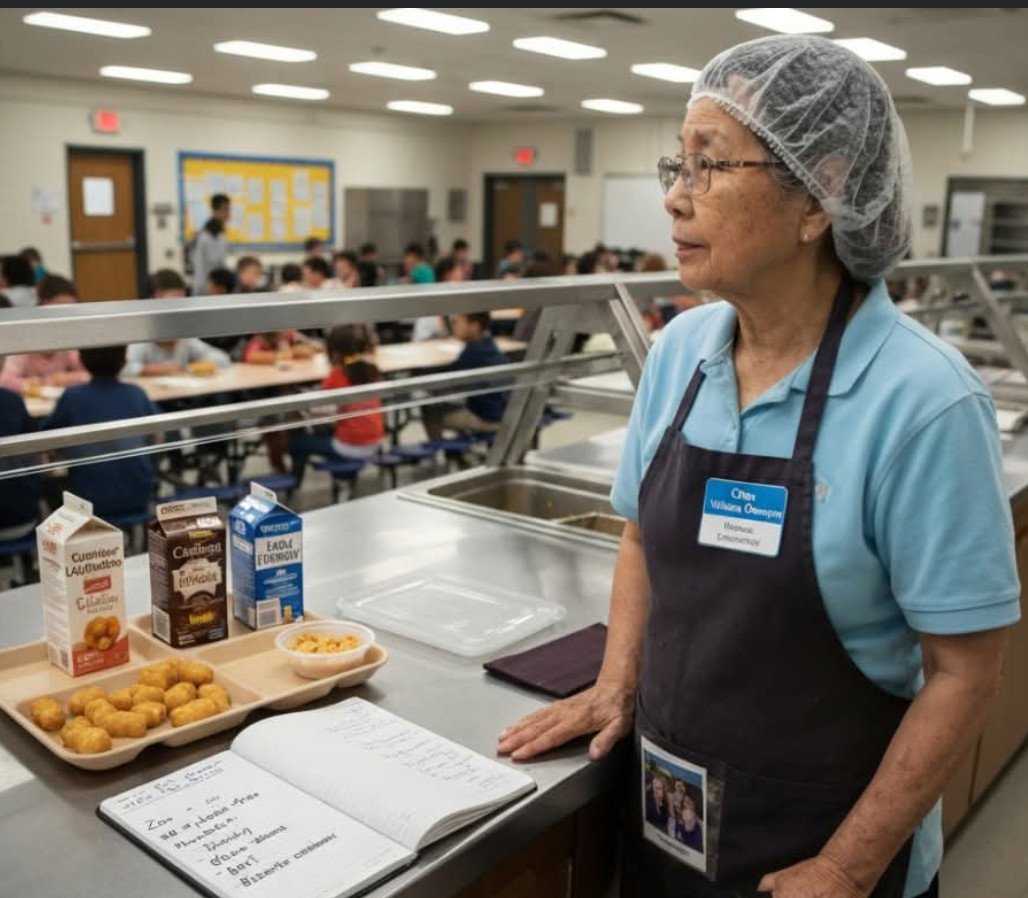
Schools run on more than curriculum and policy; they run on the unseen threads of human connection. Often, the people who hold those threads are not at the front of the classroom. For over two decades, Mrs. Chen stood behind a lunch counter, her hairnet and apron symbols of a role many considered minor. Yet, in that space of clattering trays and youthful chatter, she performed a vital service of observation and care. She understood that a child’s ability to learn is deeply connected to their sense of safety and belonging, and she used her unique position to nurture both, one plate at a time.
Her power lay in a profound, unassuming attention to detail. Where others saw a line of hungry kids, Mrs. Chen saw individual stories. She knew which children were saving food for siblings, which ones were hiding eating disorders behind careful selections, and which ones bore the weight of poverty or shame with their daily choices. This knowledge wasn’t gathered through interviews or files; it was earned through years of consistent, quiet watching. She saw the boy who took extra bread, not as greedy, but as preparing for a weekend with an empty pantry at home.
Her interventions were masterpieces of discretion and dignity. She never embarrassed a child or drew attention to their need. Instead, she engineered small solutions that preserved their pride. An “accidental” extra scoop, a quietly swapped milk carton, a reassuring smile with a serving of comfort food—these were her tools. She operated in the space between official protocol and human necessity, understanding that sometimes the most effective help is the kind that doesn’t feel like charity, but like a gentle secret between two people.
The impact of her departure was a stark testament to her silent work. When she retired, the lunchroom became merely a place of logistical food service. The new hire was competent but lacked the watchful eye. Without Mrs. Chen’s subtle safety net, struggles that had been quietly managed suddenly became crises. The school felt the shift in a wave of emotional and behavioral issues, a clear signal that a crucial pillar of student wellness had been removed. The children felt invisible again, their silent signals going unanswered.
The school’s solution was a beautiful acknowledgment of her true role. They brought Mrs. Chen back as the Student Wellness Observer, a title that finally matched her lifelong function. Her physical capacity was reduced, but her empathetic vision was not. Her legacy was cemented when a graduating senior, Zoe, dedicated a speech to her. “Some people teach subjects,” Zoe said. “Mrs. Chen taught us humanity.” In that moment, the lunch lady was seen not as support staff, but as the foundational heart of the community, a powerful reminder that seeing someone—truly seeing them—is the first and most important step in helping them grow.