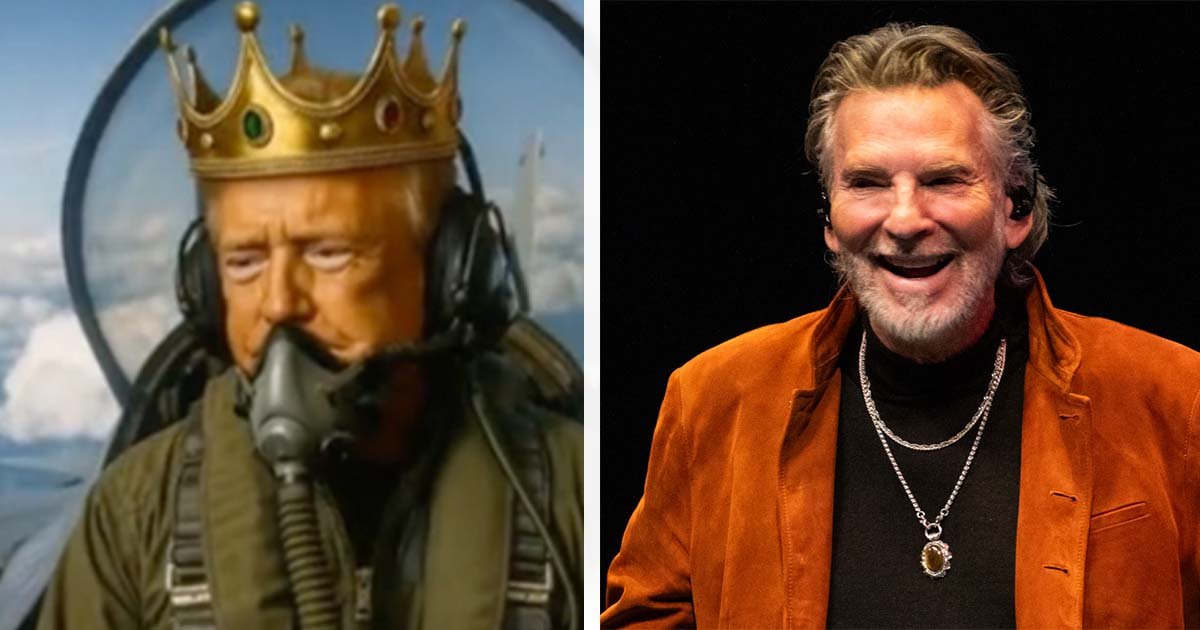
Kenny Loggins has found his classic rock anthem “Danger Zone” in the middle of a modern political firestorm. The catalyst was an AI-generated video shared by Donald Trump that used the song to score a disturbing scenario: the former president, portrayed as a king, attacking American protesters with raw sewage from a fighter jet. The musician’s reaction was both a defense of his artistic rights and a plea for national cohesion.
In his public statement, Loggins was unequivocal about the unauthorized use of his music. He confirmed that permission was neither sought nor granted for the track’s inclusion in the viral video and formally requested that his recording be taken down. This act of reclaiming control over his art is a common point of contention in today’s highly politicized landscape, where songs often become unofficial campaign themes.
But Loggins elevated the conversation beyond legalities. He directly challenged the intent behind the video, stating he could not fathom associating his music with content created to divide the country. His words reflected a weariness with the polarized climate and a call for a return to a more collective identity. “There is no ‘us and them’,” he insisted, arguing that such a dichotomy is not representative of the American spirit.
The singer concluded on a hopeful note, envisioning music as a unifying force capable of bridging divides. By taking a stand, Kenny Loggins transformed a copyright dispute into a commentary on the power of art and the responsibility that comes with it. He made it clear that some songs are meant for bringing people together, not for scoring attacks on fellow citizens.