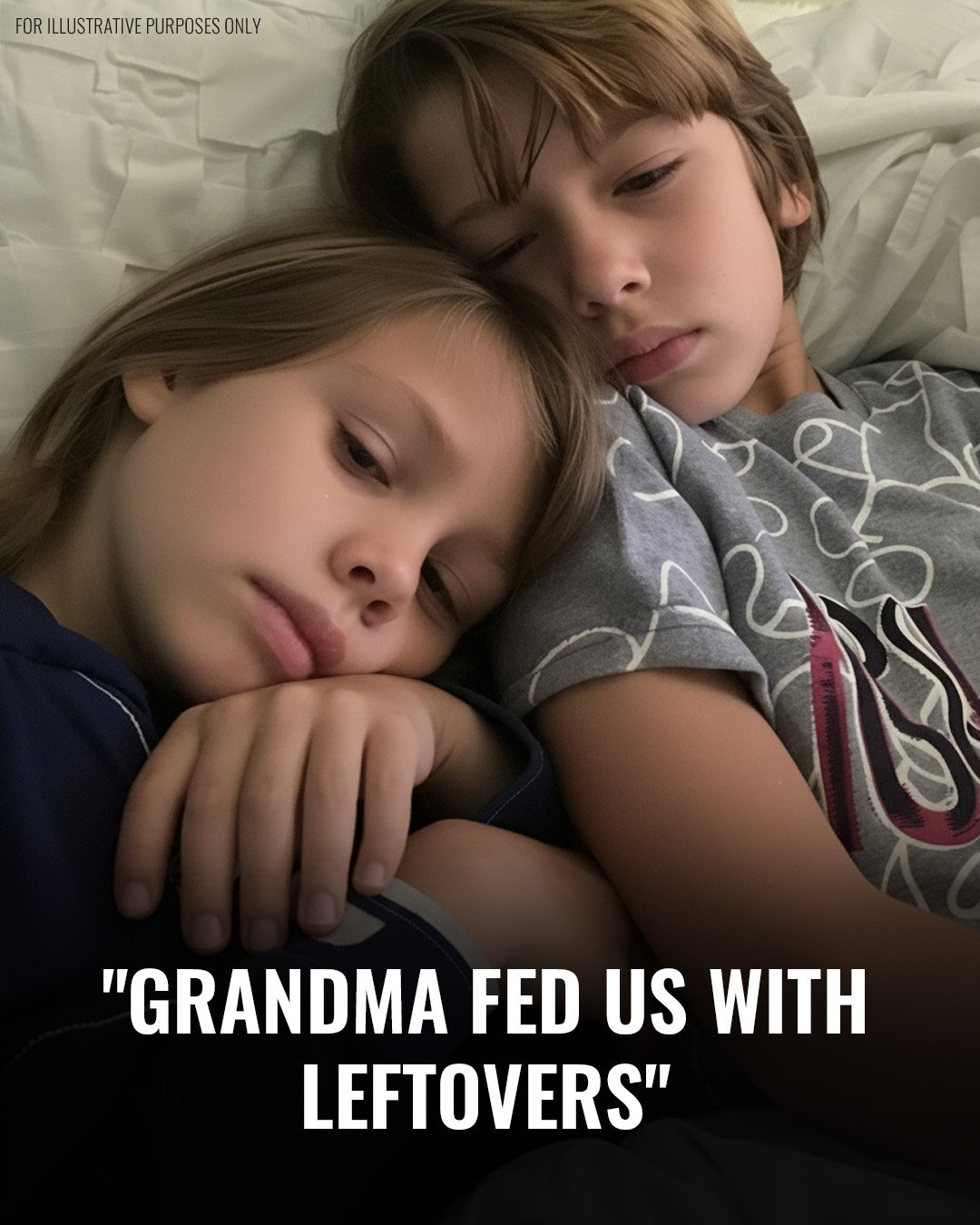
Family dynamics can be complicated, and in my case, they were defined by a stark imbalance. My mother-in-law, Margaret, held my sister-in-law Hannah’s family on a pedestal, while my children and I were treated as afterthoughts. For years, I absorbed the criticism and slights, with my husband Ethan urging patience, explaining that “this was just how she was.” We endured countless gatherings where my kids were overlooked, their achievements met with silence while their cousins were lavishly praised. I convinced myself that maintaining a connection, however strained, was important. That belief was tested to its limit one Sunday evening. A tearful call from my daughter revealed the depth of the disparity: during a weekend visit, Margaret had fed my children leftover pizza crusts while serving Hannah’s kids fresh, cheesy slices. The intentional humiliation of that act, of making them feel less than, was the final straw.
Driving to Margaret’s house, a cold fury settled over me. Walking in to see her celebrating with her favored family, oblivious to the hurt she’d inflicted, ignited a resolve I didn’t know I possessed. When she callously told us to leave, the rift became permanent in my heart. Ethan, witnessing the raw evidence, had no more excuses. We left, and I began to accept that some family bonds are too toxic to maintain. Little did I know, the universe, in the form of my wise father-in-law Walter, had already set a reckoning in motion. A few days later, a lawyer’s meeting revealed that Walter, who had always been my quiet ally, had left his entire estate to me. He believed I was the only one who would handle it with true fairness.
The reaction was instantaneous and profound. Margaret’s mask of indifference slipped into sheer panic. The woman who had ordered me from her home now lavished me with desperate, transparently false praise. The hierarchy she had built and lived by was now inverted, and she was at the bottom, dependent on my goodwill. It was a stark lesson in karma—not delivered with drama, but with the quiet authority of a legal document. For the first time, she and Hannah had to confront the consequences of their years of exclusion and meanness. They were no longer the gatekeepers of family acceptance; I was.
Holding that power was a heavy responsibility. I spent weeks reflecting not on revenge, but on Walter’s intention. He hadn’t given me this task to punish his wife and daughter, but to correct the family’s course. I thought about all the children involved, mine who had been hurt and Hannah’s who had been spoiled by favoritism. With that in mind, I crafted a distribution that provided for everyone but prioritized the grandchildren’s futures equally. When I met Margaret to give her share, her proud, cold exterior finally melted into a puddle of regret. She apologized, and I forgave her. The forgiveness was my release, not her reward. It allowed me to close a painful chapter without carrying its bitterness forward. The experience taught us all a lasting lesson: that fairness is a healing force, and that sometimes, the person you’ve overlooked is the very one who holds the key to your redemption.