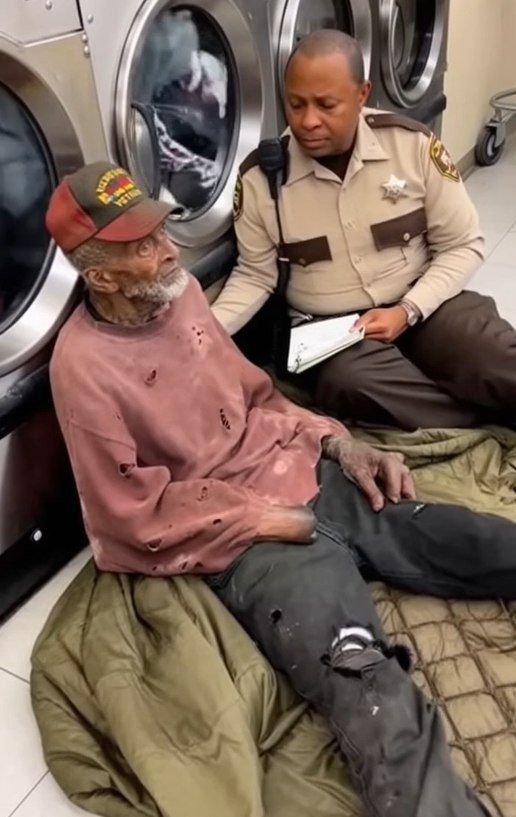
Deputy Carter’s call was a simple one: a “vagrant” in a laundromat. But upon arrival, the script flipped. The man on the floor was Elijah, an elderly veteran whose very presence was a silent reproach to a society that had moved on. Carter, a man sworn to uphold the law, was faced with a conflict between duty and humanity. His badge represented authority, but his heart recognized a deeper duty—to a man who had once worn a different uniform in service to their country. In choosing compassion, Carter redefined what it meant to protect and serve.
The scene could have been one of cold transaction. Instead, it became one of profound connection. By kneeling and sitting beside Elijah, Carter dissolved the barriers of authority and circumstance. He listened to tales of sacrifice and systemic neglect, hearing the heartbreaking reality behind the label “homeless.” This wasn’t about charity; it was about respect. Carter treated Elijah with the honor due to a superior officer, acknowledging his service and his inherent worth. That respect was the key that unlocked a path to real help.

The journey out of the laundromat wasn’t an arrest, but an escort to safety. Carter secured Elijah a place at a veterans’ shelter, ensuring his immediate needs for warmth and food were met. This story is more than a feel-good moment; it’s a case study in empathetic policing and a stark reminder of our collective debt to those who served. It challenges us to look beyond our immediate discomfort and see the individuals in our community who are struggling, urging us to respond not with judgment, but with the kind of decisive kindness that can change a life.