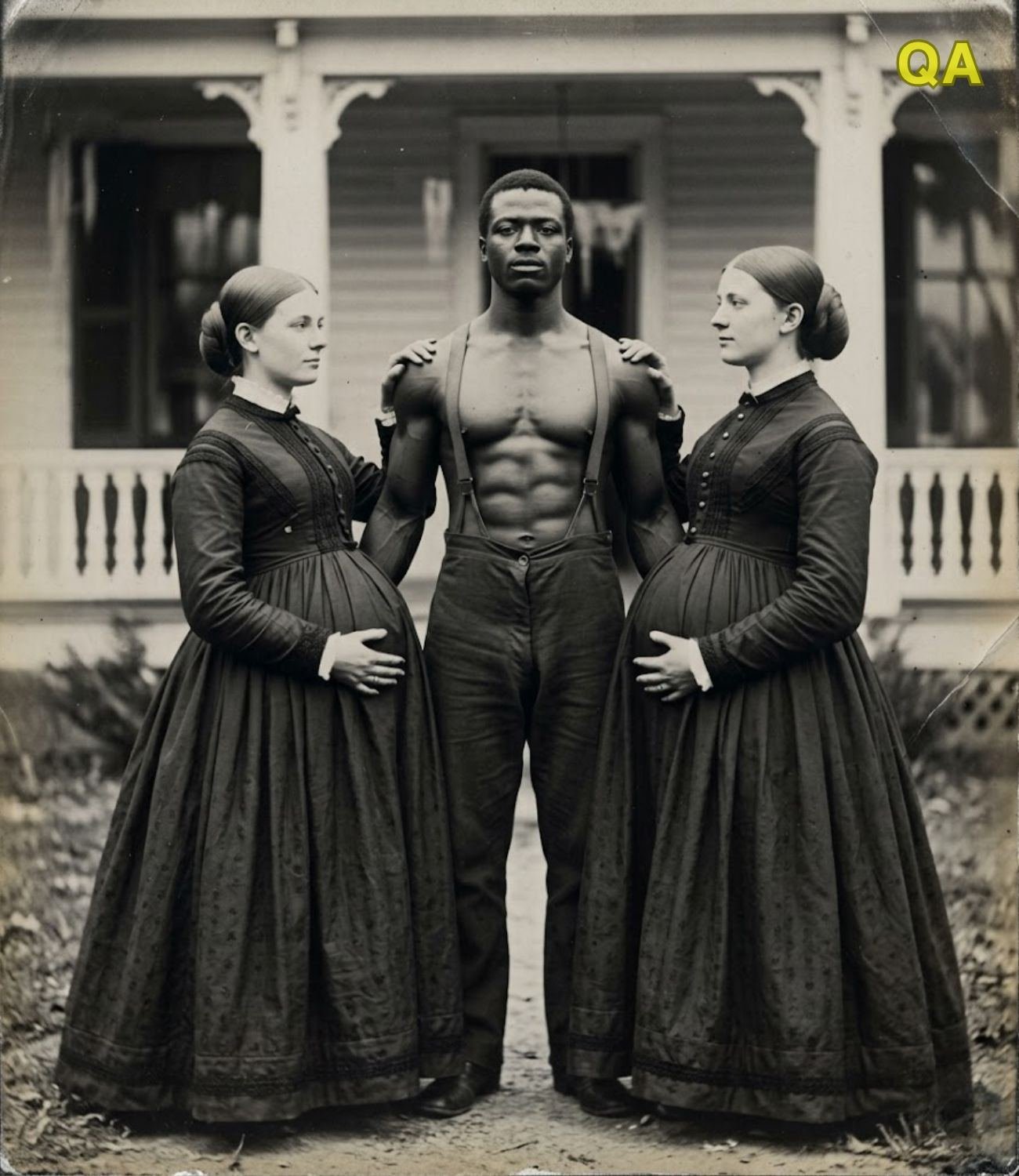
In the stifling summer of 1839, whispers rippled through the sprawling cotton fields of Ravenswood Plantation in Green County, Alabama. The enslaved workers moved cautiously, exchanging furtive glances and low murmurs. Something impossible to ignore had emerged in the heat of that oppressive season: both Whitmore sisters, Caroline and Catherine, were showing signs of pregnancy at precisely the same time.
What made the revelation all the more scandalous—and dangerous—was the man at the center of the storm: Isaac, a single enslaved man kept in the main house since the death of the plantation’s master. The rumor, already dripping with tension, hinted at a transgression that could ignite outrage among Alabama’s aristocracy and expose the shadowy complicity of women in the sexual exploitation endemic to slavery.
The Whitmore Legacy
Caroline and Catherine Whitmore were born in 1815, identical twins raised in a bubble of southern refinement and privilege. Their father, Edmund Whitmore, was a man of wealth and influence, owning Ravenswood Plantation, hundreds of acres of cotton fields, and a workforce of enslaved people whose lives he treated as property, not human beings.
When Edmund died suddenly of fever in 1837, he left a peculiar and unprecedented will. Instead of marrying off his daughters or dividing his estate among male heirs, he left the 800-acre plantation and 130 enslaved people jointly to Caroline and Catherine. At just 22 years old, the twins became co-owners, wielding power that few women in the antebellum South could ever imagine.

The arrangement was unusual, but not entirely unheard of. The catastrophe, however, lay not in the inheritance itself, but in how the twins would exercise their newfound authority. Caroline, cold and calculating, viewed most men as intellectually inferior and financially motivated, while Catherine, passionate and impulsive, rejected the societal expectations of submission to male authority. Together, they were a force of defiance and desire, challenging the strict social norms of their time.
The Man at the Center: Isaac
Isaac’s life was bound by the brutal hierarchies of slavery. A man whose skill, strength, and quiet intelligence had kept him in the Whitmore household for years, he had little agency in a system designed to deny him humanity. Yet, the rumors claimed that both twins had turned their attention toward him, an enslaved man who had no choice but to navigate the impossible.
The truth of what happened is shrouded in secrecy, amplified by the fear and shame of those involved. But the timing of the pregnancies suggested a single, unifying source. For a society obsessed with reputation and honor, the implications were explosive.
A Society Obsessed with Appearances
In 19th-century Alabama, southern aristocracy was defined by appearances. Marriages were strategic, consolidating wealth and power. Women were groomed to be obedient, graceful, and, most importantly, controlled. The Whitmore twins defied every expectation. Their refusal to marry, their disdain for suitors, and their apparent attraction to Isaac upended the rigid social order.

Whispers in the town of Green County hinted at scandal. Yet, the enslaved community, often silenced by fear, began to notice patterns and shifts in the household dynamic. Isaac’s visible presence in the main house, once a marker of service and labor, now became a subject of speculation.
Secrets and Power
The twins’ wealth and authority created a perverse equilibrium. As co-owners of Ravenswood, they wielded control over the lives of the enslaved, yet their own desires operated outside social law. Caroline’s calculated demeanor and Catherine’s impulsive nature created a volatile environment in which rumor and secrecy thrived.
In the sultry heat of the Alabama summer, the household became a tinderbox of tension. Every glance, every whispered word, carried weight. The line between ownership and obsession blurred, creating a scandal that would ripple far beyond the walls of Ravenswood.
Pregnancy and the Shattering of Illusions
When the pregnancies became undeniable, the plantation’s social hierarchy began to fracture. The Whitmore twins, symbols of beauty, wealth, and intelligence, were now embroiled in a story that could destroy reputations, upend family legacies, and challenge the very fabric of their world.
The community’s reaction was a mix of horror, fascination, and condemnation. How could two white women of such standing share the affections of a single enslaved man? What did it mean for the children to come, born into a web of power, privilege, and secrecy?
The Children: Innocence in the Eye of the Storm
The births of the twins’ children were milestones fraught with tension. For the enslaved, the children represented the continuation of a lineage shadowed by exploitation. For the twins, the children were both a source of pride and a symbol of the forbidden. The dual pregnancies became a subject of whispered conversations, moral debates, and social judgment that extended beyond Ravenswood.

Every step of the pregnancy was fraught with peril. Society’s expectations, the judgment of neighboring plantations, and the scrutiny of the wider county created a pressure cooker environment. The twins’ ability to navigate this landscape demonstrated their intelligence, audacity, and the complexity of their character.
The Scandal Reaches the Town
As news of the pregnancies leaked, Green County became a hub of gossip. Letters traveled between plantation families, church leaders debated morality, and newspapers hinted at impropriety without daring to name names. The Whitmore twins’ story became a cautionary tale of power, desire, and social transgression.
The scandal revealed the undercurrents of gender, power, and race. It exposed the uncomfortable truths of southern aristocracy: women were not merely passive players in a patriarchal society; they could exercise influence and, in some cases, complicity in the oppression around them.
Legacies and Consequences
Over time, the consequences of the Whitmore twins’ actions echoed through generations. Their children, born amidst secrecy and scandal, carried the weight of a story that intertwined love, power, and transgression. The plantation continued to function, but the social ripples persisted.
Historians and scholars, looking back, have debated the implications of the twins’ story. Was it a tale of forbidden desire, an assertion of female agency, or a dark testament to the abuses of a system built on inequality? Perhaps it was all three.

Power, Desire, and Morality
The story of Caroline and Catherine Whitmore challenges the sanitized narratives of antebellum society. It forces readers to confront uncomfortable questions: How do power and privilege shape desire? What moral compromises are inherent in a system built on subjugation? And how do personal choices intersect with societal expectations to produce scandal, history, and legend?
The Enduring Fascination
Today, Ravenswood Plantation is a relic of a bygone era, but the story of the Whitmore twins endures. It reminds us of the human capacity for complexity, contradiction, and courage—or recklessness—in the pursuit of personal desire. It is a tale that continues to captivate historians, writers, and readers, offering lessons about power, morality, and the consequences of crossing social boundaries.
In the end, the twins’ story is not simply about scandal. It is about the intersections of race, class, and gender in a society structured by exploitation. It is about human desire in a world that sought to regulate it, and the shocking consequences when rules are broken, secrets are exposed, and history takes notice.