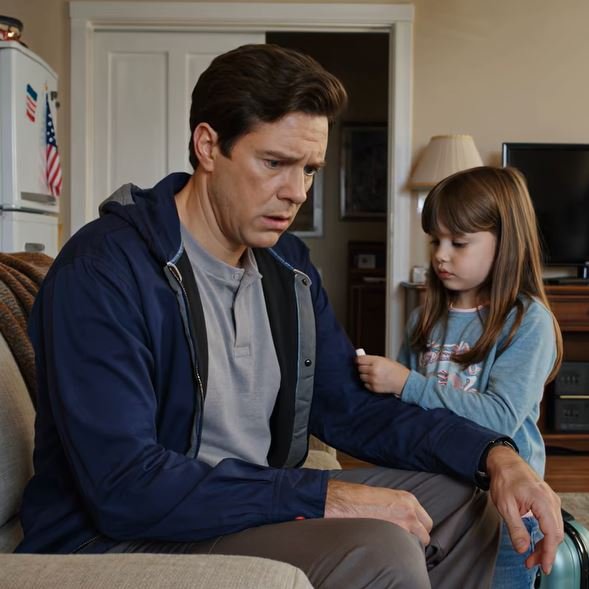
Home should be a sanctuary. I learned it can also be the place where you discover a silent war is being waged against someone you love. Returning from a week away, I was met not with my daughter’s joyful tackle, but with her hollowed-out expression. Later, as I made dinner, she gathered the courage to ask a simple, horrifying question. “Do I have to keep taking Mom’s vitamins?” In that instant, the familiar landscape of my family life cracked open. I discovered a hidden bottle of pills, unlabeled and unexplained.
Those small white tablets became the focus of my world. A doctor’s analysis confirmed my deepest dread: they were potent sedatives, inappropriate and dangerous for a child. The person administering them was my wife, Sophie’s mother. The betrayal was a physical sickness. This wasn’t just a marital problem; it was a threat to my child’s wellbeing. I had to act, but I needed proof. With Sophie safely at her grandmother’s, I installed a small camera. I also began quietly examining our finances, and the story the numbers told was one of deliberate deception.
The camera revealed the painful truth. My wife, Audrey, was deeply involved with a colleague. She hosted him in our home with a casual intimacy that spoke of a long-standing affair. Watching them together, I didn’t feel rage first—I felt a profound grief for the twelve years I thought we had built. The financial records showed the cost of her double life: thousands of dollars from our shared account, spent on luxury hotels and gifts. Our savings, our trust, our daughter’s stability—all were compromised.
I knew I couldn’t confront her alone. I needed someone who loved Audrey to see the unvarnished truth. I brought her mother to the house, where we witnessed the affair in real time. The devastation on her grandmother’s face was a tragic mirror. When I revealed the drugging, Audrey’s mother recoiled. Her support shifted to me and Sophie in that moment. “You endangered her,” she said to Audrey, her voice breaking with a mother’s disappointment. It was the turning point.
The divorce and custody hearing were straightforward given the evidence. My priority was creating a stable, secure environment for Sophie. We left the old house and its painful memories behind. Our new apartment is smaller, but it is filled with honesty and calm. Sophie’s recovery has been slow and steady. The color has returned to her cheeks, and her quiet confidence is blooming again. We talk openly, and I let her guide what she feels about her mother.
This experience taught me a brutal lesson about vigilance. Danger doesn’t always shout; sometimes it whispers from a kitchen cabinet, disguised as care. The most important thing any parent can do is listen—truly listen—to their child. Believe them when they say something feels wrong. Have the courage to look for answers, no matter where they lead. Protecting your child is the most sacred duty, and it sometimes means making the hardest choices of your life.