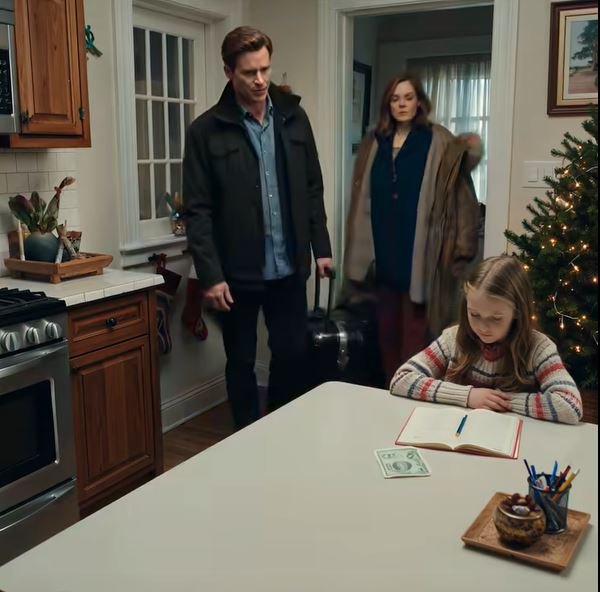
The note was written on the back of an airline itinerary, the ink slanting as if dashed off in a hurry. “We’re going to Europe for a month.” Next to it, a single fifty-dollar bill, folded twice. I was twelve. That note and that money were my only companions for thirty long days. In that time, I learned to navigate a world of quiet alarms—the panic of a broken faucet, the dread of a power outage during a storm, the hollow ache of eating crackers for dinner. I didn’t fall apart; I figured it out.
My parents’ departure wasn’t an adventure; it was a vanishing act. They left the kitchen light on, a small, maddening detail that proved they’d had time for a chore but not for a proper goodbye. Their trip was meticulously planned on the fridge calendar, a schedule where my name never appeared. So, I became my own system. I made rules, fixed what broke, and learned to interpret the kindness of neighbors as a risk. Telling an adult would have meant exposing the truth, and the unknown consequences were more terrifying than the familiar hunger.
Their return was the beginning of a different kind of loneliness. The house was full again, but it felt smaller, tighter. They tried to resume control, hovering and questioning, but the dynamic had irrevocably shifted. They were watching someone who no longer needed their permission to breathe. I saw their fear—not fear for me, but fear of my capability. My quiet adaptation had robbed them of a narrative where they were essential. My path out was planned with the same precision I’d used to survive that month.
The military offered what my home never could: structure where accountability mattered, and absence had real consequences. It was a system that rewarded the very discipline forced upon me as a child. When I stood before my father years later, not in his home but in a realm where my rank commanded his respect, the circle closed. He finally witnessed the formidable person forged in the fire of his neglect. His whispered “I didn’t know” was the only apology I would ever get, and it was enough.
The legacy of that fifty dollars isn’t bitterness; it’s a profound understanding. My parents’ greatest failure became my most crucial preparation. They taught me, through absence, how to stand alone. And in learning that, I gained the confidence to lead others, to build a life of purpose, and to recognize that true strength is what you choose to create once you realize you are, and always were, capable.