276 Views
Friends Vanished In Grand Canyon — 3 Years Later One Found, BUT She Didn’t Look Like A Human…

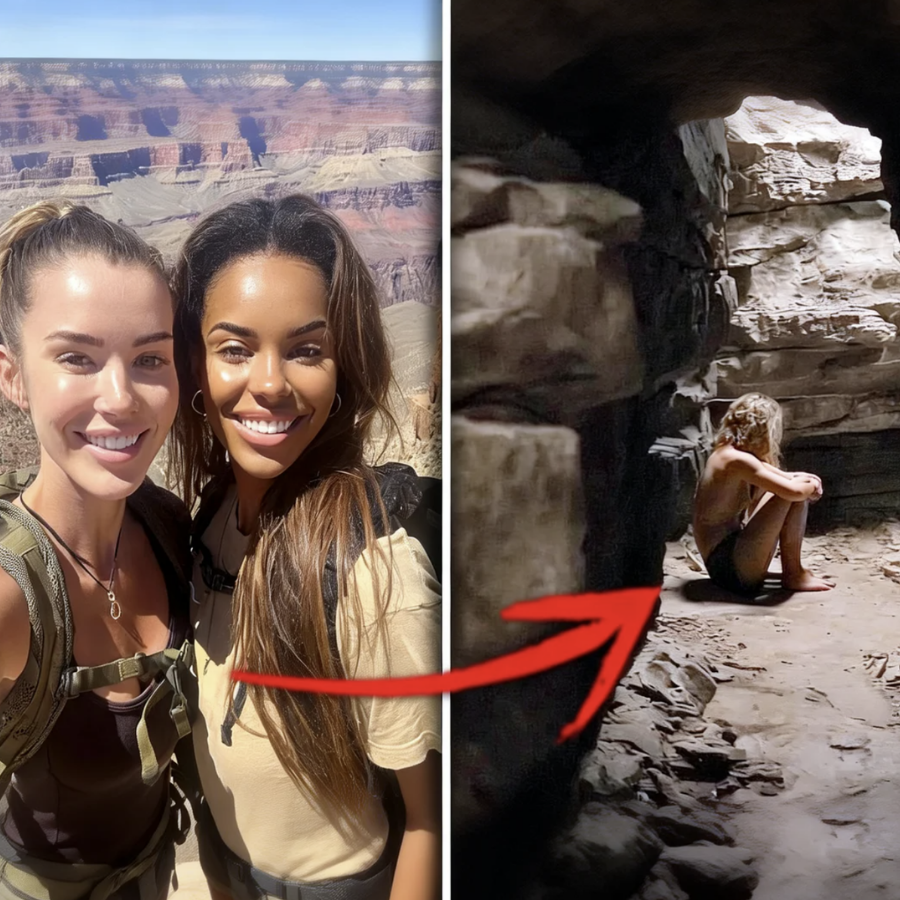
On June 15th, 2012, 26-year-old Madison Blake and 23-year-old Rachel Bennett disappeared during a two-day hike in the Grand Canyon, Arizona. However, 3 years later, in July 2015, Rachel was found alive, but barely recognizable, in a remote cave. Her skin was covered with a network of cracks. Her weight was critically low and she was clutching a dirty backpack that she refused to give even to doctors.
You will find out where Madison disappeared and what terrible truth was hidden behind the survivor’s silence in this story. The events in this story are presented as a narrative interpretation. Some elements have been altered or recreated for storytelling purposes. The morning of June 15th, 2012 in Grand Canyon National Park, Arizona, began with a sweltering heatwave that reached 85° Fahrenheit at 8:00 in the morning.
It was at this time that a silver Chevy rented in Phoenix by two friends from California was spotted in a parking lot near the start of the South Kaob Trail. 26-year-old Madison Blake and 23-year-old Rachel Bennett had arrived at the canyon, planning to make a two-day hike that was to be the highlight of their vacation.
Madison, an energetic marketing agency administrator, was the trip’s organizer. According to her colleagues, she had always been meticulous in her planning and passionate about outdoor activities. Her friend Rachel, who had just graduated from college 3 weeks earlier, saw the trip as an opportunity to reset before looking for her first serious job.
According to the official timeline compiled later by the Ranger Service, the girls left the car at exactly 8 hours and 45 minutes in the morning. Their signatures were not found in the visitors log at the trail head, but this was a typical violation for short-term visitors who did not plan to spend the night in the lower part of the canyon. At 10:00 and 15 minutes in the morning, the last photo appeared on Madison’s social media page.
The girls standing against a sunny slope, smiling with light backpacks behind them. The landscape behind them made it possible to identify the location. It was a point called O a point located about one mile from the edge of the cliff. This picture filled with the cheerfulness and bright light of Arizona would later become the main symbol of the tragedy that unfolded in the silence of the Red Rocks.
There were no reports of accidents in this sector on Saturday and Sunday. The heat rose to 110° F during the day, making any physical activity in open areas dangerous. The alarm didn’t start until Monday, June 18th at 9:00 in the morning when Madison failed to show up for a work meeting.
The agency manager recalled during the interview that Madison had never been late without warning. So, several consecutive unsuccessful attempts to reach her caused immediate concern. The girl’s parents, having received a call from their colleagues, initially hoped that the lack of cell phone service, which is a common problem in the Grand Canyon, was due to a lack of cell phone reception.
However, the silence that grew louder and louder, eventually turned into panic. At 14 hours and 30 minutes that afternoon, Madison’s father contacted the Cookanino County Sheriff’s Office to report her missing. The first check of the parking lot confirmed the worst fears. The rented Chevy was in the same spot where it had been seen on Friday.
The car was locked and sunglasses, spare water bottles, and a printed map of the national park were visible through the windows. This indicated that the girls had not returned to the car after starting their hike. According to a ranger who participated in the initial inspection, the vehicle looked like it had been abandoned in a hurry, but no signs of forced entry or damage were found.
The search operation began on June 16th at 6:00 in the morning. It involved helicopters circling the canyon’s complex terrain for hours and more than 30 volunteers combing the main routes. The Grand Canyon is one of the most difficult areas to search. Numerous crevices, caves, and sudden changes in elevation create areas inaccessible to visual inspection from the air.
The rangers, using binoculars and thermal imagers, examined every rock outcropping, hoping to see brightly colored clothing items. However, the canyon remained mute. No signs of a struggle. No abandoned items or fragments of equipment were found on the South Kob Trail or on parallel branches. The search team’s report on June 20th stated that the search dogs lost the trail within the first mile of the descent, which could have been due to strong winds and extreme temperatures that destroyed scents on rocks.
The girls families were in a state of what was later described as frozen grief. Rachel’s mother recalled that the first days were filled with a terrible numbness. Every phone call seemed like a rescue, but every conversation ended with the words, “No new information.” The Arizona police, after analyzing the calls, found that the last activity of Madison and Rachel’s phones was recorded at 10:00 30 minutes in the morning on June 15th, just after the photo was published.
After that, both devices went offline at the same time, which usually indicates that they were in a zone of complete lack of coverage or mechanical damage to the equipment. After 7 days of intensive searching, the National Park management was forced to admit that there was no real clue. A huge amount of information gathered from other hikers only confirmed that the girls had been seen on the trail in the morning of June 15th, but no one could recall their return or any suspicious persons near them.
The official investigation was at a standstill without material evidence or bodies. The case was classified as a disappearance under unexplained circumstances. However, for the family, this void was unbearable. The Grand Canyon with its majestic vistas and ancient rock formations swallowed up the two young women without leaving any explanation.
The last cheerful photo was the only proof that they had ever walked on this red earth, which now kept its secret in the deep shadows of the canyons. Years of uncertainty lay ahead during which hope slowly faded and the names of Madison Blake and Rachel Bennett gradually disappeared from the headlines, becoming just another line in the list of unsolved cases.
The silence surrounding their disappearance seemed to be permanent until the nature of the canyon decided to speak again under completely different circumstances. Exactly 3 years have passed since the official search for the Grand Canyon was terminated and the Madison Blake and Rachel Bennett case files were moved to the Cookanino County Sheriff’s Department’s archive section.
For 1,095 days, the canyon remained silent, giving no new clues to relatives or investigators. However, on July 11, 2015, at 14 hours and 20 minutes, the situation changed dramatically. A group of three amateur explorers specializing in hard-to-reach caves were exploring a remote sector of the canyon, 12 mi from the popular South Kaob Trail.
This area was considered technically challenging and virtually unvisited by tourists due to the risk of sudden rockfalls. According to the team leader testimony, they noticed a narrow entrance to the cave about 60 ft above the bottom of a dry tributary channel. When the researchers climbed up to the entrance and shown their flashlights into the interior, a beam of light snatched a silhouette out of the darkness, which they initially thought was an optical illusion or a ghost.
In the farthest corner of the cave on the rocky floor, there was a creature that hardly reacted to the appearance of people and the harsh light of powerful diode lamps. It was 26-year-old Rachel Bennett, but her appearance was so altered that it took some time to identify her, even for the specialists who arrived later.
The girl’s physical condition was critical and shocked the witnesses. Her hair, which used to be long and thick, was now sparse, short, and unevenly cut. Rachel’s skin had acquired a specific yellowish gray hue, and was completely covered with a network of small, deep cracks, indicating a prolonged exposure to extreme moisture and vitamin deficiency.
Due to her extreme weight loss, she resembled an anatomical specimen rather than a living person. Her bones were clearly visible through her thin epidermis and her muscle tissue looked completely atrophied. One of the researchers noted in his report to the police that she looked like a person who had returned from the dead or like a shadow that had accidentally materialized in this void.
Rachel did not respond to her own name and made no attempt to speak. Her only conscious action was to clutch her old backpack covered with layers of dirt and dust tighter. The girl held it in front of her with such force as if her whole life was concentrated in this object, and no attempts to calm her down made her loosen her grip.
Neither Madison Blake nor any material evidence of how Rachel was able to survive in complete isolation for 3 years, was found near her. There were no water supplies, firewood, or any equipment for hunting or gathering food in the cave. The search team, which arrived at the site at 18 hours 000 minutes after being called in via a satellite, immediately began to inspect the surrounding area.
Rangers and detectives combed a 2-m radius around the cave, hoping to find the second missing girl, or at least traces of the camp. The results were nil. No fragments of Madison’s clothing, no inscriptions on the rocks, and no markings left behind. Rachel was completely alone within a radius of many miles of the nearest sign of civilization.
Her presence in this inaccessible location contradicted any logic of survival, as the path to the cave required significant physical effort, which the girl’s exhausted body was not capable of. Rachel’s condition did not allow for an initial survey on the spot. She looked through the people with a blank stare, occasionally flinching from the sounds of the helicopter that was called to evacuate her.
The doctors who arrived on board the rescue vessel recorded her in a state of catatonic stuper and signs of severe cognitive impairment. When the girl was being lifted into the cradle of the evacuator, she continued to hold her dirty backpack, clutching it to her chest. It was the only thing that connected her to the past and the only thing she took out of the darkness that had consumed 3 years of her existence.
The canyon was once again in the center of attention of the whole country. But now it raised even more questions than in 2012. The discovery in the cave actually destroyed the version that the girls had died immediately after their disappearance. Rachel was living proof that the story had a continuation hidden from the eyes of the official search teams.
However, her appearance and silence created an atmosphere of anxiety that only grew. Someone or something had allowed her to survive, but the price of that survival was etched on her face and emaciated body. Rachel Bennett had returned from the dead, but she brought with her a secret that seemed more terrifying than death itself. On July 11th, 2015, at 19 hours and 30 minutes, a rescue helicopter that had risen from the bottom of the Grand Canyon landed on the roof of the Flagstaff Medical Center.
On board was Rachel Bennett, a young woman whose return after 3 years of missing was later described by doctors as a true biological anomaly. She was immediately transferred to an isolated box in the intensive care unit where sterile silence rained, interrupted only by the rhythmic hum of medical monitors.
The traumatologist who conducted the initial examination of the patient noted in his official report that the girl’s condition was close to critical. At 5t and 4 in tall, she weighed only 82 lb. This indicated prolonged systematic malnutrition and actual atrophy of muscle tissue which is commonly seen in people in long-term captivity or in conditions of extreme resource scarcity.
The first verdicts of the doctors made after a comprehensive blood test were disappointing. Rachel was diagnosed with severe vitamin deficiency, critical iron levels, and signs of prolonged mobility restriction. However, the staff was most horrified by the injuries that could not be attributed to ordinary injuries from falling or wandering in the mountains.
Forensic experts found old, deep scars on her wrists, ankles, and shoulder joints. The nature of these scars indicated repeated systematic mechanical pressure. The skin in these areas was keratinized and had a dark tint, indicating that the girl had been held in the same position for years with rigid shackles or ropes.
One of the detectives present at the examination noted that these marks resembled the prince of invisible shackles that had become an integral part of her body. Doctors classified Rachel Bennett’s mental state as a state of deep catatonic stuper. She was fully conscious. Her eyes were open, but her gaze remained frozen and directed at a single point on the ceiling.
It seemed that her mind had built an impenetrable psychological wall to protect herself from the reality around her. She did not make a single sound, did not respond to simple requests from doctors or even to the pain of manipulating her IV drips. Her breathing was shallow and her body was unusually cold to the touch despite the fact that the temperature in the room was kept at 72° F.
When her parents were allowed to enter the ward 3 hours after her admission, the atmosphere in the room became almost unbearably tense. According to the nurse on duty at the bedside, Rachel recognized her family. It was clear from the way her pupils dilated and her heartbeat accelerated on the monitor. However, when the girl’s mother tried to touch her arm and hug her, unable to hold back her tears, Rachel’s body instantly went into a violent spasm.
It was not a conscious movement. It was a vegetative reaction of an organism that was used to expecting only threats from touch. Her eyes, which had been empty before, showed real animal fear. She did not push her mother away, but she tensed so much that her thin bones seemed ready to break under the pressure of her own muscles.
This was the first warning sign. Rachel had returned physically, but her perception of human closeness had been completely destroyed. The moment Madison Blake’s parents arrived was even more difficult. For 3 years, they had been living in a state of frozen grief, waiting for any news about their daughter.
The news that Rachel was found alive was a flash of hope for them, which quickly turned into mute despair. When Madison’s father came to the bedside and asked in a quiet voice, “Rachel, where is our girl? Where is Madison?” The patient reacted non-verbbally. She began to cry. It was a silent, convulsive cry accompanied by trembling of the whole body.
Rachel didn’t try to speak. She just covered her face with her hands as if she was trying to hide from the weight of the question. Her silence was heavier than any blatant confession. The Blake family stood in the middle of the sterile room, surrounded by the sounds of medical equipment, realizing that the only person who knew the truth about their daughter was locked inside their own horror.
However, the central object of investigation during these hours was not only the girl’s condition, but her backpack. During the evacuation, the initial treatment at the hospital, and even while trying to feed her, Rachel never let go of it for a second. It was an old, dirty Osprey backpack that she had been wearing the day she disappeared on June 15th, 2012.
However, in 3 years, it had become a deformed object covered with layers of unknown red dirt. When the staff tried to move it away for even a moment to change the bedding, Rachel would fall into a state of uncontrollable panic, clutching at the straps with her thin, bird-like fingers. The sheriff’s detectives in the hallway noted in their reports that the backpack had become not just a thing for her, but part of her physical survival, a kind of shield.
One of the officers suggested that there might be something inside that would explain Madison’s disappearance or indicate the location of their three-year detention. However, the doctors strictly forbade the use of force as any sudden movement could lead to a complete cardiac arrest of the exhausted girl.
Thus, the backpack remained in her arms, a mute, dirty witness to 3 years of suspense that Rachel defended with the last of her broken body. In those first 24 hours in the Flagstaff Hospital, Rachel Bennett never spoke a word. She remained a ghost, breathing but refusing to return to the civilized world, holding her secret tightly in the arms of an old backpack.
Everyone who entered her room felt that the truth was somewhere nearby, behind the layers of dirt on the fabric and the girl’s frozen gaze. But the path to this truth promised to be much longer and more frightening than the 3 years of waiting. Dear viewers, before we delve into the details of the search of the cave, I would like to ask you to support the development of our channel.
Please subscribe, leave a comment below this video, and be sure to like it. This is extremely important because YouTube’s complex algorithms work in such a way that your activity directly helps to promote this video in the recommendations. Thank you to each of you for your support. And now we return to the events of July 2015. On July 12th, 2015, 12 hours after Rachel Bennett was taken to the hospital, a team of forensic scientists and detectives from the Cookanino County Sheriff’s Department returned to the cave. Access to the site remained
extremely difficult with experts having to use climbing equipment to climb 60 ft of steep slope to a narrow entrance that appeared from the outside to be just a dark crack in the rock. The temperature inside the cave despite the outside heat of 98° F remained at 62°, creating ideal conditions for preserving any material evidence.
A thorough search of the room, which lasted more than 8 hours, revealed a picture that contradicted all previous assumptions of the investigation. In the deepest corner of the cave, behind a large boulder, the forensic experts found a small cache. There, among a layer of dry dust, were empty wrappers from energy bars and packages of freeze-dried food.
An analysis of the labeling showed that these products had expired back in October of 2012. These were the exact supplies that Madison Blake and Rachel Bennett had purchased at a camping store in Phoenix before starting their hike. However, the fact that these rappers were carefully stacked in one place indicated the conscious activity of a person trying to keep at least some order in their primitive life.
However, it was the arrangement of the lair that raised the most questions for the detectives. Unlike places where people stayed for a long time, where significant amounts of organic waste, layers of soot from fires or traces of household alterations would have accumulated over 3 years. This cave looked almost sterile.
The place to sleep was prepared in a very primitive way. a small layer of dry grass and moss covered with the remains of an old nylon film. The forensic expert noted in his report that the condition of this flooring and the absence of deep dents in the ground indicated that the cave had been used recently, perhaps within the last 2 to 3 weeks.
This led to a clear and disturbing conclusion. Rachel Bennett had not been at this point in the canyon during the 3 years she had been missing. The cave was only her temporary accidental shelter, which she had entered under mysterious circumstances just before she was found. Where the girl had been for a thousand days before, that remained a complete mystery.
An additional clue was found in the analysis of the clothes Rachel was found wearing. Although her clothes were worn to the point of rags, the lab technicians found significant layers of specific red dirt on the fabric fibers in the area of her knees and elbows. Further geological examination confirmed that this type of soil is not typical for the rocky and arid regions of the Grand Canyon.
This type of mud is characteristic of the marshlands and wet lowlands that are located much further north of the canyon on the Kaibab Plateau tens of miles from where the girl was found. This meant that Rachel had traveled a huge distance in a state of extreme exhaustion, or someone had moved her from one climate zone to another.
The question of Madison Blake’s fate only became more acute during the inspection of the cave. Despite the use of luminol and a detailed examination of every inch of the stone floor, forensic experts found no biological trace of the second girl. There was no Madison’s hair, no drops of blood, and no small personal items such as hairbands or pieces of jewelry in the cave.
The entire space belonged to Rachel alone. It seemed that Madison Blake had never set foot in this stone lair. This supported the theory that the friends had been separated at some point during their disappearance, or that something had happened to Madison much earlier. Detective Sullivan, who led the survey team, later recalled that the atmosphere in the cave was depressing, not because of what they found, but because of what was not there.
There were no signs of a struggle, no notes on the walls, which are usually left by people hoping for rescue. There was only silence and the smell of stagnant moisture. The cave looked like a cage that had just been opened, but whose occupant never realized that he was free. The evidence gathered, three-year-old rappers next to a newly arranged sleeping area and alien red dirt, indicated that the investigation would have to go far beyond the national park.
The Arizona police began to realize that they were not dealing with a case of miraculous survival in the mountains. but with a targeted activity that required logistics and control of the victim. Someone kept Rachel in the wet forests to the north and then for unknown reasons brought her back to the canyon, leaving her in a cave with old food supplies as if to simulate her staying there all along.
Each new discovery in the stone layer only moved the detectives further away from a simple solution, turning the case into a complex labyrinth with the mute Rachel and her untouchable backpack in the center. July 25th, 2015 was a turning point in the investigation, which until then had resembled an attempt to put together a jigsaw puzzle from broken and lost fragments.
Exactly two weeks have passed since Rachel Bennett was hospitalized at Flagstaff Medical Center. All this time, the girl has been under the supervision of a team of psychiatrists and specialists in dealing with deep trauma. The state of catatonic stuper in which she was found was gradually replaced by a phase of reactive numbness.
She began to eat from the hands of nurses, but her eyes still remained glassy, and any attempt to speak to her ended in prolonged silence or short spasms of facial muscles. According to the notes of a leading psychiatrist, Dr. Elias Thorne, Rachel’s mind had built a complex system of defense mechanisms.
It was a classic form of dissociative amnesia mixed with extreme post-traumatic stress disorder. Her brain seemed to have blocked the most painful memories to prevent the complete mental destruction of her personality. Doctors noted that Rachel reacted only to certain stimuli. The strongest trigger was the name of her friend Madison.
Every time one of the staff or detectives who periodically came to the room said this name, the girl’s condition changed dramatically. She would start to rock rhythmically from side to side. A typical stereotypical reaction typical of people who have experienced prolonged isolation and physical abuse.
This monotonous action was the only way her exhausted psyche tried to calm itself. On July 25th at 16 hours 45 minutes during another therapy session when the room was silent, Rachel broke her silence for the first time in 3 years. According to Dr. Thorne. He was just sitting next to her, not asking questions, when she suddenly stopped rocking.
Her eyes, usually directed into the void, focused for a moment on the wall in front of her. Her voice was barely audible, horse from long periods of non-use of her ears, but her words were clear. She uttered the first phrase that instantly changed the vector of the entire investigation. She couldn’t walk, so I’m here alone.
These six words were a real explosion for the detectives. Until that moment, the main version of the police was the assumption that the girls had fallen into some kind of natural trap where Madison died and Rachel miraculously survived. However, the phrase she couldn’t walk indicated that Madison Blake had suffered a severe injury that deprived her of mobility.
This explained why the girls were unable to return to the car on their own in June 2012. But most importantly, the words, “That’s why I’m here alone,” indicated that the separation of the friends was forced and occurred under circumstances that Rachel perceived as fatal. 30 minutes after the first phrase, when the doctors were trying not to frighten the girl with unnecessary attention, she added another detail that finally ruled out the version of a simple accident.
Rachel continued to stare at one point and whispered. He should have helped, but he didn’t. The use of the pronoun he was direct evidence of the presence of a third person in the story. It was not an abstract animal or natural element. It was a concrete person, a man who the girls had counted on to help them at their most vulnerable moment, but who instead became their nightmare.
The investigative team led by Detective Sullivan immediately began reviewing all the case files from 2012. It became clear that Madison had indeed been injured, probably during the descent or due to a bad step on loose soil. However, instead of finding help and saving the girls, this unknown he took advantage of the situation.
A new term appeared in the police reports. Intentional confinement. Rachel’s phrase that he didn’t help took on a terrible meaning. It was not just a refusal to help, but the beginning of a three-year hell. Psychologists analyzing Rachel’s condition after these words came to the conclusion that she was experiencing deep survivors guilt.
Her mind was blocking memories precisely because they were associated with the moment when she saw her friend’s helplessness. It became obvious that for 3 years, the unknown kidnapper had not only kept the girl in isolation, but had purposefully broken her will, possibly using Madison’s fate as an instrument of psychological pressure.
This testimony, although fragmentaryary, gave the investigation a new impetus. The Arizona police received confirmation that they were not looking for a body in the mountains, but for a living criminal who could still be somewhere nearby. The figure of the man from the canyon appeared in the case, who knew about Madison’s injury and deliberately decided to leave her unaided, taking Rachel with him.
The girl’s silence began to break, and every new letter, every word spoken within the walls of the Flagstaff Hospital brought the detectives closer to understanding what had happened in the shadow of the Red Rocks. Now, the main task was to find out who this he was and what exactly happened to Madison Blake, who could not walk.
On July 27th, 2015, at 10:00 in the morning, the management of the Flagstaff Medical Center, together with the detectives of the sheriff’s department, decided that Rachel Bennett needed to be medically sedated. The girl’s condition remained extremely unstable, and her pathological attachment to her old backpack prevented her from undergoing vital procedures.
Only after administering strong sedatives when Rachel fell into a deep sleep were the police finally able to gain access to the object she had been holding in her arms for 16 days since her rescue. The Osprey backpack, once a vibrant blue, was now almost black with layers of dirt, dust, and old stains of unknown origin.
As it was moved to the sterile examination room in the presence of two forensic scientists, the room fell silent. According to the search protocol number 48B, the central compartment of the backpack was opened at 11 hours and 15 minutes. What the detectives saw inside finally destroyed the theory that Rachel was simply lost and surviving on her own.
In addition to the remains of the girl’s personal belongings, which had turned into rags, objects of obviously alien origin were found at the bottom of the backpack. The first discovery was three fragments of nylon rope with a total length of about 10 ft. The tactical equipment expert involved in the analysis noted in his conclusion that the ends of the ropes were tied with specific professional knots.
These were complex self-tightening loops and stirrup knots which are commonly used in military or industrial mountaineering to secure heavy loads. However, the wear pattern of the rope indicated otherwise. Microscopic fragments of human epithelium remained on the fibers. It became apparent that these ropes were used as shackles to secure the limbs and the complexity of the knots ensured that the victim would not be able to free himself.
The second even more disturbing discovery was pieces of specific tactical marking tape. This material known in narrow circles as photooluminescent tape has the ability to glow in complete darkness after a short exposure to light. Such tapes are often used by military units during night operations to mark roots in dense forests or complex underground utilities.
Fragments were glued to the inside of the backpack and to some of the girls personal belongings. This indicated that Rachel’s movements and her stay in the darkness of the caves or forests were clearly controlled by brutal and sophisticated visual navigation techniques. Detective Sullivan analyzing the contents noted that these items clearly could not have belonged to Madison or Rachel.
The college student and marketing agency administrator had neither the skills to tie professional military knots nor access to specific tactical equipment. Inside the backpack were also found several empty packages of dry rations used by the US Army, but the serial numbers on them had been carefully erased, indicating an attempt to conceal the source of the food.
On July 29, the Arizona State Crime Laboratory completed the analysis of DNA profiles obtained from the surfaces of the ropes and the inner walls of the backpack. The results confirmed the investigator’s worst fears. In addition to Rachel’s own biological material, the DNA of an unknown man was found on the items. This genetic profile did not match any record in the COTUS database, which meant that the perpetrator had not been prosecuted for serious crimes before, but his invisible presence in the girl’s lives for 3 years was now scientifically
proven. The forensic report emphasized that the condition of the items found indicated systematic control. The girls were not just kept in captivity. Their lives were organized according to a strict almost military routine. The use of tactical tape and professional ropes suggested a person with specific training and accustomed to acting in the wild using methods of suppressing will.
The backpack that Rachel so desperately defended was not actually her personal property, but a portable prison that held the tools of her own enslavement. For the Flagstaff Police, analyzing the contents of the backpack was a point of no return. It became clear that they were dealing with a professional predator with survival and tactical planning skills.
This explained why the large-scale search operations of 2012 did not yield any results. The girls were not just hidden, they were held using methods that allowed them to remain invisible to thermal imagers and search groups. The question of why this man allowed Rachel to keep the backpack with such incriminating evidence remained open.
Perhaps he was so sure of his impunity or it was part of the last most brutal stage of his game with the victim’s psyche. Evidence indicated that Madison Blake, who could not walk, was probably subjected to even harsher methods of fixation. The absence of her biological material on the ropes in Rachel’s backpack only heightened the alarm.
It meant that the kidnapper had a different toolkit for each of the girls. Arizona police began to narrow the search, focusing on former military or forest service personnel who had access to specific equipment and possessed the skills demonstrated in the cave and Rachel’s backpack. The truth began to take on a clear but extremely chilling shape.
On August 4th, 2015 at 6:00 in the morning, a joint task force from the Sheriff’s Department and the National Park Service began a large-scale inspection of the northern section of the Kaib forest. Based on the results of forensic analysis of the red dirt found on Rachel Bennett’s clothing and backpack, the search area was narrowed to 30 square miles of marshland, located well north of the main Grand Canyon Canyon.
This area, known for its dense vegetation and limited number of official hiking trails, has been considered one of the most isolated areas in the state for decades. For 10 hours, the search team combed through inaccessible sectors where the ground had the same distinctive rusty red hue caused by high levels of iron oxide.
As the detectives moved through the dense shrubbery and fallen pine trunks, they began to lose hope, assuming that the geological examination might have been too wide of a margin of error. However, at 16 hours and 20 minutes, the situation suddenly changed. When the group came to a small clearing 12 mi from the nearest dirt road, a man came out of the woods to meet them.
When he saw the armed officers in uniform, he instantly froze. According to Sergeant Miller’s report, the man looked shocked and confused, but his posture showed a specific tension characteristic of people with professional combat training. He was wearing sturdy olive tactical clothing that looked neat despite its long use.
The man introduced himself as Robert Turner, a 38-year-old former military man. When the detectives asked him about his presence in the middle of nowhere, he said that he had been here recently. about 2 weeks and had chosen this place for complete solitude and psychological recovery after performing difficult military missions abroad.
When Turner was shown the printed photographs of Madison Blake and Rachel Bennett, his reaction was cold and reserved. He studied the pictures carefully and declared that he had never seen these women and had nothing to do with the events of 2012. He claimed that all this time he had been moving around different states seeking peace from civilization and had only recently stopped in the Kaibab forests.
However, it was this confession of a military background that was the decisive factor for the police. The specific type of intricate knots in the nylon ropes found in Rachel’s backpack and the presence of army rations with numbers rubbed off perfectly matched the profile of someone who had access to professional equipment and the relevant skills.
Robert Turner was detained for identification and interrogation. However, the main stage of the investigation was the identification procedure. On August 5th, at 10:00 in the morning at Flagstaff Medical Center, with the consent of her doctors, Rachel Bennett was prepared to meet with a potential suspect.
Due to her unstable condition, it was decided to conduct the lineup through a protective glass in a specially equipped room where she could see Turner while remaining invisible to him. Rachel’s reaction was immediate and terrifying. As soon as the man entered the adjacent room and raised his head, the girl fell into a state of acute hysteria.
Her body began to shake with violent convulsions, and she slid off the bed onto the floor, trying to hide in the farthest corner. It was not just fright. It was deep primal terror. After 3 weeks of almost complete mute, Rachel screamed. Her words captured on audio and witnessed by three police officers became the key evidence.
She screamed that it was him, the man who had met them in June 2012 on the South Kaob Trail. According to Rachel’s words, which were later reconstructed during brief periods of clarity, Turner was the man who was supposed to help them. When Madison Blake injured her leg and was unable to continue walking, they met Turner, who looked like an experienced hiker or ranger.
The girls turned to him hopefully, believing they had met their savior. However, instead of calling for help or transporting the injured girl to the canyon exit, Turner took advantage of their helplessness. She screamed that instead of rescuing them, he had abused them for years, keeping them in captivity and making every hour of their lives a struggle for survival.
Rachel repeated that he had appeared just as Madison was lying on the ground, unable to move, and that this man had been the architect of their three-year hell. His calm and confident appearance in the forest clearing was just a mask hiding a predator who had deliberately chosen the two hikers as his victims at the most difficult moment of their hike.
After the identification, Rachel’s condition deteriorated again and doctors were forced to use sedatives. However, for the investigation, the picture became extremely clear. The man in the woods, Robert Turner, was no longer a bystander. He became the main defendant in the case of Rachel Bennett’s abduction and three-year detention.
But the main and most painful question remained. Where exactly was Madison Blake? And why hadn’t she returned with her friend if Turner had the ability to hold them both? The answer to this question now depended on whether the detectives could break the professional resistance of the detained veteran who continued to remain silent even while handcuffed in the interrogation room.
The trial in the case of the state of Arizona versus Robert Turner officially began in March 2016 in the Flagstaff District Court. This case, which for 3 years had been considered a hopeless dead end, now captured the attention of the entire country, making even experienced criminalists shudder. The courtroom was packed with journalists, volunteers who had participated in the search since 2012, and relatives of the girls whose faces had become masks of deep, incurable pain.
Over the course of 24 days of court hearings, the jury was exposed to the true devoid of any human features nature of the crime that lasted for over a thousand days in complete isolation from the civilized world. Robert Turner was not a random passer by who got confused in an extreme situation.
The psychological examination materials presented by Dr. Elias Thorne showed that the defendant suffered from an extremely destructive form of post-traumatic stress disorder which was superimposed on congenital sociopathy. His professional military experience instead of becoming a tool of defense turned in his mind into a tool for the realization of painful fantasies.
Psychologists have established that when Turner met Madison Blake and Rachel Bennett on the trail on June 15th, 2012, and saw that Madison had broken her leg, the hunter in him instantly awoke. He didn’t see accident victims in front of him. He saw the perfect material for his survival experiments. Instead of calling for a rescue helicopter, Turner, using his physical superiority and fake calm, lured the girls to his basement.
It was a specially equipped room in his private home, located in the middle of the Kaibob forest, 15 mi from the nearest village. The basement was soundproofed and equipped with a video surveillance system through which Turner watched his captives around the clock. At his trial, he cynically explained his actions as learning to survive under extreme stress.
In his distorted perception, the girls ceased to be human beings. They became objects or cadetses whose resilience he decided to test in practice. The fate of Madison Blake was the most tragic part of the indictment. She died 2 months after her abduction in August of 2012. The cause of death was progressive sepsis caused by an open fracture of the tibia and massive blood loss.
During the interrogations, Turner said with a coolness that shocked even the judge that he did not knowingly give Madison any drugs or antibiotics. He simply observed how the young body was trying to fight the infection, making daily notes in his notebook about the stages of decomposition of the tissues of a still living person. When Madison died in agony in front of her friend, Turner carried her body out and buried it in a shallow grave under the roots of an old pine tree near his home where forensic scientists would find her remains 3 years later. He continued to
keep Rachel Bennett in captivity for another 3 years. During this time, he was able to completely break her will using Madison’s fate as the main tool of psychological terror. He demanded unquestioning obedience from her using methods borrowed from the most brutal military practices of interrogation and identity deposition.
Rachel obeyed his every gesture, every look. Turner released her into that remote cave only in July 2015 when he realized that she had become a broken toy. She no longer cried, asked for help, or even tried to escape when the door of her prison remained open. He had lost interest in her because she had ceased to offer the resistance that had so fueled his sadism.
On March 28th, 2016, Judge Christopher Ellis announced the final sentence, life in a maximum security prison with no chance of parole. When the gavl hit the courtroom, Robert Turner showed no emotion. According to the baiffs, he looked directly at Madison Blake’s parents with a cold, barely noticeable smile that captured his absolute disregard for human life.
This story changed all of its participants forever, leaving only ruins. Rachel Bennett has never been able to return to reality. Now she is under roundthe-clock supervision in a closed rehabilitation center in California. According to the medical staff, 3 years in Turner’s basement have left her mentally scarred beyond repair.
Rachel still cannot sleep in a bed. Every night she lies down on the hard, cold floor, curled up. The most terrifying detail of her current life is that she never drinks water on her own. Every time she feels thirsty, she freezes in the middle of the room and waits for hours for one of the medical staff to pay attention to her so that she can whisper for permission to take a sip.
She still lives by her captor’s rules, even when he is behind bars. Madison Blake’s family was finally able to bury their daughter in a closed casket in a small cemetery in their hometown. This brought them legal closure, but not peace of mind. Their home, once filled with Madison’s laughter, has now become a silent memorial where every object reminds them of the two months of her inhuman suffering in the Kaob forests.
The lives of both families will forever be divided into before and after that fateful June 15th. The Grand Canyon with its majestic scenery no longer exists for them. Now it is only a territory where a ghost in military camouflage was waiting for them in the shadow of the red rocks, proving that the most terrible predator in the wild is a man who has lost everything human.
The case of Madison and Rachel became a grim reminder that sometimes the silence of the forest hides secrets that are better never to be revealed. And the victory of the law in court does not mean victory over the darkness in the human soul.