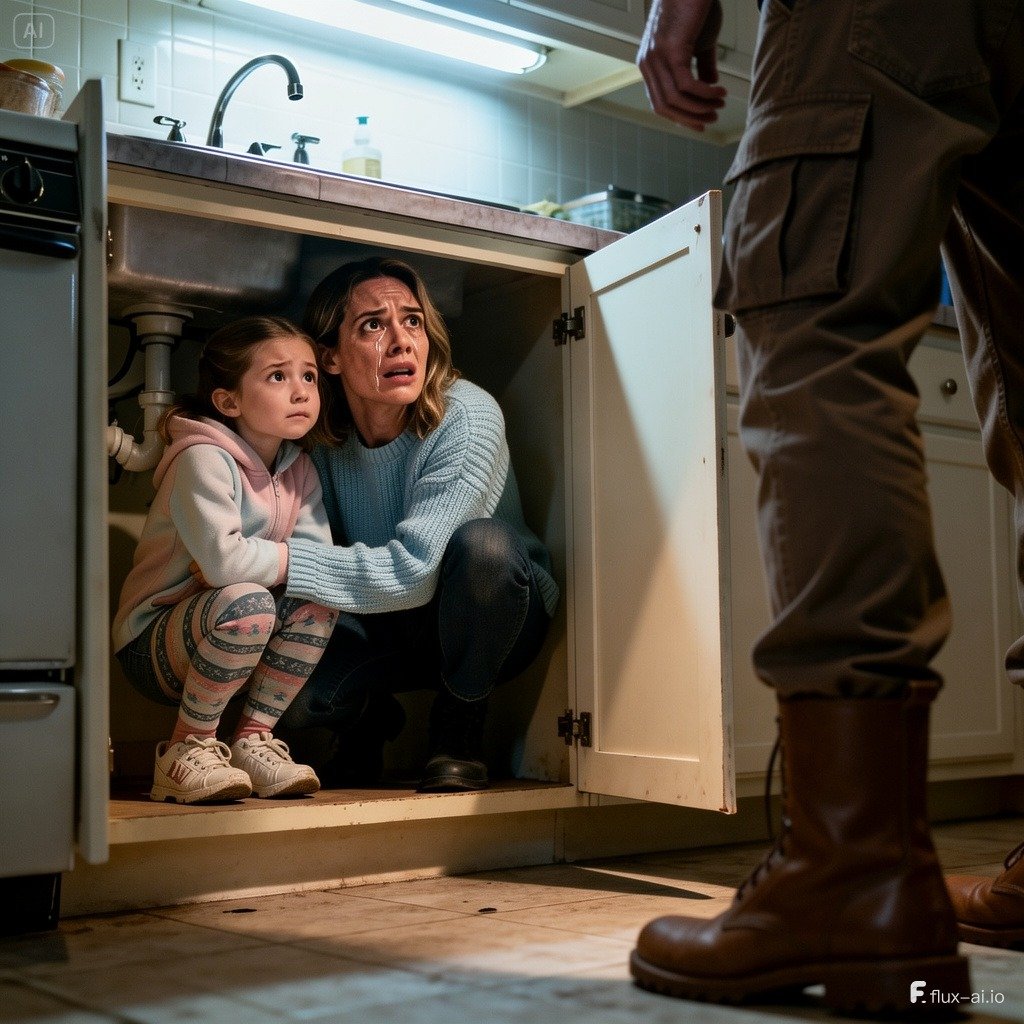
Familiarity can be our greatest comfort—and our greatest vulnerability. I learned this in the most terrifying way possible. My husband Michael returned from a trip a day early, or so I thought. A knock at the door was followed by a voice that was unmistakably his calling, “It’s Dad, Mom!” I was seconds from opening it when my eight-year-old daughter Sophie’s small hand clamped onto mine. “Mom, that’s not Dad,” she whispered, her voice thick with a fear that was instantly contagious. “We have to hide.” We retreated to a kitchen cupboard, a decision that felt absurd even as we made it. That decision saved us.
Huddled in the dark, we heard the intruder enter our home with a key. His footsteps, steady and even, were the first concrete proof Sophie was right. My husband has a distinct gait. Then, a confirming text from the real Michael lit up my phone: he had just landed at the airport. The man in our house was a stranger performing a convincing imitation. When he found our hiding place and opened the cupboard door, the reality of the danger became horrifically clear. A struggle, a frantic escape to the backyard, and the timely, real arrival of my husband turned a potential tragedy into a narrow escape.
The police explained the intruder’s method. He was a predator who used research and mimicry, not force, as his primary tool. He had cloned a key and practiced my husband’s voice. His scheme was sophisticated because it was built on exploiting social trust. He didn’t need to break down the door; he only needed us to open it willingly. The entire plan was undone by a child’s acute attention to detail—a specific, small sound her father made that the impersonator didn’t replicate.
This experience was a brutal lesson in situational awareness. We often teach children to be wary of strangers, but we rarely consider that a stranger might sound exactly like a loved one. We changed our physical security immediately, but we also changed our family protocols. We established a safe word, and we promised to always listen to that gut feeling, no matter who it comes from. The event reminded us that safety is a shared responsibility, and that sometimes the most critical warnings come from the smallest voices. I share this story not to frighten, but to encourage a conversation about the small, personal habits that define our true family and home. Knowing them might be the most important security system you ever have.