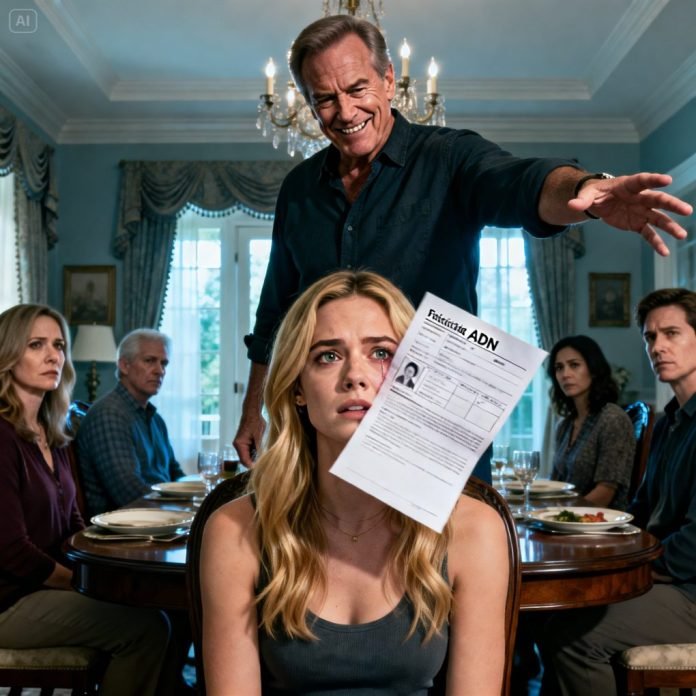
Family dynamics can be complicated, but mine were built on a lie. On my twenty-seventh birthday, my father presented me with a DNA test kit, declaring it might explain why I was the “mistake” of the family. It was a brutal, public attempt to cement my status as an outsider. For years, subtle differences in my appearance and personality had been used as evidence that I didn’t belong. That night, I used the test, not for him, but for myself. The results confirmed he was not my biological father. I held onto that truth in silence, unsure of what to do next.
The turning point came months later, via a summons from the family estate attorney. The meeting she called was cryptic and mandatory. Sitting across from my pale, nervous parents, I listened as the attorney, Margaret, revealed a story of profound deception. My grandfather, William, was my biological father. A long-concealed affair, buried under legal documents to protect the family’s reputation, was the real origin of the “differences” I’d been punished for my entire life.
The emotional whiplash was immense. The man who had raised me with such contempt was not my father, but my half-brother. The grandfather I’d barely known had provided for me in secret through a substantial trust, activated only by the DNA verification I had just unwittingly provided. The insult meant to diminish me had instead handed me the keys to my own liberation and a significant portion of the family’s wealth.
What followed was a masterclass in toxic family patterns. Richard’s reaction cycled through denial, rage, and manipulative bargaining. He saw the truth not as a revelation, but as a theft. This period forced me to establish the strongest boundaries of my life. With the help of a clear-eyed lawyer, I navigated the legal process, not as an act of vengeance, but of reclamation.
The real work was internal. The money provided security, but the journey was about integrating a shattered identity. I had to grieve the fictional family narrative and accept a more painful, complex reality. I chose to use the resources to create positive change, actively redefining what the family name could mean. My relationship with my mother evolved into something more honest, though fragile. With Richard, I established a distant, civil détente, freed from the need for his approval.
The profound lesson was about the nature of truth and power. My father believed truth was a weapon to be wielded by the powerful. He was wrong. Truth, once released, is an equalizing force. That DNA test didn’t just reveal biological facts; it exposed the rot of secrecy and gave me the agency to build a life on my own terms. It proved that sometimes, the very thing meant to break you contains the blueprint for your freedom.