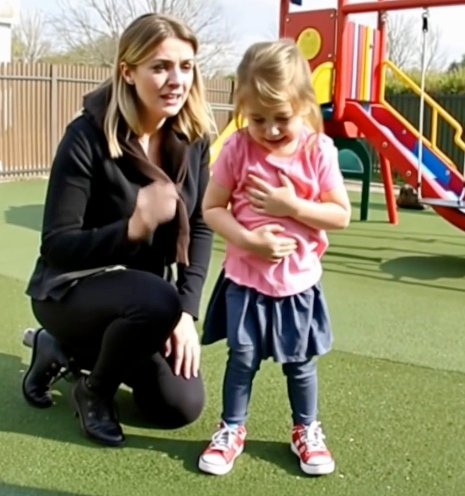
A child’s pain is not always loud; sometimes, it is whispered in a hesitant walk. Teacher Rachel learned this in the most urgent way when she watched her student, Emily, enter the classroom moving with obvious difficulty. The little girl’s pained steps told a story words could not. When Rachel looked more closely, the evidence was clear and chilling, written plainly on the child’s clothing. In that split second, a teacher’s instinct became a lifeline. Rachel immediately called 911, setting a rescue in motion for the suffering child.
In the aftermath, as Emily was taken to receive critical care, Rachel had to quickly compose herself for the sake of her other students. She addressed their worried faces with gentle honesty, assuring them Emily was in good hands and encouraging them to send kind thoughts. She guided the class through their day, a model of calm, while her mind replayed every interaction with Emily, searching for missed clues in her recent quietness and avoidance of certain activities. The question of “what if” lingered, but was quickly overshadowed by the need for “what next.”
Her duty did not end with the emergency call. After school, Rachel became an active participant in the safety net forming around Emily. She consulted with the school counselor to plan for Emily’s emotional recovery and then provided a detailed account to child protection investigators. Her firsthand observations of Emily’s academic performance and social behavior were invaluable, painting a fuller picture of the child’s home life and needs. Rachel understood that her voice as a teacher could be a powerful instrument for protection.
The gravity of the situation stayed with Rachel long into the evening. It ignited a fierce determination to ensure no child would ever feel so alone in their distress. This was not an isolated incident, but a symptom of a need for greater awareness. She began organizing trainings and discussions with her fellow educators, focusing on recognizing the subtle, non-verbal signs of abuse and neglect. She championed the idea that their school should be a place of unwavering safety and open communication.
Emily’s painful journey into the classroom that morning became a defining moment. It transformed Rachel from a teacher into a steadfast advocate, highlighting the essential, often unseen, role educators play as guardians of their students’ well-being. Her actions proved that courage in the classroom isn’t just about managing lessons; it’s about having the heart to see the unseen and the resolve to act, ensuring that a child’s silent cry for help is always met with a swift and caring response.