The cold at Blackwood Lake that day was a character in itself—a silent, bitter predator. I sat apart, a silent sentinel in a thin coat, my gaze fixed on my daughter, Mia. She stood like a ghost among the vibrant, expensive parkas of the Harrison family. Since her marriage to Brad, the joy in her eyes had been systematically replaced by a quiet dread. They were a clan built on old money and casual cruelty, and Mia was their favorite target.
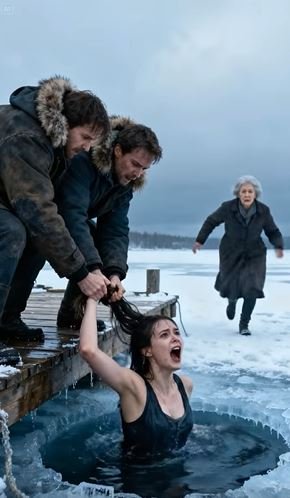
It started as a drunken idea, a spark of boredom in their privileged eyes. Brad’s brothers moved with a coordinated menace that betrayed this was more than a spontaneous jest. They grabbed Mia. Her cry for help was directed at her husband, but Brad’s only response was to raise his phone, a cynical director filming his own tragedy. The shove was violent, sending her arcing through the brittle air before she crashed through the ice. The laughter that followed was more jarring than the splash.
Then, the true depth of their depravity revealed itself. As Mia fought the paralyzing shock of the water, they didn’t help her. They pushed her back under. They held her there. Her fight for breath was their entertainment. My scream was raw, torn from a place I didn’t know existed, but it was met with their indifferent amusement. In that crystalline moment of horror, a switch flipped inside me. The polite mother-in-law was gone, replaced by something feral and unstoppable. I plunged into the water, the cold an agony that meant nothing compared to the sight of my daughter drowning.
On the shore, cradling Mia’s blue-tinged, convulsing form, I faced their mocking stares. They told us we were being dramatic. They told us to stop crying. It was then I knew that pleas were useless. My fingers, numb and clumsy, found my phone. I bypassed 911 and dialed a number I had sworn never to use—a direct line to a different kind of emergency response. My brother answered, and my message was simple: “Do it. Make them pay.”
The sirens that approached were not the usual kind. This was a convoy, a display of force that spoke of a different caliber of justice. My brother, Marcus, emerged not as my sibling, but as the state’s Attorney General. The Harrisons’ bluster died in their throats as they recognized him. He used their own weapon against them—the video—transforming their “prank” into a damning confession of attempted murder. Their money, their name, their influence—it all evaporated under the cold, impartial gaze of the law.
Now, the winter is a season we observe from the warmth of a safe hearth. Mia is recovering, her spirit slowly returning. The Harrisons are facing a long, cold future behind bars, their legacy one of shame and incarceration. They thought they could get away with it because they always had. But they made a fatal miscalculation. They thought the greatest danger was the icy water, but they were wrong. The most dangerous force in the world is a mother who has been pushed too far, with the means and the will to ensure that justice, like the deepest winter, is utterly unforgiving.