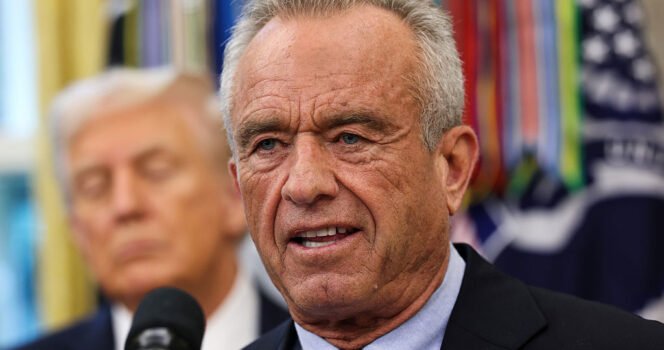
The role of science in public health policy is under scrutiny following recent comments from Health Secretary Robert F. Kennedy Jr. In a cabinet meeting, he reaffirmed his long-standing theory linking acetaminophen—the active ingredient in Tylenol—to autism, a claim that exists firmly outside the consensus of the medical and scientific community. Major health organizations and independent researchers have consistently found no evidence to support this connection, highlighting a critical divide between a political narrative and established scientific understanding.
Kennedy’s hypothesis doesn’t stop with Tylenol alone. He further proposed that circumcision could double the rate of autism in boys, suggesting a link through the administration of painkillers after the procedure. This claim seems to stem from a 2015 observational study from Denmark. However, the authors of that very study have been clear about its limitations, explicitly stating they found a correlation, not a cause, and had no data to confirm whether painkillers were even used. In scientific terms, a correlation simply indicates a statistical relationship that may be coincidental or influenced by other unseen factors, not that one event causes the other.

The reaction from the medical community has been swift and firm. Experts point out that autism spectrum disorder is a neurodevelopmental condition with strong genetic components and likely influenced by a variety of complex, interacting factors. Pinning its cause to a single, common medication or medical procedure oversimplifies a deeply intricate field of study. Such assertions, when presented without the crucial context of their scientific rebuttal, can be misleading and cause undue alarm among parents.
The concern among researchers and clinicians is that promoting unsubstantiated claims from a high office can undermine public health. It can lead to vaccine hesitancy-style movements where parents avoid safe and effective pain relief during pregnancy or necessary medical procedures based on fear rather than fact. This diverts the conversation away from supporting autistic individuals and their families and from funding robust, methodologically sound research into the true, multifaceted origins of autism.
RFK Jr: There are two studies that show children who are circumcised early have double the rate of autism. It's highly likely because they were given Tylenol."
Wut
pic.twitter.com/dliR1agiEJ— Republicans against Trump (@RpsAgainstTrump) October 9, 2025
This situation underscores the essential need for evidence-based discourse in public health. While questioning and investigating are fundamental to science, presenting hypotheses as settled facts without rigorous proof can have real-world consequences. The duty of health leadership, many argue, is to communicate the consensus of scientific evidence clearly and responsibly, ensuring the public can make informed decisions based on reliable information.