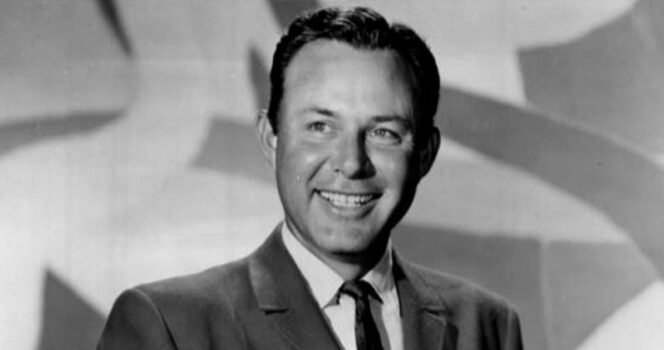
The year 1960 witnessed the rise of a song that would become a cornerstone of popular music. Jim Reeves’ “He’ll Have to Go” did more than just dominate the airwaves; it crafted a new identity for country music, blending its traditional heart with a polished, pop-friendly sound. Reeves, known for his impeccable style and smooth vocal delivery, delivered a performance that felt both intimately personal and grandly universal, securing his place as one of Nashville’s most iconic voices.

What makes a song truly timeless? For “He’ll Have to Go,” it was the perfect fusion of a relatable story and a flawless performance. Inspired by a real-life phone call overheard in a bar, the song captures a man’s desperate attempt to win back his lover. This simple, yet profoundly human scenario, provided a narrative that millions could connect with. Reeves’ interpretation, calm yet filled with yearning, turned the lyrics into a powerful emotional experience.
The track’s monumental success was no accident. It was a strategic and artistic triumph that showcased the emerging “Nashville Sound.” By pairing Reeves’ gentle baritone with sophisticated, string-laden arrangements, producer Chet Atkins created a record that was both country and cosmopolitan. This sound resonated far beyond its genre, allowing the song to become a massive crossover hit and introducing Jim Reeves to a global audience that might never have tuned into a traditional country station.
Tragically, Reeves’ life and career were cut short just four years later, a loss that deeply saddened the music world. However, his musical legacy, particularly that of “He’ll Have to Go,” only grew stronger. The song became a permanent fixture on jukeboxes and radio playlists, and his posthumous induction into the Country Music Hall of Fame was a fitting tribute to his impact. His influence paved the way for future artists who sought to blend country roots with mainstream appeal.
Today, the song remains as powerful as ever. Its continued presence in modern media is a testament to its enduring quality. Jim Reeves proved that great music is defined not by its category, but by its ability to convey authentic emotion. “He’ll Have to Go” stands as a permanent monument to this philosophy—a smooth, heartfelt plea that continues to captivate listeners and remind us of the gentle power of a perfectly sung song.