The deep sea is Earth’s final frontier, a realm of perpetual darkness teeming with life forms that have adapted in extraordinary ways. One such example is the Eulagisca gigantea, a marine worm from Antarctica that has recently surged in popularity online. Its sudden fame provides a wonderful opportunity to explore the hidden biodiversity of our oceans and the remarkable adaptations that allow life to thrive in extreme environments.
At first glance, you might be struck by the worm’s almost jewel-like quality. Its body is adorned with a dense covering of golden, metallic bristles that shimmer as if dusted with precious metal. This stunning appearance is a testament to the unexpected beauty found in the deep. However, nature often balances beauty with purpose, and this worm is no exception. Those brilliant bristles are multifunctional tools for survival in a challenging habitat.
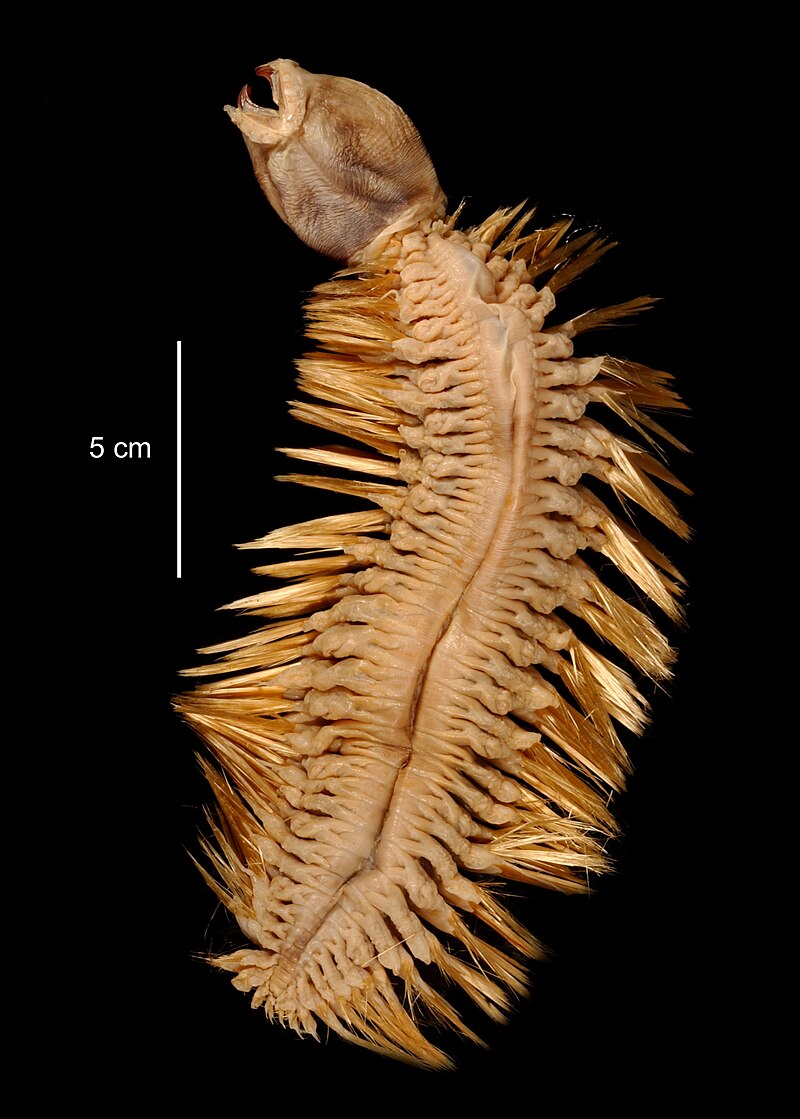
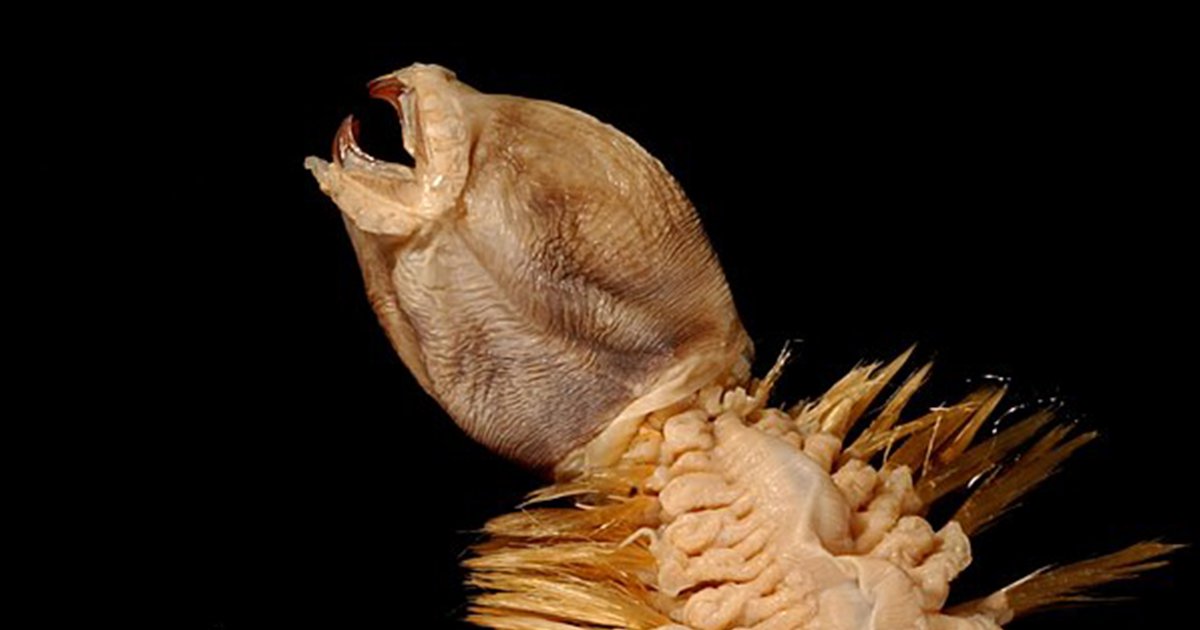
The true marvel of its anatomy, though, lies in its head. The worm possesses an eversible pharynx, which is a scientific way of saying its throat can turn inside out and extend out of its body. At the end of this extended throat is a circular mouth armed with teeth, ready to capture food. This efficient design allows it to be an active hunter, taking down prey much larger than one might expect for a worm.
This species is part of the polychaete family, a group of worms that are crucial to marine ecosystems. They help recycle nutrients and form a key part of the ocean’s food web. Discovering and understanding creatures like Eulagisca gigantea is vital for scientists who are piecing together the complex puzzle of life in the deep sea. A 2016 study even suggested that we may have only discovered half of all marine worm species, indicating that many more surprises await.
The worm’s journey to internet stardom began when a scientific photo from an Antarctic expedition was shared on social media. The contrast between its beautiful golden body and its monstrous revealed mouth captivated a global audience. While its look may be startling, this worm is a hero to marine biologists, representing the countless unknown species that remind us how much there is left to explore and protect in the world’s oceans.