November 8th, 1983, NBC Studios, Burbank, California.
It was a moment that would forever change the way television viewed silence, patience, and the profound depth of human connection. That evening, as Johnny Carson, the beloved host of The Tonight Show, prepared for yet another night of banter, laughter, and celebrity interviews, an unexpected guest arrived in his studio: a 10-year-old boy named Michael Bennett, who, despite his severe non-verbal autism, was about to become the center of one of the most touching moments in live television history.
At first glance, it seemed like just another segment for the late-night audience—maybe a cute moment featuring a child, a bit of heartwarming interaction. But what followed was anything but ordinary. Michael, who had never spoken a word in public, not even at his own birthday parties, was about to break a silence that had held his world captive for years. For Michael, The Tonight Show wasn’t just an opportunity to be seen—it was the last chance to be heard.
The tension was palpable, not just in the studio, but across the entire production crew. Michael’s appearance was a risk. His mother, Patricia Bennett, had written 53 heartfelt letters to Johnny Carson, hoping to secure an appearance for her son—a boy who had been labeled “broken” by the world. Yet, despite all odds, Johnny had responded to her letters, and Michael was sitting beside him on the famous Tonight Show couch. There was no script for this segment, no rehearsed lines, no guarantee of success. Just a silent, still child, waiting to break the silence, and a late-night talk show host determined to give him the space to do it.
The Journey That Led to This Moment
Michael’s story was one of struggle, hope, and quiet brilliance. His diagnosis of non-verbal autism meant he had never spoken a word in public. His communication came only through hand gestures and written notes, which were often the only way his family could understand his thoughts and feelings. He had spent years in silence, unable to express himself the way others could. But there was something special about Michael—a spark of intelligence, kindness, and humor that could be seen in his gestures, his expressions, and his love for life.
Michael’s mother, Patricia, had known her son’s worth long before others saw it. As a mother, she had spent years fighting for her son’s place in a world that often overlooked those who didn’t fit the traditional mold. But when she heard about Johnny Carson’s reputation for kindness and compassion toward nervous guests, she saw an opportunity. She wrote the first of what would become 53 letters to Johnny, hoping against hope that he would invite Michael on the show. She had been told by many people that it was a futile dream. But Patricia was unwavering in her belief that Michael’s voice deserved to be heard, even if it wasn’t spoken aloud.
After the first 52 letters went unanswered, Patricia’s belief began to waver. She wondered if she had pushed too far, if this dream of having her son heard would remain just that—a dream. But then, out of nowhere, the 53rd letter reached Johnny’s assistant on a day when he was sorting through unusual requests. When Johnny read the letter, he didn’t hesitate. He immediately picked up the phone and called Patricia with a simple, life-changing question: “Mrs. Bennett, if your son can’t speak, if he just sits there in silence, will you be okay with that?”
Patricia’s answer came swiftly, as if she had been waiting for this question all her life: “If Michael is silent, that’s just him. But if there’s a chance he might speak, then we have to try.”
With that, the path was set. Three weeks later, Michael, dressed in a suit his mother had carefully chosen, arrived at the studio. He was quiet, still, and avoided eye contact with anyone around him. But Johnny, who had spent the weeks leading up to the taping learning about autism and Michael’s specific challenges, knew that this moment wasn’t going to go according to plan—and that was perfectly okay.
Johnny’s promise was clear: if nothing else, Michael would be treated with respect.

The Moment of Silence: What the Producers Didn’t See Coming
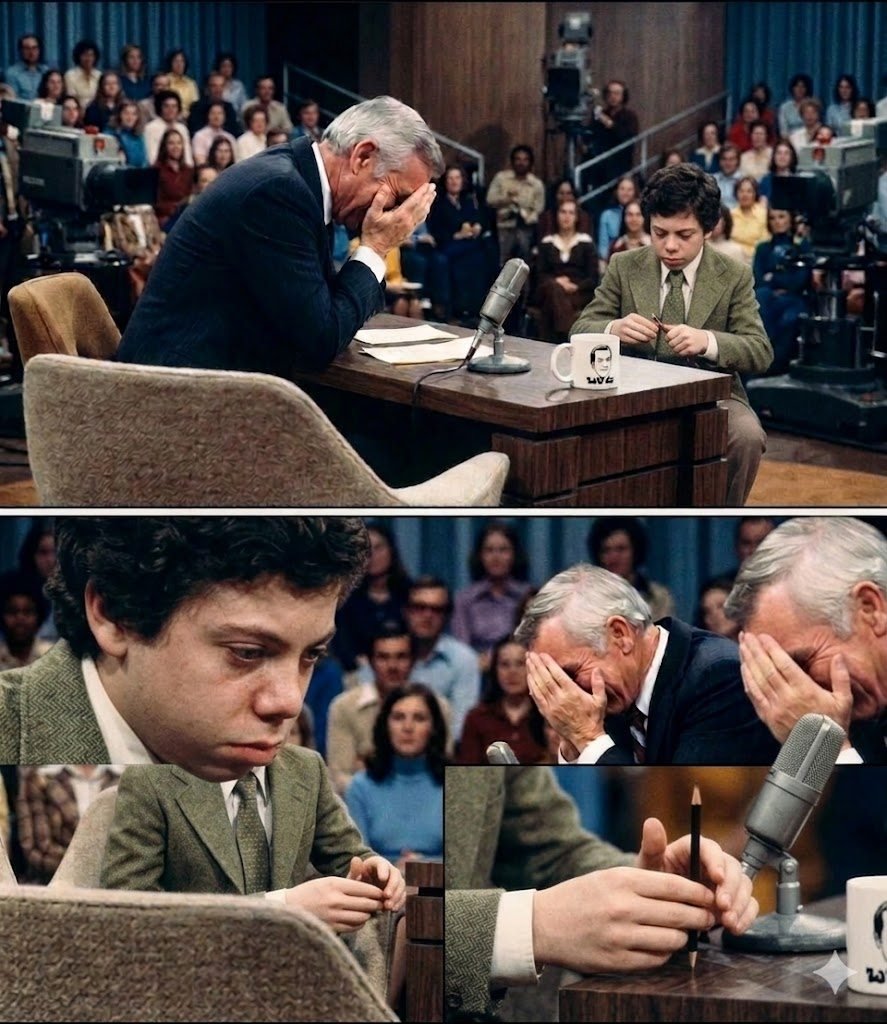
As the cameras rolled and the spotlight fell on Michael and Johnny, the studio audience was unaware of the profound emotional journey about to unfold before them. The producers had already signaled to Johnny to move on if nothing happened—if Michael didn’t speak or engage. But Johnny remained patient, keeping the space open for whatever might come.
Miriam Bennett, who had been anxiously watching from the wings, couldn’t help but feel the weight of the moment. Would her son speak? Could he? For 10 years, she had watched as Michael struggled to communicate, fought to be understood, and often faced rejection and isolation because of his silence. She was prepared for anything—but her heart still raced with anticipation.
For a few agonizing minutes, the two sat in silence. Johnny, though experienced in handling tough situations, didn’t push. He simply waited. He had promised Patricia Bennett he would do everything in his power to make Michael feel comfortable, and now he kept his promise with quiet resolve. The producers, frantic in his earpiece, urged him to move on, but Johnny knew that the moment was unfolding on its own time.
And then, something shifted.
At first, it was just a soft sound—a gentle clearing of the throat. Michael’s fingers twitched. His eyes met Johnny’s for the first time that evening. The silence was broken, but it wasn’t loud. It wasn’t forced. It was a soft, steady exchange, one that felt more intimate than anything the audience could see.
Johnny leaned in, his eyes locked on Michael’s, ready for whatever might come next. The room seemed to hold its breath as Michael’s hand moved slowly toward the microphone.
The audience could barely hear it, but the words that followed left an indelible mark:
“Thank you… for letting me be here.”
For those few words, the world of The Tonight Show stood still. This was no longer just an interview. It was a moment of human connection—raw, real, and profound. It was the first time Michael had spoken publicly, and the effect was immediate.
The audience, stunned into silence, began to slowly realize what had just transpired. Michael had found his voice. And in doing so, he had just made television history.
The Emotional Aftermath: The Unseen Power of Silence
The effect of Michael’s words wasn’t immediate in terms of applause or cheers. Instead, it was the emotional weight of the moment that rippled across the studio. There were no immediate reactions—no loud clapping, no immediate recognition of what had just occurred. Instead, there was a quiet realization: this was real. This was not just a segment on a late-night talk show. This was a breakthrough.
Johnny Carson, who had been in the business for decades, found himself moved by Michael’s courage. He had seen many guests, many performances, and many heartfelt moments in his long career, but this one was different. This was not about ratings. It wasn’t about spectacle. It was about a boy, a mother, and the space for both of them to be seen and heard.
As the moment lingered, Johnny looked at Michael, and without words, a shared understanding passed between them. The silence that had filled the room for those few minutes became louder than any applause could have been. For Michael, it was a moment of liberation, a moment that transcended everything he had faced in his young life. And for Johnny, it was a reminder of why he had been in the business all these years—to bring moments of truth, connection, and humanity into the living rooms of millions.

The Aftermath: A Changed Life
The clip of Michael’s appearance on The Tonight Show quickly went viral. It wasn’t just the speech that moved people—it was the entire context: the patient waiting, the support of Johnny Carson, and the silence before the breakthrough. Michael Bennett’s appearance on the show became a symbol of patience, perseverance, and the power of giving someone the time they need to be heard.
For Miriam Bennett, it wasn’t just about the spotlight. It was about seeing her son not only acknowledged, but heard. That night, Johnny Carson’s show wasn’t about comedy or entertainment. It was about something far more meaningful: a moment of real connection.
Conclusion: A Moment of Truth
In a world obsessed with noise, spectacle, and instant gratification, the quiet breakthrough of Michael Bennett on The Tonight Show stands as a testament to the power of patience, respect, and the willingness to allow others to speak in their own time. Johnny Carson, the seasoned host who had navigated countless interviews, understood that some moments couldn’t be scripted—they had to unfold on their own terms.
That night, Michael Bennett’s voice was finally heard. And in doing so, he reminded us all that sometimes, the most powerful moments aren’t the loudest or the most planned—but the ones that happen when we give others the space to be seen, to be understood, and to be heard.
And for Michael, his appearance on The Tonight Show didn’t just mark a career milestone for Johnny Carson. It marked the beginning of something much more important: a life where his voice, his presence, and his truth would no longer be hidden in the silence.