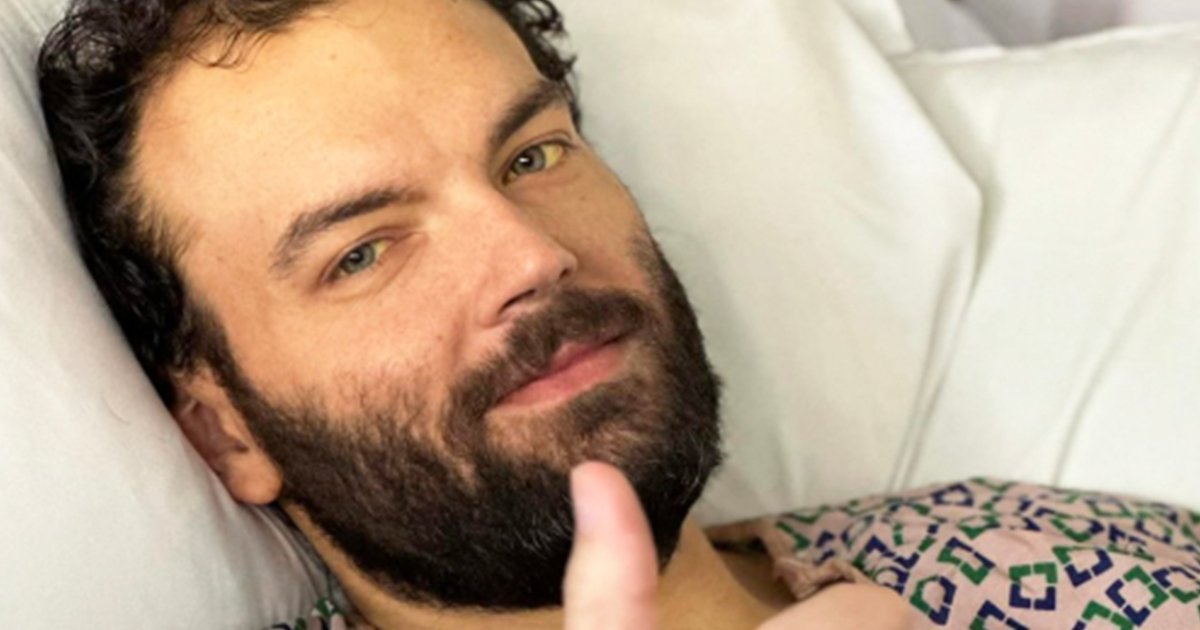
At just 26, David Lyon had never faced a serious health scare — aside from a sports injury here and there.
“When I first noticed the symptoms, cancer was the last thing on my mind,” he told Today.
”I kind of wrote it off…”
Today, nearly three times as many young people are being diagnosed with colon and rectal cancer compared to the 1990s, new research reveals.
The sharp rise in this type of cancer among young people has left researchers puzzled, and studies are now underway to uncover the reasons behind it. What is clear, however, is that this devastating disease shatters the lives of many young individuals and causes immense pain for their families and loved ones as well.
David Lyon, 26, from Erie, Pennsylvania, never imagined cancer could strike him at such a young age. Because of his age, seeing blood in the toilet didn’t immediately set off alarms.
”I was seeing red when I would go to the bathroom. And I didn’t think much of it,” Lyon told Today.

”I kind of wrote it off because I worked in a sheet metal shop, and I didn’t know if maybe I had a piece of metal on my finger and it scratched something.”
But his symptoms quickly worsened. Abdominal pain became so intense that he could barely stand upright, finding relief only when hunched over.
”That is when I was like, yeah, something’s not right. I need to go get it checked out,” he recalls. “Cancer was the farthest thing from my mind.”
A colonoscopy revealed a mass, and subsequent scans showed the cancer had already spread to his liver. At just 26, Lyon received a devastating Stage 4 colon cancer diagnosis.
Made a choice that helped him survive
David Lyon’s situation wasn’t entirely unique, but according to Dr. Bassam Estfan, Lyon was the youngest patient he’d ever treated with this type of cancer.
Speaking to Today, Estfan said he’s seeing more and more patients in their 30s and 40s being diagnosed, but someone in their 20s getting it is still extremely rare —especially without a hereditary predisposition like Lynch syndrome.
”I quickly got a scan done and they found the cancer had already metastasized to my liver. It was so aggressive,” David told People.
”The doctors didn’t know what to think because I was so young.”
Receiving a cancer diagnosis is, of course, a shock — and David Lyon was no exception.
“I was mad. Like I just saw red. I didn’t feel sad, I didn’t feel anything, I just felt mad,” he recalled.
He then made a choice that would help him survive mentally as well as physically: he didn’t want to know the full extent of his condition. For the first three years, only his mother was aware of how serious things were — a decision he credits with keeping his spirits high.
From the start, Lyon refused to let cancer take over his life. Even during grueling chemotherapy sessions that stretched on and off for three years, he kept hitting the gym and lacing up his skates for hockey, a sport he’d picked up just in his senior year of high school. The ice became his escape, a place where the fear and pain of cancer faded away, even if just for a few hours.
An important reminder
Once chemotherapy shrank the tumor in his colon, Lyon underwent surgery in 2022 to remove the remaining mass and affected lymph nodes.
But the cancer had already spread to his liver, forcing him to face an even bigger battle: a liver transplant in 2024. Thanks to advancements in medical research, liver transplants for colorectal cancer patients have become a life-saving option, drastically improving survival compared to chemotherapy alone.
The procedure left no trace of cancer in his body, giving Lyon a chance at a true recovery. Through it all, Lyon had an unwavering source of comfort: his dog, Sully.
The St. Bernard, a puppy he’d adopted just months before his diagnosis, stayed by his side through the toughest treatments.
Whether he was up and moving or resting, Sully provided quiet reassurance, sensing when his owner needed a little extra love. Even after weeks apart during recovery, the dog’s gentle welcome spoke volumes about the bond they shared.
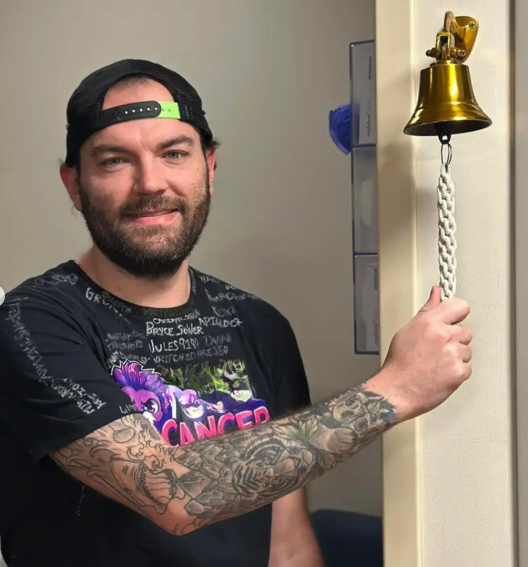
Now 31, Lyon is cancer-free, with no treatments needed and a prognosis doctors call “excellent.”
His journey is a reminder of the importance of listening to your body. Doctors emphasize that blood in stool, unexpected fatigue, unexplained weight loss, or changes in bowel habits are not to be ignored, even for young adults.
The NHS lists some common signs of bowel (colon) cancer to watch for:
- Changes in your bowel habits, like diarrhea or constipation
- Bleeding from the rectum
- A persistent feeling that you need to go, even after using the bathroom
- Abdominal pain or cramping
- A noticeable lump in your stomach
- Bloating or swelling
- Unexplained weight loss
- Feeling unusually tired or fatigued without a clear reason
David Lyon’s story is a powerful testament to resilience, hope, and the life-saving impact of early detection.
He survived against incredible odds—and now, he’s sharing a message that could save lives: if something feels off, get checked. Don’t wait.
READ MORE