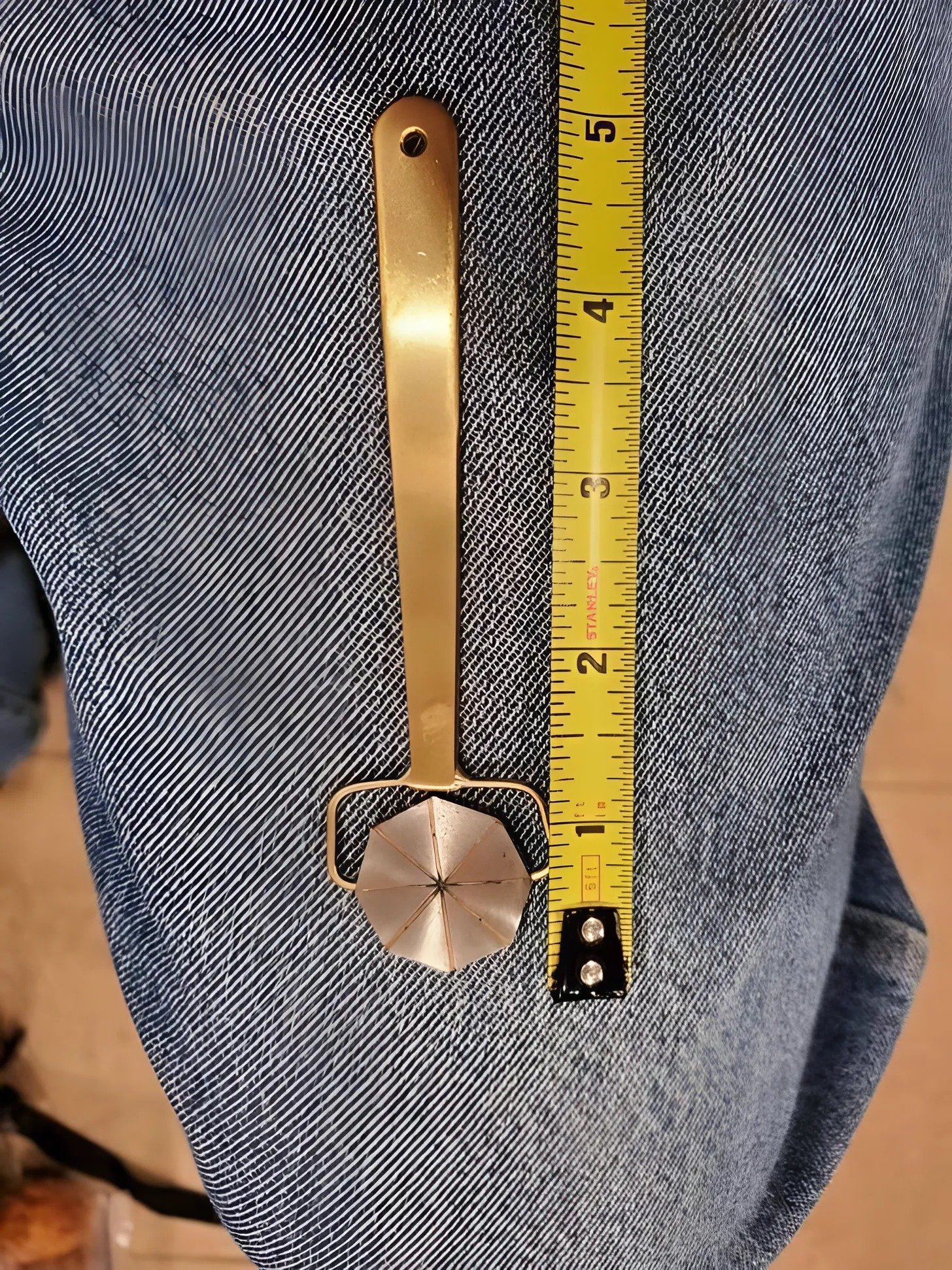
One day, while clearing out an old storage space packed with forgotten equipment, I found a curious brass tool. It had a thin handle with an octagonal head that turned smoothly. The metal was solid and cool, and the tool felt unlike anything I had seen before.
At first, I thought it might be some special measuring device, but I couldn’t identify its purpose. I went down the rabbit hole of online searches and old technical guides and finally found out it was a magnetic field indicator used by railway workers.
The brass handle was non-magnetic and spark-resistant, important for safety when working near electrical systems. The rotating octagonal head was designed to pick up magnetic fields from all angles, helping workers detect issues with electrical contacts on railway tracks.
This tool once helped prevent accidents by finding problems early in the signals and switches along train lines. I pictured a worker on a wet day, using this simple but effective device to make sure the tracks were safe.
Brass was chosen for its durability and safety, resisting corrosion and preventing sparks where electricity or fumes might be present. The adjustable head gave precise readings, making it a dependable tool under tough conditions.
Though it seems outdated compared to today’s digital sensors, this tool was reliable and required no power source. Holding it made me appreciate the careful engineering behind railway safety equipment years ago.
Rather than leave it forgotten, I keep it as a piece of living history on my desk. It’s a reminder that sometimes simple, well-made tools matter the most for safety and trust.