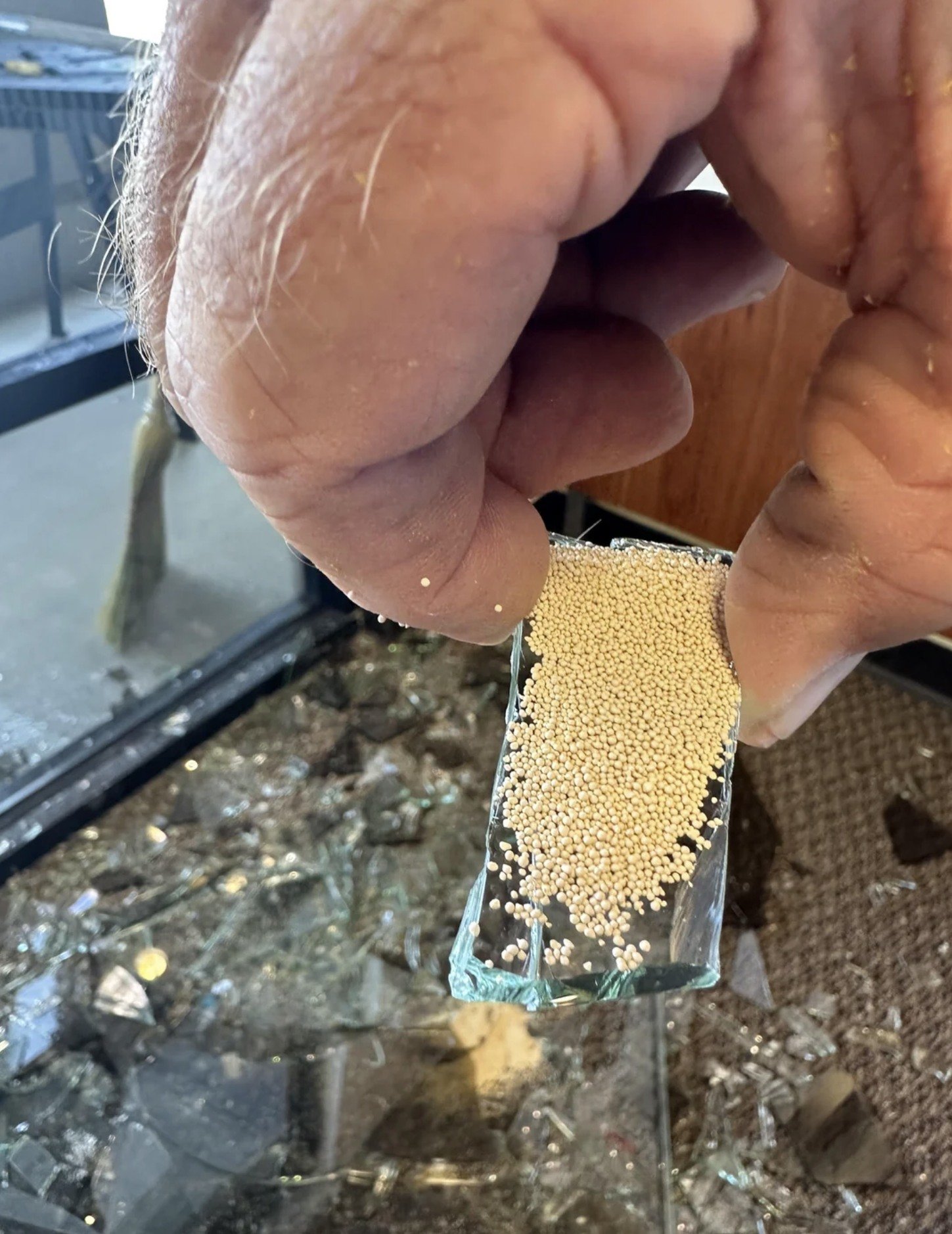
After a break-in at my wife’s workplace, we braced for the standard aftermath—broken glass, missing items, and disorder. But what we didn’t expect was to see clusters of tiny cream-colored beads scattered with the shards. They looked almost like tiny seeds or millet, shimmering oddly under the lights. Even the police had no immediate explanation for them. We gave them everything, hoping to solve the puzzle. For a moment, it felt like we’d uncovered an unusual clue.
Later, we learned the beads were simply part of modern dual-pane windows. These windows use two layers of glass separated by a thin metal spacer, which contains desiccant beads. These tiny pellets absorb moisture to prevent condensation forming between the glass panels.
When the window shattered, the spacer holding the beads cracked, spilling them everywhere. They weren’t left intentionally or connected to the burglary; they just became visible due to the damage. Desiccant beads keep the space between window panes dry, helping the window stay clear and insulated.
Made from materials like silica gel and zeolite, the beads trap moisture without releasing it back. They’re non-toxic but should be cleaned up quickly to avoid accidental swallowing by children or pets. Seeing these beads outside their usual place is rare and can be confusing without the right knowledge.
Our experience showed how everyday materials can surprise you when out of context. If you ever find cream-colored beads with broken glass, chances are it’s from a ruptured insulated window. And if you live in central California, keep an eye out for anyone suspiciously selling Ray-Ban or Costa sunglasses—it might be tied to break-in activity like ours.