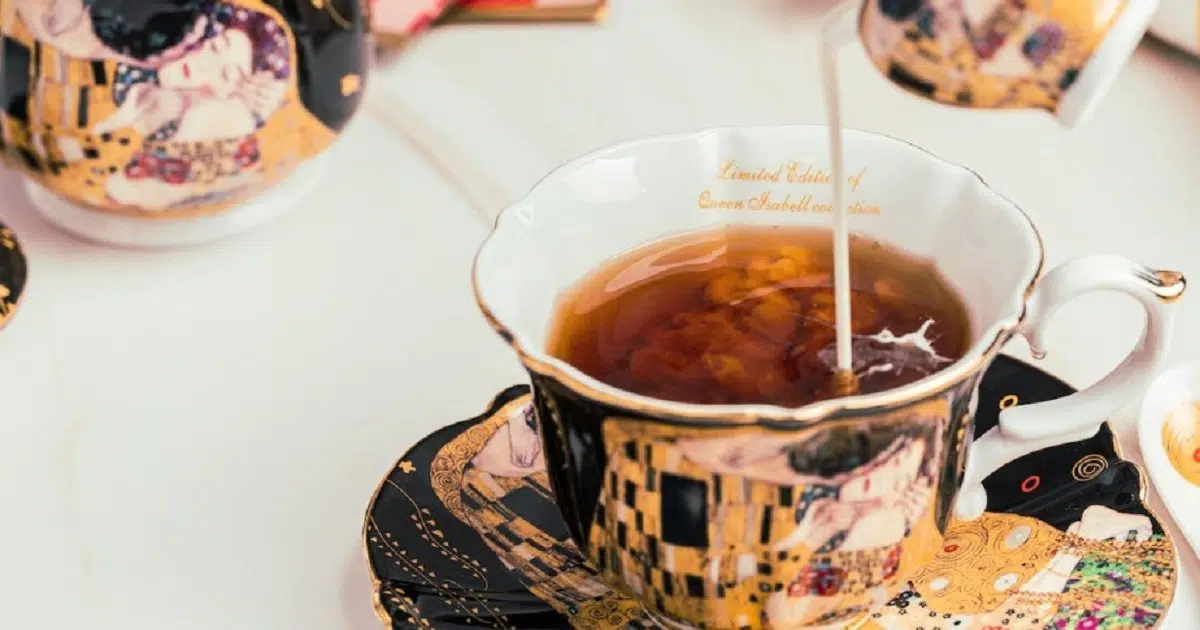
I was surprised the first time I saw someone add milk to their tea. Tea, to me, was always served with lemon or sweeteners. Moving to Britain was a revelation—milk in tea wasn’t just common, it was a matter of tradition.
Tea drinking here is a cherished ritual, with people paying close attention to brewing quality and the age-old debate of milk placement. But how did milk become a tea staple in the UK?
Tea came to Britain via Portuguese royalty in the 1600s. Served then in delicate porcelain, tea was expensive and reserved for the elite. Putting milk in first helped cool the hot liquid and prevented the fragile cups from breaking. It also softened the sharpness of robust black teas.
Some also loved the creamy taste milk gave the drink. When good-quality tea was expensive, adding milk first signaled trust in the brew’s flavor and showed care for the cup.
As tea became more accessible, the milk habit stayed strong. It’s become a part of British identity, a comforting daily ritual balancing flavor and tradition.
Across the Atlantic, tea culture diverged. Americans usually prefer iced tea and rarely add milk. Still, some influenced by British customs do enjoy milk in hot tea.
Adding milk isn’t universal among Brits either—many to prefer green or herbal teas without it. The choice of milk timing is a hot topic, reflecting personal taste and long-standing tradition.
In the end, milk in tea tells a story of history, practicality, and community—a small but meaningful tradition.