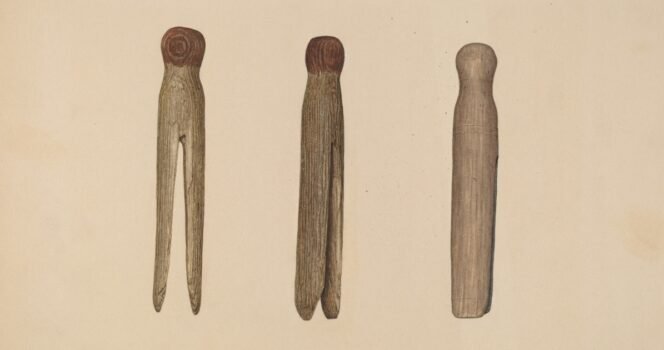
Before the days of electric laundry appliances, families had to get creative if they wanted clean, dry clothes. That’s where the wooden clothespin comes in—a tool that may seem simple but played a huge part in everyone’s daily life for centuries. When someone recently shared a picture online of an odd little wooden stick with two “legs” at one end, older generations immediately recognized it: this was a classic clothespin, a must-have for hanging clothes out to dry.
Originally, clothespins were just a shaped piece of wood, sometimes split or notched so that it could grip a cloth edge. While they kept freshly washed shirts, sheets, and socks anchored on the clothesline, wind was a constant enemy. Early versions were notorious for allowing laundry to blow away, bringing frustration to anyone whose hard work was undone by a sudden gust.
View this post on Instagram
Everything changed in 1853 when an improved design was patented by a Vermont inventor, David M. Smith. His clothespin used two wooden arms attached with a metal spring, forming a clamp that locked onto garments securely. After that, losing your socks to the wind became much less of a problem. Factories soon began mass-producing these spring-loaded pins, making them even more common and affordable for every home.
Wooden clothespins remained essential to everyday chores throughout the 20th century, even as alternatives like plastic pins and electric dryers arrived. They became symbols of home life, found everywhere from laundry rooms to craft tables—kids painted them, crafters decorated them, and many still use them the traditional way because they’re reliable, sturdy, and gentle on fabric.
Eco-friendly, classic, and durable, the wooden clothespin is a small invention with a big legacy. Whether you’re drying clothes the old-fashioned way or making DIY art, these humble objects connect us to generations past.