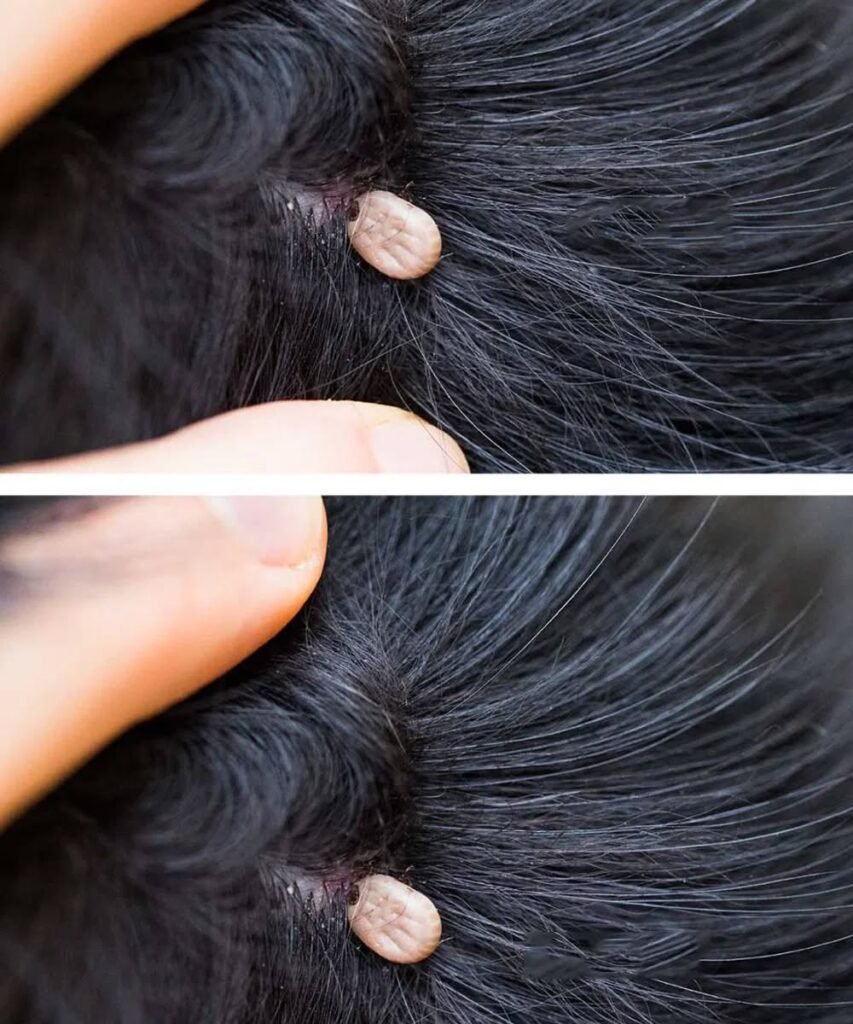
It’s normal to feel alarmed when you spot something strange in your child’s hair. White specks, bumps, or little movements might make you think about lice or mites immediately. However, it’s best to stay calm and methodical, as many such issues are treatable.
Begin by parting the hair and closely inspecting with a magnifier or camera zoom. Look closely for tiny insects, nits stuck near the scalp, or signs of redness and itching. Pay attention if your child scratches a lot, particularly at night.
Children frequently pick up lice or mites from places like school and daycare. Head lice live on the scalp and lay eggs that look like dandruff but don’t fall off easily. Scabies mites burrow into the skin and cause intense itching with bumps but are rarely visible.
Other things like dandruff, cradle cap, or lint can appear odd but are harmless and easy to manage.
Some parents try homemade remedies such as oils and vinegar, but these can irritate sensitive skin. Always do a patch test and see a doctor if the problem persists or worsens. Medical treatment with lice shampoos or mite creams may be necessary.
Contact your doctor if itching is severe, sleep is disturbed, or if there’s swelling or infection. To prevent problems, teach kids not to share hats or brushes, wash bedding frequently, vacuum properly, and keep hair tied back during group play.
Over-the-counter shampoos combined with nit combing are effective for lice. Scabies needs prescribed creams or oral medicine. Often, everyone in the home must be treated to stop reinfestation.
After treatment, keep monitoring your child’s scalp to catch any return early. With patience, knowledge, and care, you can easily handle and prevent hair infestations.