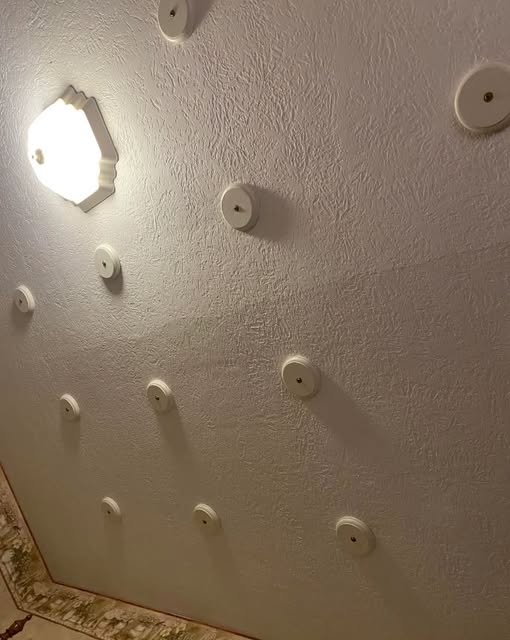
After a long journey, I lay in a hotel room and noticed rows of small wooden discs on the ceiling. At first, I wondered if they were part of an old light fixture or some unusual decoration. But I soon realized these discs are a traditional way to fix sagging plaster ceilings.
Before drywall, walls and ceilings were made with lath and plaster. Thin wood strips called lath were nailed to the frame, and wet plaster was applied over them. Over time, the plaster dries and pulls away, causing sagging or even falling pieces.

Screwing the plaster back up doesn’t work because it’s too brittle. Instead, these wooden discs are screwed through the plaster into the lath, spreading the pressure and holding the plaster firmly without cracking it.
Years ago, I used this method in my old home. I screwed discs in a grid pattern and painted over them. The ceiling looked great and stayed solid for years. It’s a humble but effective repair.
If you see these discs only in one room, it might mean that spot had worse damage or water leaks. These discs tell a story about the building’s past and the care taken to preserve it.
Some people leave the discs showing for a rustic look, others cover them up. I prefer them visible—they show the craftsmanship behind the repair.
So, those wooden discs aren’t just odd decorations—they’re a clever, time-tested way to keep old plaster ceilings intact.