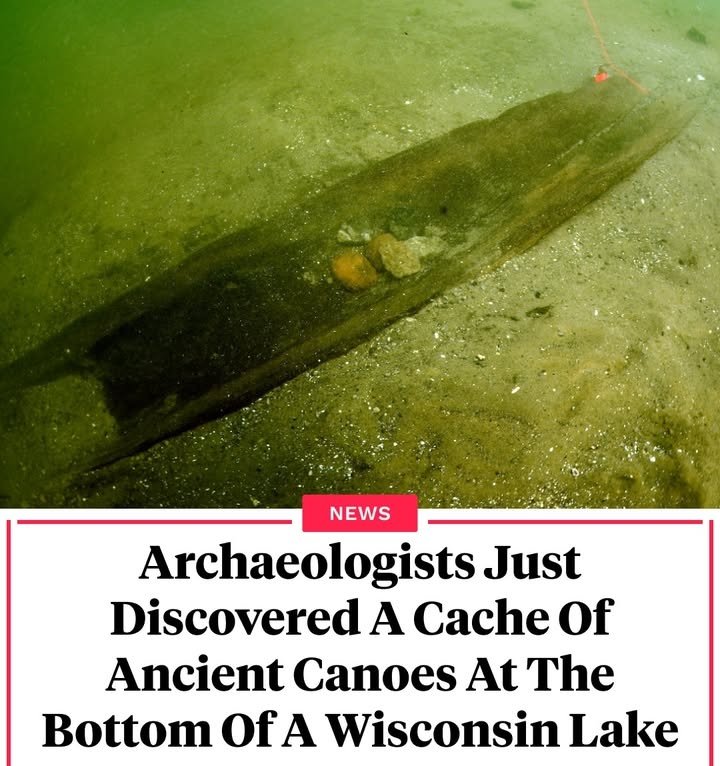
In Lake Mendota, Madison, Wisconsin, divers have found up to 11 ancient canoes, some dating back 4,500 years. The Wisconsin Historical Society has been exploring these relics since 2021, with the oldest canoe being the most ancient in the Great Lakes region. They tell a story of Native American life across centuries. The first canoe, uncovered in 2021, was 1,200 years old, followed by a 3,000-year-old one in 2022. Carved from elm and red oak, these canoes range from 2500 B.C.E. to 1250 C.E.
Native peoples likely sank the canoes near the shore each fall to keep the wood intact over winter, raising them for spring trips. Over time, floods and sediment buried them in the lakebed, preserving them until today. Archaeologist Amy Rosebrough wonders if more canoes surround the lake, suggesting further discoveries await. The oldest, from the Late Archaic period, shows skilled navigation long before farming or mounds.
These canoes likely belonged to ancestors of the Ho-Chunk Nation, though their names are lost. Some are from the Middle Woodland period, with early farming and trade, while others come from the Late Woodland period, marked by corn and mounds, or the Oneota period’s villages. Ground-penetrating radar helps study the canoes without harm. The first two will be preserved at Texas A&M University and displayed at the Wisconsin History Center in 2027.
The most fragile pieces remain underwater to stay safe. Ho-Chunk Nation’s Bill Quackenbush says the canoes make oral traditions feel alive. They reveal centuries of Native travel and skill. A canoe is relatable, letting us imagine its makers’ lives. The Wisconsin Historical Society plans sonar mapping to find more relics. These canoes link us to the ingenuity and strength of Native peoples in the Great Lakes, a legacy that inspires today.