After losing my dad, I thought my mom found love with a charming man. But when he started controlling her, I devised a plan to free her and show him what strength looks like. Dad’s cancer took him when I was a teen, leaving Mom, Diane, to hide her pain. She wore his old shirts and cried alone, but we held each other up, me at school, her at work. When I moved out, her loneliness in our old house worried me. Then David, a new neighbor, won her over with wildflowers, homemade soup, and sweet notes on her car. He even thanked me for “sharing” her with a smile. I thought he was her happily-ever-after.

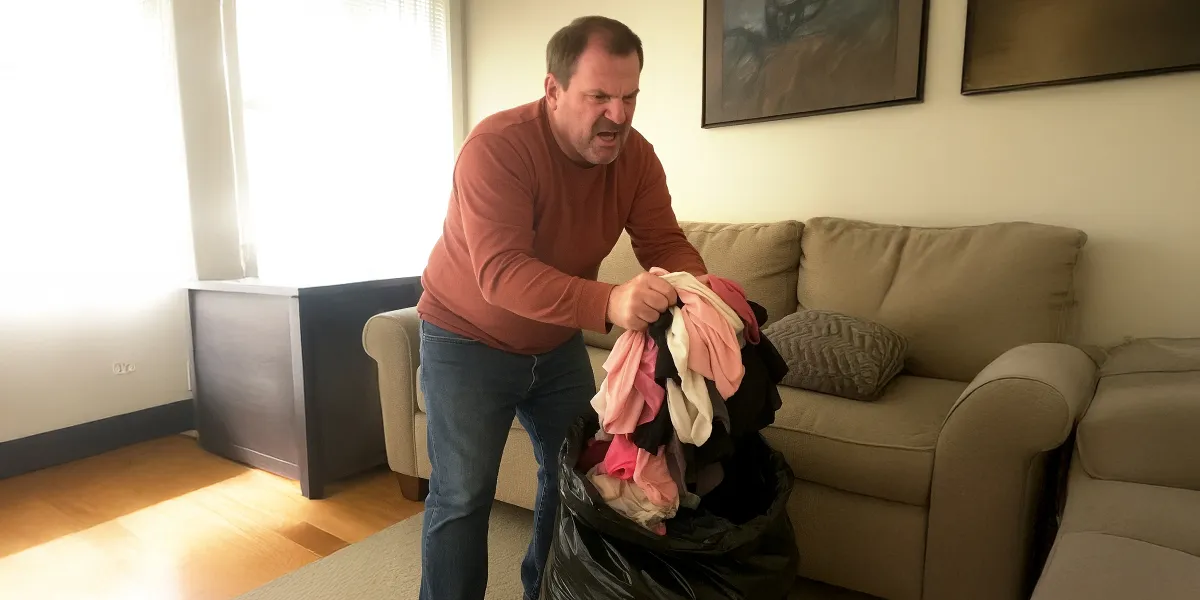
They married after ten months, and I was overjoyed. But soon, Mom’s spark faded. Her bright dresses and bold makeup gave way to dull clothes. She stopped smiling, canceled our coffee dates, and her friends noticed her absence. I asked, “You okay?” She said, “Marriage is an adjustment.” But it felt deeper. One day, I surprised her with her favorite blueberry tart, using my key to their place. I heard David: “You don’t need these dresses. You’re with me now.” I saw him tossing her cherished clothes—worn for special moments—into trash bags. Mom sat silently, a tear falling.
“What’s going on?” I asked. David smiled. “Just helping Diane clear out old stuff.” Mom didn’t look up. I saw his control and faked a smile. “Wow, David, so thoughtful.” He beamed. I stayed briefly, checking on Mom, then left, determined. I spent days researching rentals and women’s groups. Thursday, I brought wine, saying, “David, you do so much for Mom. Let me take her for a girls’ night.” He nodded, sipping his drink. I drove Mom to a rented lake cabin, saying, “You’re not going back.” She whispered, “David won’t like it.” I said, “He’s crushing you, Mom. This isn’t love.”
She stayed quiet, but the next day, she smiled, wanting pancakes. We cooked, laughing like before. I leased an apartment near mine for her, packing her essentials while David was distracted. I also took his fancy golf bag, his pride. I left a note: “Love doesn’t control.” David called, but Mom ignored him. He told neighbors she was “lost,” but I sent his HOA his toxic online rants about women. His reputation fell—his mailbox was tagged “creep,” and neighbors avoided him. I donated his golf bag to a women’s shelter, adding: “He discarded what didn’t suit him, so I did too.”
Mom’s alive again, wearing bright coats and baking cakes. She walks with bold women and laughs loud. Her divorce is nearly done. I saw David at a shop, looking small. “Hey,” I said. “Mom made cookies yesterday. She’s shining.” He nodded, silent. He lost her and his control. Mom and I found our strength. We’re not silent anymore—we’re powerful.